STEM and SEL: Important Connections for Student Development
The following is a guest post from Dr. Jacie Maslyk.
More than ever, we need to ensure that the social-emotional development of our students (and ourselves) is at the forefront. Student and teacher well-being is so important, but can also be challenging to address with all the other things that may be on our plates.
Integrating SEL in our classrooms doesn’t have to be another thing that we add to our already packed schedules. SEL skills and strategies can be incorporated into the content we are already teaching. There are many connections between the goals of meaningful STEM learning and the tenets of social-emotional development.
What is Social-Emotional Learning (SEL)?
The Collaborative for Academic, Social, and Emotional Learning (CASEL) has shared widely their framework for SEL including:
Self-awareness
Self-management
Social awareness
Relationship skills, and
Responsible decision-making
What are the 5 parts of SEL?

We can incorporate SEL content into our classrooms through the programs we offer and the books that we read. Counselors, teachers, principals, and parents can work together to encourage development within these five components.
Why does SEL Matter?
The social-emotional development of our students is critical to their overall development as individuals and global citizens. Developing these skills in our young people will help them to engage in meaningful student collaboration and interact with others in a positive way. When we promote SEL in the classroom, our students will begin to:
Consider others’ perspectives
Recognize strengths in themselves and others
Demonstrate empathy and compassion
Develop communication and organizational skills
Understand and express gratitude
How Does STEM Connect with Social-Emotional Learning (SEL)?
STEM learning and the challenges we design in our classrooms offer collaborative experiences with real-world connections. This is the perfect opportunity to embed strategies for social-emotional learning. As educators, we can identify the SEL components and raise awareness within our students demonstrating for them the connections to what they are learning and how this is also developing a sense of responsibility, decision-making, or relationships skills.

Self-Awareness
Within the STEM classroom, students may experience a variety of feelings: frustration, joy, overwhelm, concern, etc. Naming these emotions is one step towards developing self-awareness.
“Wow, you really pushed through that challenge, especially when you encountered some tough obstacles!”
In the classroom, students develop a growth mindset through their STEM learning. This is important for students in their social-emotional development, as well as in their development as creative and critical thinkers.
Perseverance is a huge part of developing a growth mindset. Engaging in engineering design challenges gives students the chance to try something, fail, and try again. In STEM, students are learning from their mistakes and revisiting the problem, a valuable skill for the future.
Try this---Reflection is a big part of self-awareness. Encourage students to think and write about their STEM learning and identify their personal strengths and needs. The reflections process can be embedded into STEM lessons as a step towards increasing self-awareness.
Self-Management
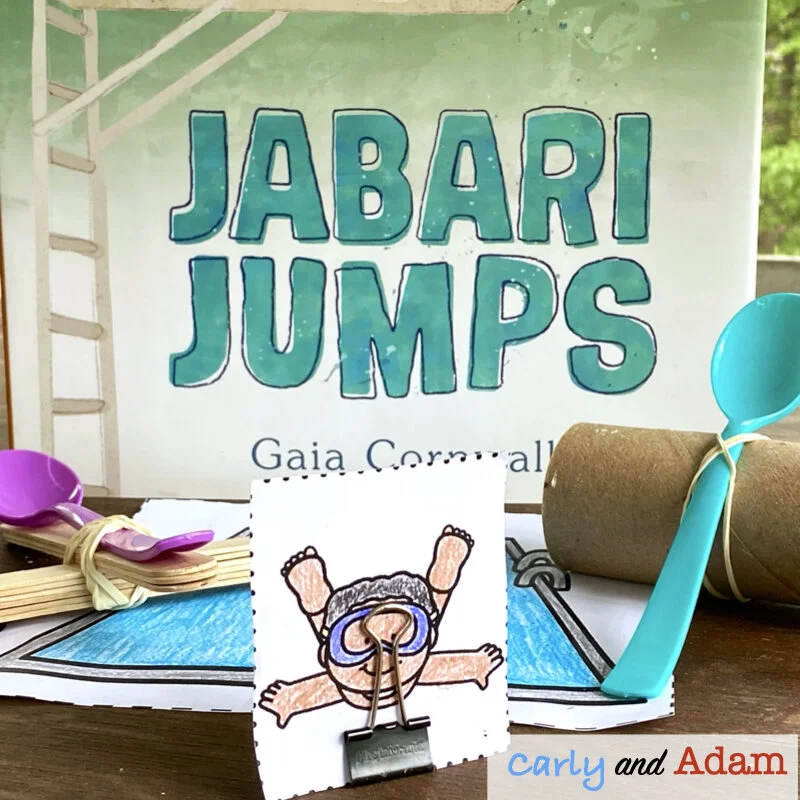
Self-management is when we are able to regulate our emotions in order to achieve our goals. This means managing our behaviors when working in a group setting and regulating our emotions even when we become frustrated or are unsure about a task. Sometimes we need to take the initiative and demonstrate motivation. Other times, we need to manage stress in a challenging situation.
Try This--Incorporate engineering design challenges into your classroom, especially open-ended challenges with no clear solution. Challenges like these will help students to activate their self-management skills as they interact in collaborative groups to solve a problem.

Social Awareness
Social awareness is the ability to recognize the feelings of others and empathize with them. Developing an understanding of the perspectives of others allows students to recognize the strengths of others. In turn, this helps them to communicate and interact with others. Social awareness expands beyond yourself and pushes you to think about the interests, concerns, and opportunities in others, both locally and globally.
Try This--Push students to become active citizens, looking for ways to improve their community or beyond. Project-based learning experiences that incorporate researching problems beyond ourselves and designing solutions for others are a wonderful way to make a positive impact.
Relationship Skills
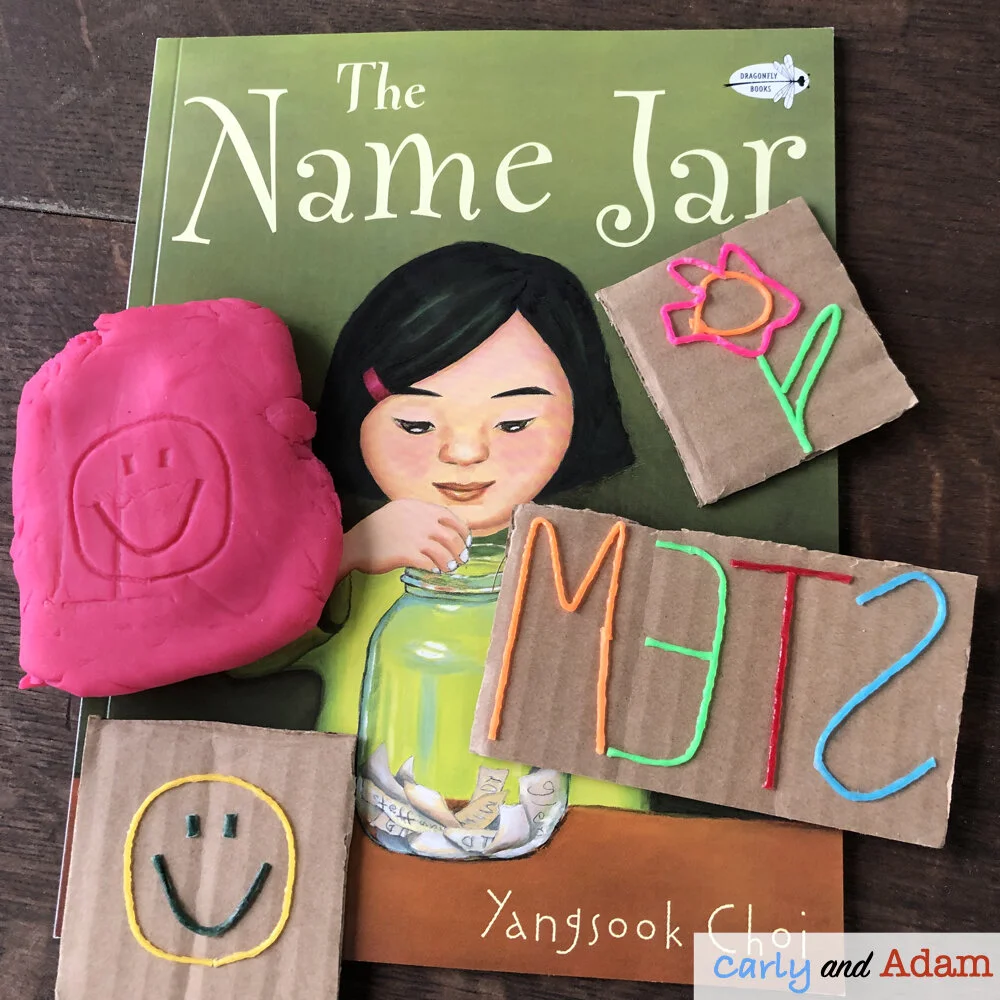
Our ability to work well with others, handle conflicts, and offer support to others is part of our relationship skills. While students are working together, they are asking and answering questions, listening, sharing ideas, and making compromises.
Relationship skills also means standing up for what is right and resisting social pressures. These can be challenging to build with our students. We need to give them lots of opportunities to learn about relationship skills, see and hear positive examples, and try to navigate relationships with ongoing support.
Try This--STEM/SEL read alouds are a great strategy to expose students to all of the facets of building relationship skills. Sharing stories that discuss making friends, solving conflicts, and communicating through challenges can help students understand this skill.
Responsible Decision-Making
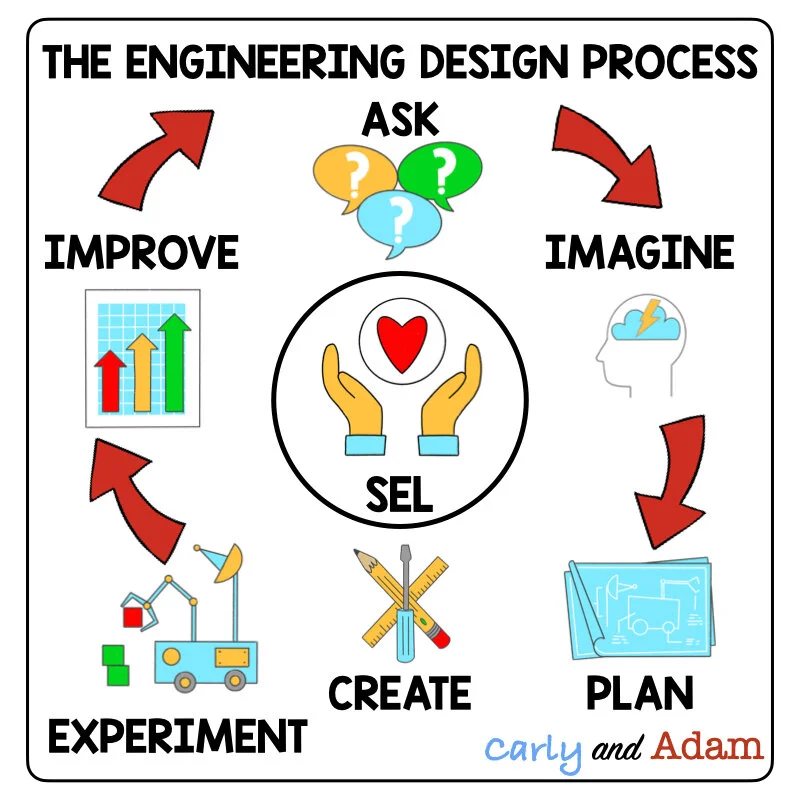
Responsible decision-making includes the effective use of problem-solving skills and making positive choices. As students develop responsible decision-making skills, they are learning that different decisions have different consequences. This happens within their relationships with peers, as well as within their designs as STEM learners. Within the STEM classroom, we can provide opportunities to empower our students to make decisions in the leadership roles that they take on and in the ongoing collaborative experiences that we invite them to engage in.
Try this--Consider several projects throughout the year where students can work through the engineering design cycle. This process pushes students to identify problems and solutions, making decisions throughout the design cycle. As they come up with new and different iterations of their design, they must decide what materials to use, how things should work, and what changes to make.
SEL Resources
We have developed a set of resources that support SEL strategies through children’s literature. Each resource focuses on five different read-aloud selections. Within each story, we have highlighted some key vocabulary words (some that are STEM-related and others that are SEL-related). We have created a hands-on, STEM challenge to go with the story so that kids can practice design and engineering skills. There is also an SEL activity to support the SEL component. For example, in our self-awareness resource, students will practice self-affirmations, build confidence, and appreciate the uniqueness in themselves and others.
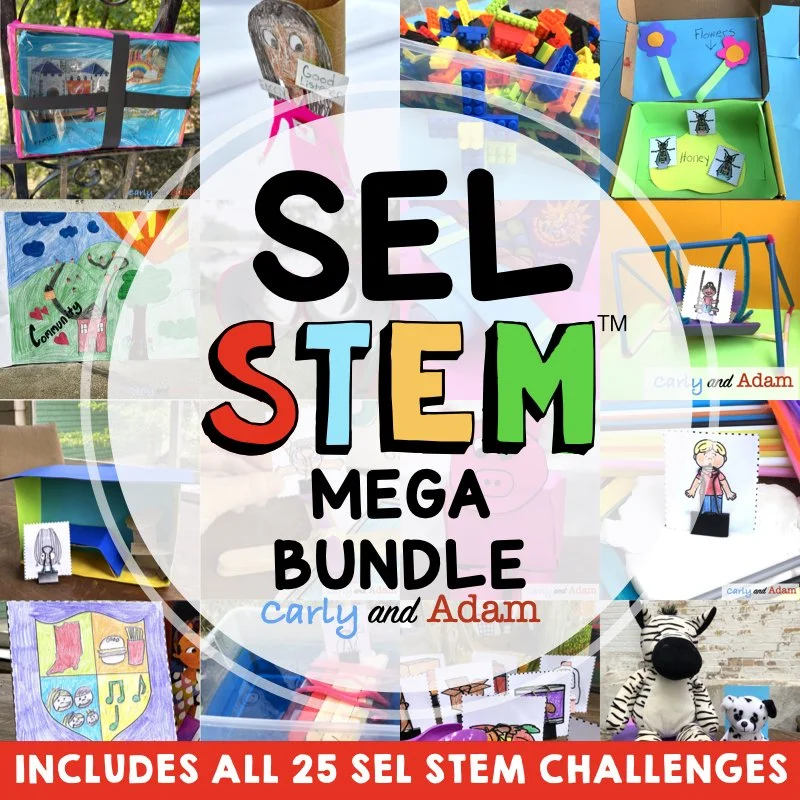
Lastly, each story is connected to a writing prompt that will allow students to reflect and extend their thinking. These resources are available in our TPT store or join the STEM Teachers Club Membership and get access to all of our SEL resources plus any new resource that we come out with.
Incorporating SEL strategies into your classroom will continue to be a critical support as your students return to school this fall. Through STEM (and other hands-on opportunities), your students can build STEM skills while also continuing to grow in their social and emotional development.
You can find the individual SEL STEM bundles here:
Self-Awareness
Self-Management
Responsible Decision-Making
Relationship Skills
Social Awareness
Want more info and resources on SEL and STEM?
Get full access to this SEL STEM bundle and all of our future SEL STEM resources when you join the STEM Teachers Club Membership (best value)!

We hope you have found this blog post helpful. To stay connected with Carly and Adam's teaching tips and classroom freebies be sure to follow us on Facebook, Pinterest, Teachers Pay Teachers, and subscribe to our blog!