
What Should You Buy For Your STEM Classroom?
The following is a guest post from Dr. Jacie Maslyk.
Whether you are just getting started or you’re a STEM veteran, you are probably thinking about the new school year and planning new learning experiences for your students. As you prepare for these exciting projects or activities in the classroom, you will also be thinking about the types of materials that you will need to engage your students.
The beauty of STEM learning is that discoveries can happen when students are designing, building, experimenting, or tinkering. Learning can happen accidentally when learners are trying new things and collaborating. Students can uncover new strategies when they are messing around with materials as simple as recyclable boxes or as complex as electrical circuitry. With all of these different possibilities, it may be difficult to know where to start.
Goals and Budget
Start by considering the goals of your class.
Will you focus more on science and experimentation?
Will classroom products center around the engineering and design process?
Are you planning to be more tech-centered?
Or is your class more like a collaborative makerspace?
The goals of your program will determine the projects you will engage in and the materials you will need.

Getting a STEM program started from scratch will require some resourceful thinking, especially when it comes to budgeting and materials. Budgets are always tight, so figuring out ways to stretch a dollar is a great skill to have! Think about ways to accumulate materials with low or no cost.
Hold a donation drive
Planning to build a Lego wall? Ask for donations of used ones. Constructing with cardboard? Ask the community to drop off boxes at the school. Maybe you are looking for fabric scraps or plastic containers. Parents and families are often willing to make donations of all kinds when they know it is going towards a well-intended school project.
Visit yard sales and dollar stores
Yard sales and dollar stores are great places to find materials at a low cost. Yard sales are great for old games and books, as well as hand tools. Stock up on basics like plastic bins, kitchen sponges, and craft sticks at your local dollar store. Acquiring these general materials at a lower cost will allow you to allocate more money on larger or more expensive items elsewhere.
Build a smart budget
School leaders are more likely to support your program when you can share a well-articulated plan. Build a clear budget that shows that you have thought through your requests. Include options for materials. (Think--You might request a robotics kit at $200, but you could accomplish similar learning goals using simpler materials.)
Prioritize your list so that the leadership knows what the most critical items are for your program. Also, let them know the steps that you have taken to obtain materials at no or low cost (donations, dollar stores, etc.) they may be more likely to purchase the items you are requesting.

Within your budget, there will be materials that you go through quickly (consumables) and materials that are used over and over again (non-consumables). You will likely want to include a balance of both of these, but that will depend on the focus of your program. It is important to talk with your students and with your colleagues to determine the skills and projects you want to plan this year.
Do your students like to build? You might want to stock up on building bricks, cardboard, duct tape.
Do your students prefer using tech tools and gadgets? Beebots, Scratch, or Makey-Makey might be good choices.
Are students interested in tinkering? Trying circuits, sewing kits, or paper folding might be fun for your students.
There are tons of consumable materials to choose from. (Keep in mind that you will need plenty of storage options to house them all!) Here’s a list of some basic consumables:

Non-consumables are things that you will be able to reuse. It will be worth it to invest in these items to always have them on hand in your classroom.

Many STEM and maker spaces also integrate technology into their projects. There are a lot of cool tech tools to try. Here are a few that you might want to add to your STEM space, depending on the grade levels that you work with. (These are just guidelines for age appropriateness, but all students are different. You may find that your students are ready and willing to try any tool and that’s OK, too!)

There are always new tech tools and gadgets coming out. New products are fun for kids to try, but don’t forget about simple games and toys that build a STEM mindset for students at any grade level. Lincoln Logs, dominoes, K’Nex and marble mazes can engage learners of all ages (even adults!).
Lots of specialized kits exist to foster STEM learning in the classroom. These can be enticing, but remember to get to know your students first, then choose the materials to meet their needs. Once your students are engaged in your class, you might want to purchase kits to grow crystals, make jewelry, or build terrariums.
One of the most versatile STEM kits is 3DuxDesign. 3DuxDesign kits come with pieces of cardboard and plastic connectors. The kits allow for open ended exploration or students can use them to create models, dioramas, and 3D designs based on specific standards. The connects can easily be reconfigured which allows for multiple iterations.
We have partnered with 3DuxDesign to offer a 5% discount on all of their kits.
Use CODE: Carlyandadam5
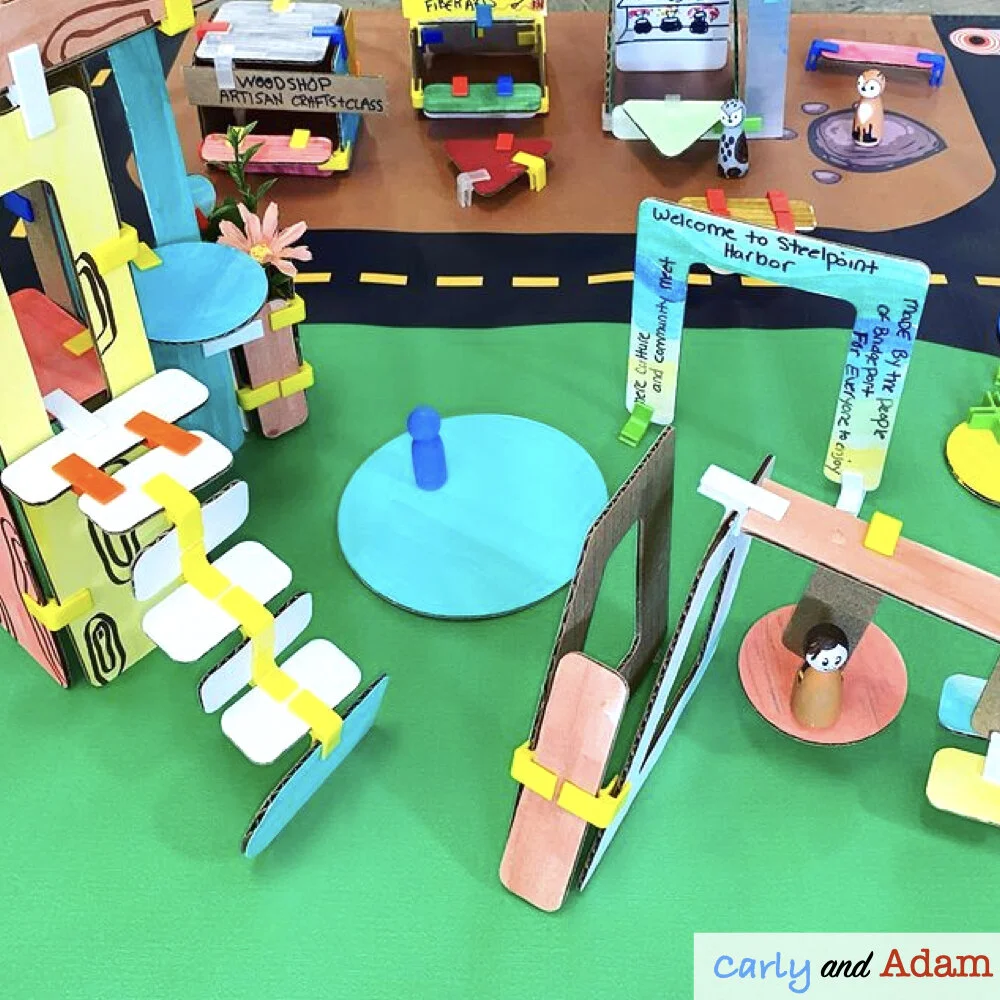
Photo Credit: @3DuxDesign Instagram Account
Whether students enjoy experimenting, constructing, or inventing, you will have materials to support their interests. In addition, don’t be afraid to push student thinking and engage them in STEM tasks that are outside of their comfort zones, at times.
If our goal is to develop creative and critical thinkers, sometimes students will need to work on things that may not fit within their personal interests. Getting students to try sewing or coding or soldering will help them to explore new ideas and build new skills that will help them to learn and grow. Whatever topics your students engage in, continue to build interests (and your materials list) so that your program continues to evolve.
Spend Less Time Planning and More Time Teaching!
Hands-on STEM learning starts here.
Find ready-to-use STEM Activities and Science Curriculum, Practical Professional Development, and a Community of Educators to help you teach STEM with confidence.
You can get all 1000+ STEM Challenges by Carly and Adam as part of the STEM Teachers Club. Save 30% on your first month/year using coupon Code: CarlyAndAdamBlog.