
Fine motor skills help young students write, cut, build, and complete everyday classroom tasks.
These 13 Fine Motor Skills STEM Activities give kindergarten and first grade students fun, hands-on ways to strengthen the small muscles in their hands and fingers.
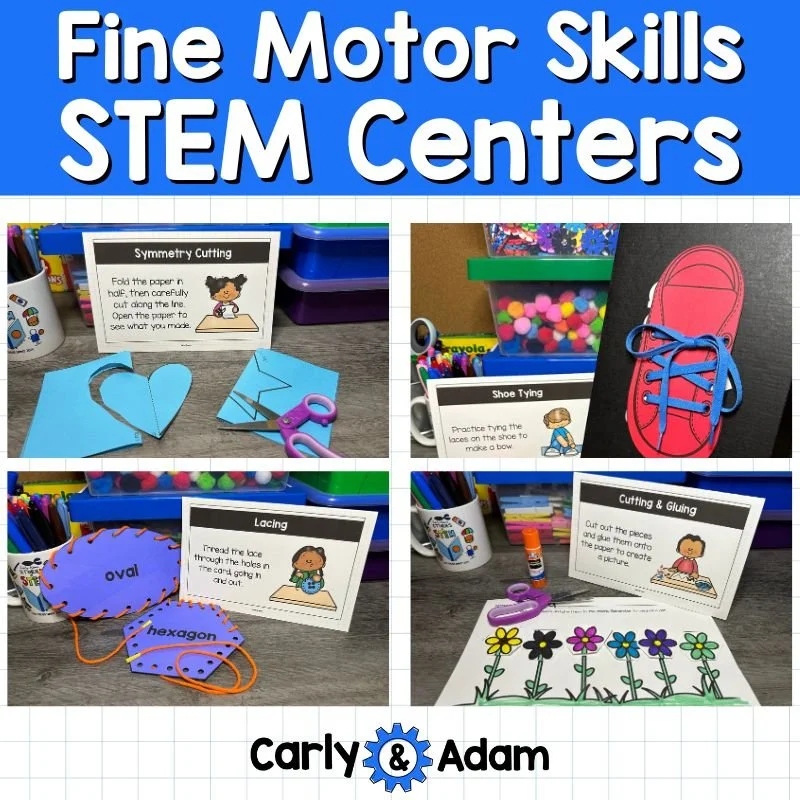
Help kindergarten and first-grade students strengthen their hands with 13 fun fine motor skills activities! These easy STEM centers include tracing, cutting, gluing, lacing, stacking, shoe tying, play dough, geoboards, and more. Perfect for morning work, centers, small groups, or early finishers.
Why Practice Fine Motor Skills?
Fine motor activities improve hand strength, coordination, pencil control, and independence. These skills help students use scissors, hold a pencil, tie their shoes, and work with classroom materials.
13 Fine Motor Skills Activities
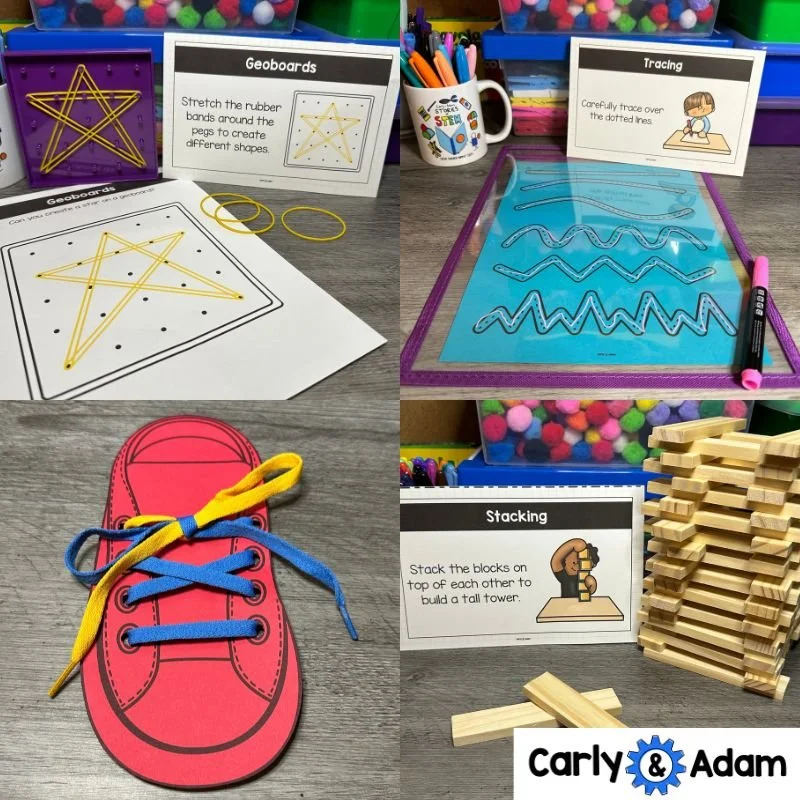
Looking for hands-on fine motor activities for kindergarten? Explore 13 simple centers that help students practice cutting, tracing, lacing, building, gluing, and pencil control. These engaging activities are perfect for kindergarten and first-grade classrooms.
1. Hole Punching
Students use a hole punch to punch the circles on printable strips. This activity is a simple way to strengthen their hands.
2. Tracing
Students trace dotted lines using pencils or crayons. The pages can also be placed in dry-erase pockets for repeated practice.
3. Symmetry Cutting
Students fold a paper, cut along the line, and open it to reveal a symmetrical shape. This activity combines cutting practice with an introduction to symmetry.
4. Cutting and Gluing
Students cut out pictures and glue them onto a page. They practice controlling scissors and using the right amount of glue.
5. Lacing
Students thread yarn through holes in printable cards. Lacing builds hand-eye coordination and strengthens students’ fingers.
6. Stacking
Students stack KEVA planks or other building materials to create a tall tower. They practice careful movements while exploring balance and stability.
7. Taping
Students use pieces of tape to attach paper shapes to construction paper. Tearing, cutting, and pressing tape gives their fingers extra practice.
8. Geoboards
Students stretch rubber bands around geoboard pegs to create different shapes. This center combines fine motor practice with shape recognition.
9. Cutting Practice
Students carefully cut along different types of lines. This helps them develop the control needed for more detailed cutting activities.
10. Pattern Stacking
Students use DUPLO bricks to recreate the patterns shown on the printable cards. This activity develops coordination, visual matching, and early math skills.
11. Play Dough Faces
Students use play dough to create faces that show different emotions. Rolling, pinching, and shaping play dough helps strengthen their hands.
12. Shoe Tying
Students practice tying laces on a printable shoe. The shoe can be attached to a shoebox to make it more stable and easier to use.
13. Line Formation
Students select a card and copy the line or shape onto a recording sheet. This activity builds pencil control and supports early writing skills.
Easy Fine Motor Skills Centers
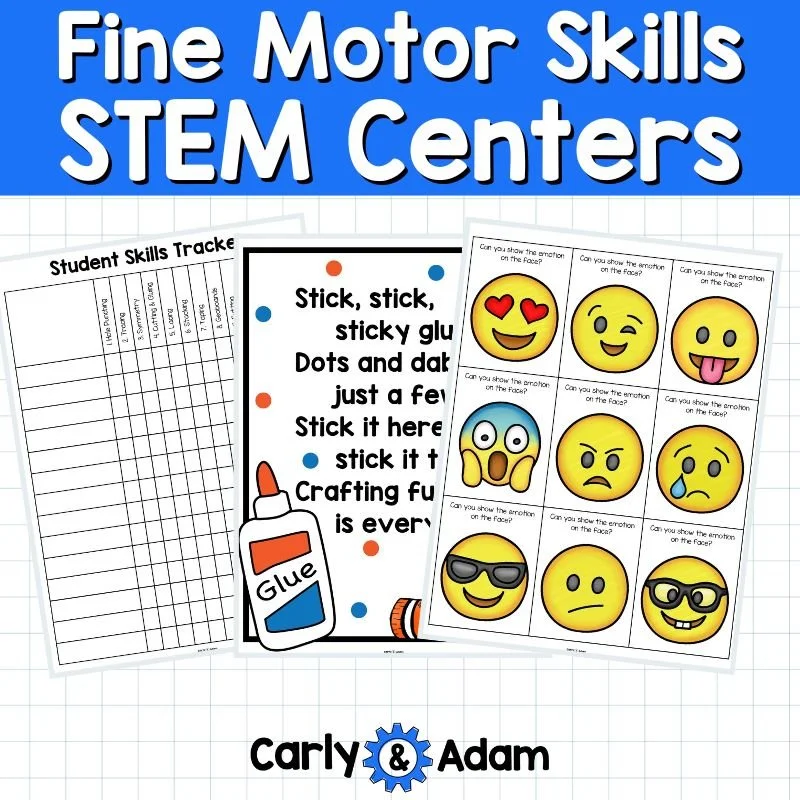
Make fine motor skills practice fun with these 13 STEM centers for young learners! Students will build hand strength and coordination through hole punching, cutting, taping, pattern stacking, play dough, geoboards, and shoe tying. Great for kindergarten morning work and centers.
These activities can be used as STEM centers, morning work, early-finisher activities, or small-group practice. Students can work independently, with a partner, or in a small group.
When using the activities as centers, allow students approximately 10–15 minutes at each station. You can use all 13 centers or choose the activities that best meet your students’ needs.
Hands-On Learning for Young Students
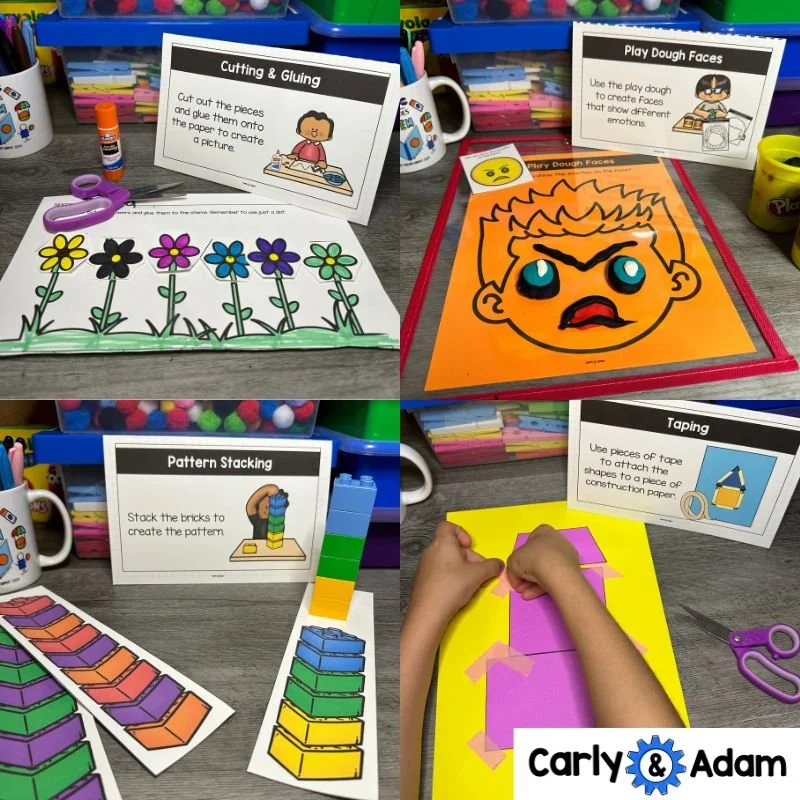
These fine motor skills centers combine hands-on learning with early STEM practice! Discover 13 activities that develop hand strength, scissor skills, pencil control, coordination, shape recognition, and problem-solving. Use them for centers, small groups, or early finishers.
Fine motor skills improve with regular practice. These centers give students many opportunities to cut, trace, lace, stack, build, and create.
As students complete each activity, they strengthen their hands, learn to follow directions, and become more confident using classroom tools. The included skills tracker also lets students color a medal as they master each skill.
These 13 Fine Motor Skills Activities make it easy to add meaningful, hands-on practice to your kindergarten or first-grade classroom.
Where to find:

Spend Less Time Planning and More Time Teaching!
Hands-on STEM learning starts here.
Find ready-to-use STEM Activities and Science Curriculum, Practical Professional Development, and a Community of Educators to help you teach STEM with confidence.
You can get all 1000+ STEM Challenges by Carly and Adam as part of the STEM Teachers Club. Save 30% on your first month/year using coupon Code: CarlyAndAdamBlog.