
Fine motor skills are important for everything from handwriting and using scissors to building models and completing everyday classroom tasks.
These hands-on fine motor skills activities help students strengthen their hand muscles, improve coordination, and build confidence while exploring the engineering design process.
This collection includes 13 STEM skills centers designed to give elementary students experience with folding, cutting, connecting, weaving, braiding, and building. The activities are easy to use as classroom centers, makerspace stations, early finisher activities, or whole-class STEM challenges.
Hands-On Fine Motor Skills Centers
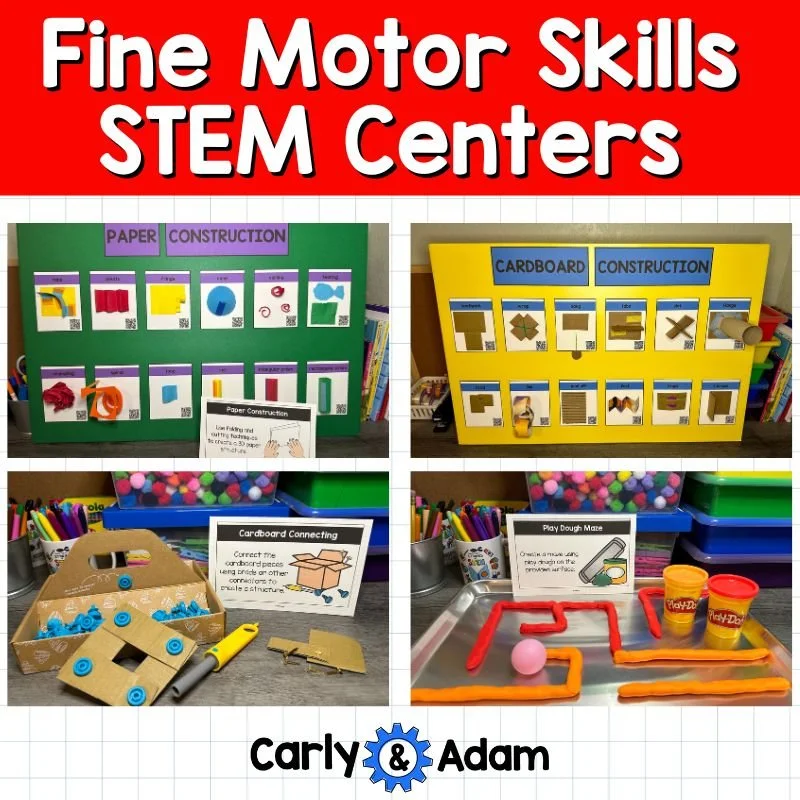
Fine motor skills STEM centers featuring paper and cardboard construction, cardboard connecting, and a play dough maze. Image Source: Carly and Adam’s Upper Elementary Fine Motor Skills STEM Centers.
Students rotate through a variety of engaging activities that introduce useful building and construction techniques.
The 13 centers include:
Paper Folding
Cardboard Construction
Weaving
Cardboard Connecting
Tying Knots
Paper Construction
Paper Airplanes
Cardboard Cutting
Play Dough Maze
Cardboard Connecting with Tape
Tower Building
Braiding
Cardboard Saw
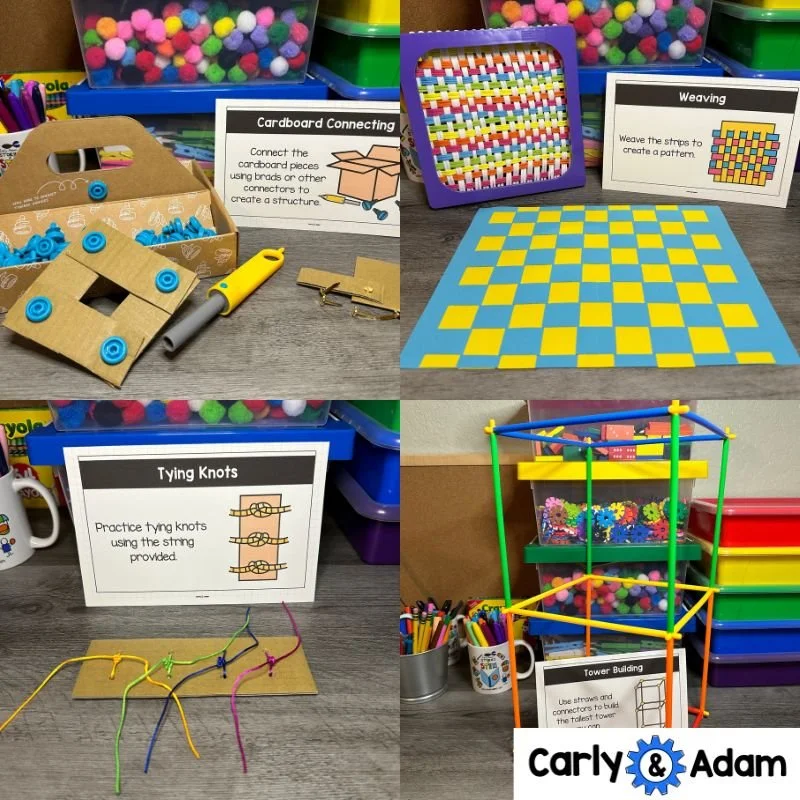
Each activity gives students a different way to practice controlling and manipulating materials. They may fold paper into origami shapes, weave paper strips into a pattern, braid yarn, trace and cut cardboard, or use straws and connectors to build a tall tower.
Build Fine Motor Skills Through STEM
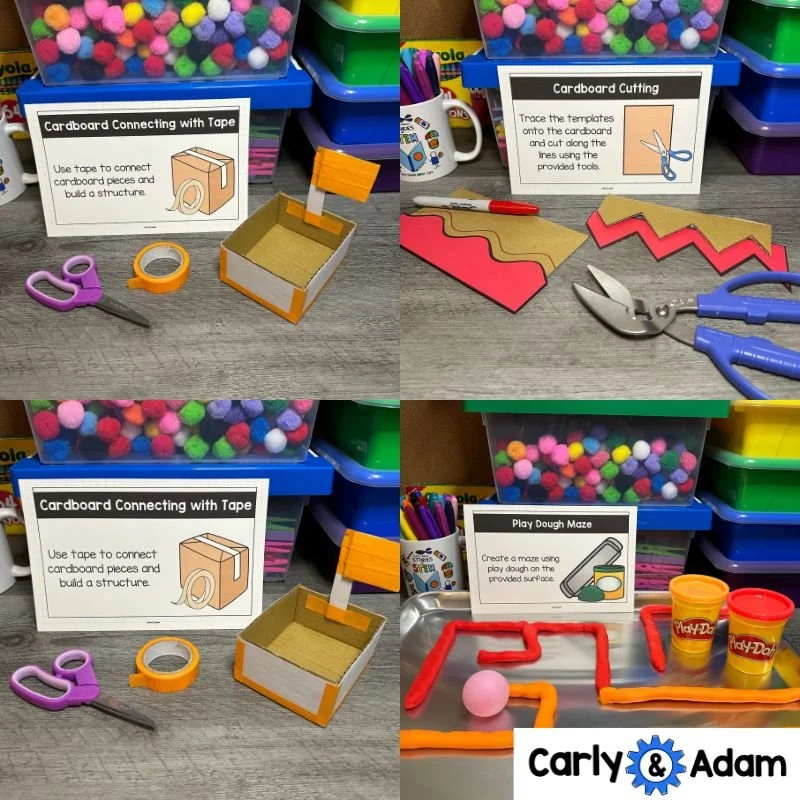
Fine motor skills STEM centers featuring paper and cardboard construction, cardboard connecting, cutting skills, and a play dough maze. Image Source: Carly and Adam’s Upper Elementary Fine Motor Skills STEM Centers.
Fine motor development does not have to be limited to handwriting practice. STEM activities provide a meaningful reason for students to use their hands carefully and precisely.
As students work through these centers, they practice:
Cutting along lines
Folding paper accurately
Tracing shapes and templates
Tying knots
Braiding yarn
Weaving paper strips
Connecting cardboard pieces
Applying tape and glue
Manipulating small building materials
Coordinating both hands to complete a task
These skills support students in the classroom while also preparing them for more advanced building and engineering challenges.
Encourage Creativity With Paper and Cardboard
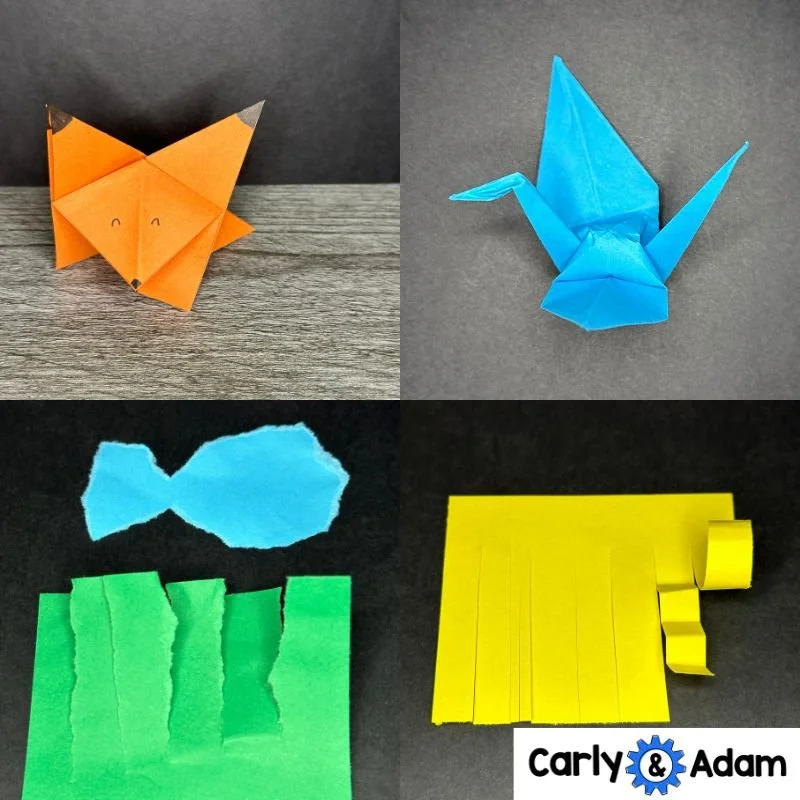
Carly and Adam’s Upper Elementary Fine Motor Skills STEM Centers.
Many of the centers use inexpensive materials such as paper, cardboard, yarn, tape, brads, and play dough.
Students learn that they do not need complicated materials to create impressive structures.
The paper construction center introduces techniques such as rolling, looping, curling, tearing, creating tabs, and making three-dimensional prisms. The cardboard construction activities allow students to experiment with flanges, hinges, slots, braces, folds, and different types of connectors.
Instead of copying one finished example, students can use these techniques to create their own designs. This keeps the focus on creativity, problem-solving, and experimentation.
Practice Productive Struggle
Fine motor skills STEM centers featuring paper and cardboard construction, cardboard connecting, and a play dough maze. Image Source: Carly and Adam’s Upper Elementary Fine Motor Skills STEM Centers.
Students will not master every skill immediately—and that is part of the learning process.
Folding an origami shape, tying a knot, or creating a braid may take several attempts.
These fine motor skills activities give students a safe place to practice productive struggle. They learn to slow down, follow directions, make adjustments, and try again when something does not work.
During the centers, remind students that success does not always mean completing a perfect final product. Discovering what does not work and improving a design are important parts of the engineering design process.
How to Use the STEM Skills Centers
Fine motor skills STEM centers featuring paper and cardboard construction, cardboard connecting, and a play dough maze. Image Source: Carly and Adam’s Upper Elementary Fine Motor Skills STEM Centers.
Each activity can be completed as a whole-class lesson or used as part of a center rotation.
When using the activities as centers, allow students approximately 10–15 minutes at each station.
Before beginning, organize the materials and review your expectations for using tools, sharing supplies, and cleaning up. Displaying a timer can help students manage their time and prepare to rotate to the next activity.
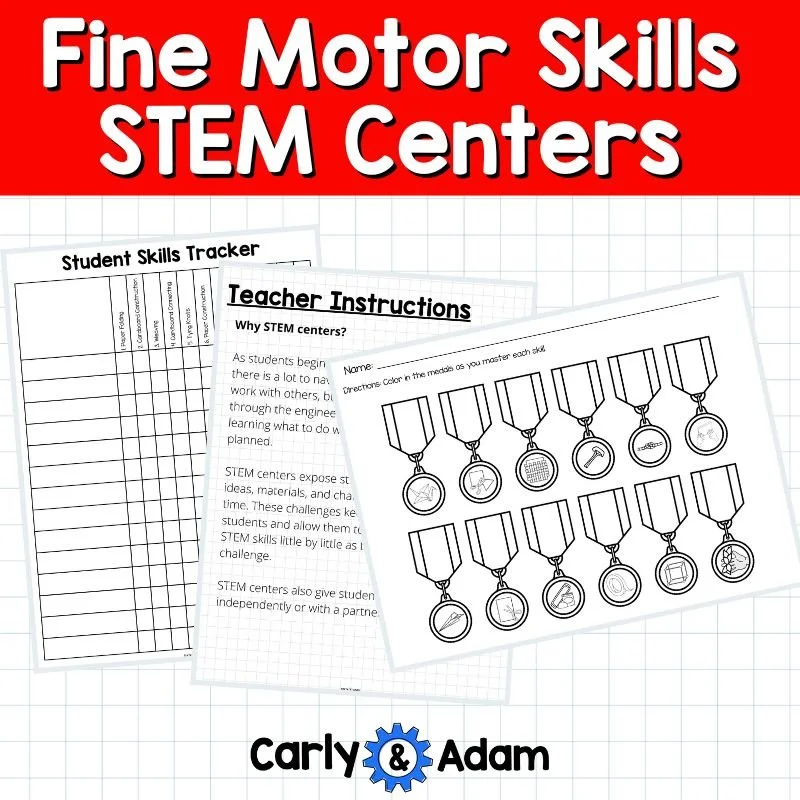
Students can complete the centers independently, with a partner, or in a small group. A student skills tracker is also included so children can color a medal as they master each new skill.
Prepare Students for Future STEM Challenges
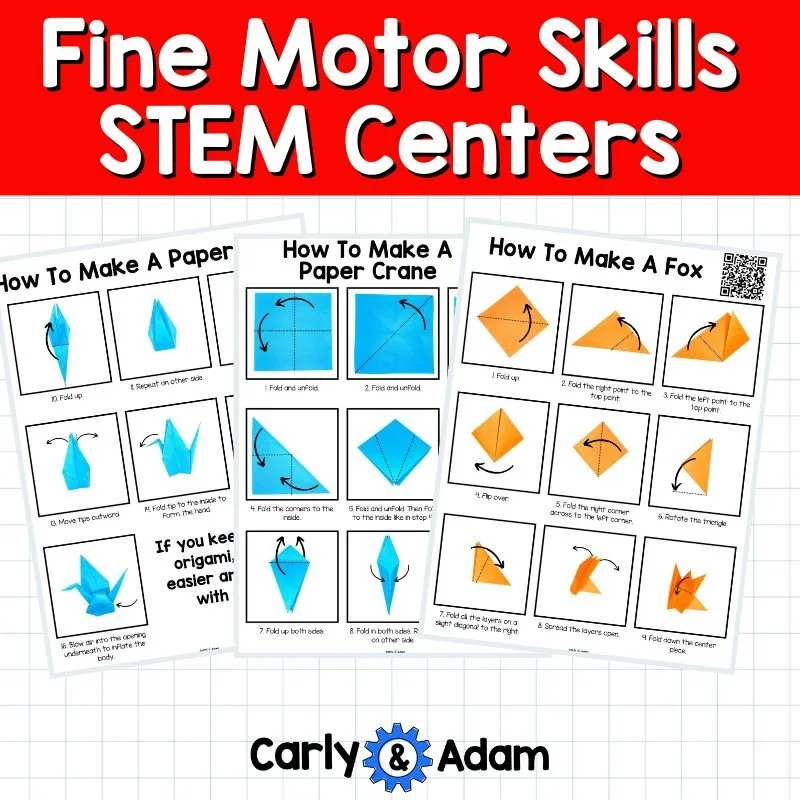
Fine motor skills STEM centers featuring paper and cardboard construction, cardboard connecting, and a play dough maze. Image Source: Carly and Adam’s Upper Elementary Fine Motor Skills STEM Centers.
Before students can confidently design and build, they need opportunities to explore materials and practice basic construction skills.
These fine motor skills centers provide that foundation.
By learning how to fold, cut, connect, weave, braid, and build, students develop skills they can use throughout the school year. They also gain patience, independence, creativity, and confidence in their abilities.
Whether you use them in a STEM lab, makerspace, classroom center, or early finisher station, these hands-on fine motor skills activities turn essential skill practice into an engaging STEM experience.
Where to find these STEM Centers:
Spend Less Time Planning and More Time Teaching!
Hands-on STEM learning starts here.
Find ready-to-use STEM Activities and Science Curriculum, Practical Professional Development, and a Community of Educators to help you teach STEM with confidence.
You can get all 1000+ STEM Challenges by Carly and Adam as part of the STEM Teachers Club. Save 30% on your first month/year using coupon Code: CarlyAndAdamBlog.