4 Objections to STEM Learning and What to Say in Response
The following is a guest post from Dr. Jacie Maslyk.
A fellow STEM educator recently reached out to me with concerns about a change in leadership at her school. She was worried that her new administrator might not see value in the STEM program that she has built over the last 2 years. “Everyone in my building hasn’t bought in yet and I need to get them to see past all the objections. I need my new principal to know that behind every objection is a student who is thriving.”

STEM/STEAM learning is a meaningful, hands on approach to integrated classroom instruction.Teachers and students who engage in STEM learning, whether within the regular classroom or in a designated STEM lab, know the benefits of this type of learning experience.
However, there are individuals who may not believe that this is an appropriate learning pathway. Some parents, administrators, or even other teachers, may present objections to why STEM learning shouldn’t happen in your school. Here are some common objections, along with your possible rebuttal, as a STEM learning advocate.
Your Honor, I Object!
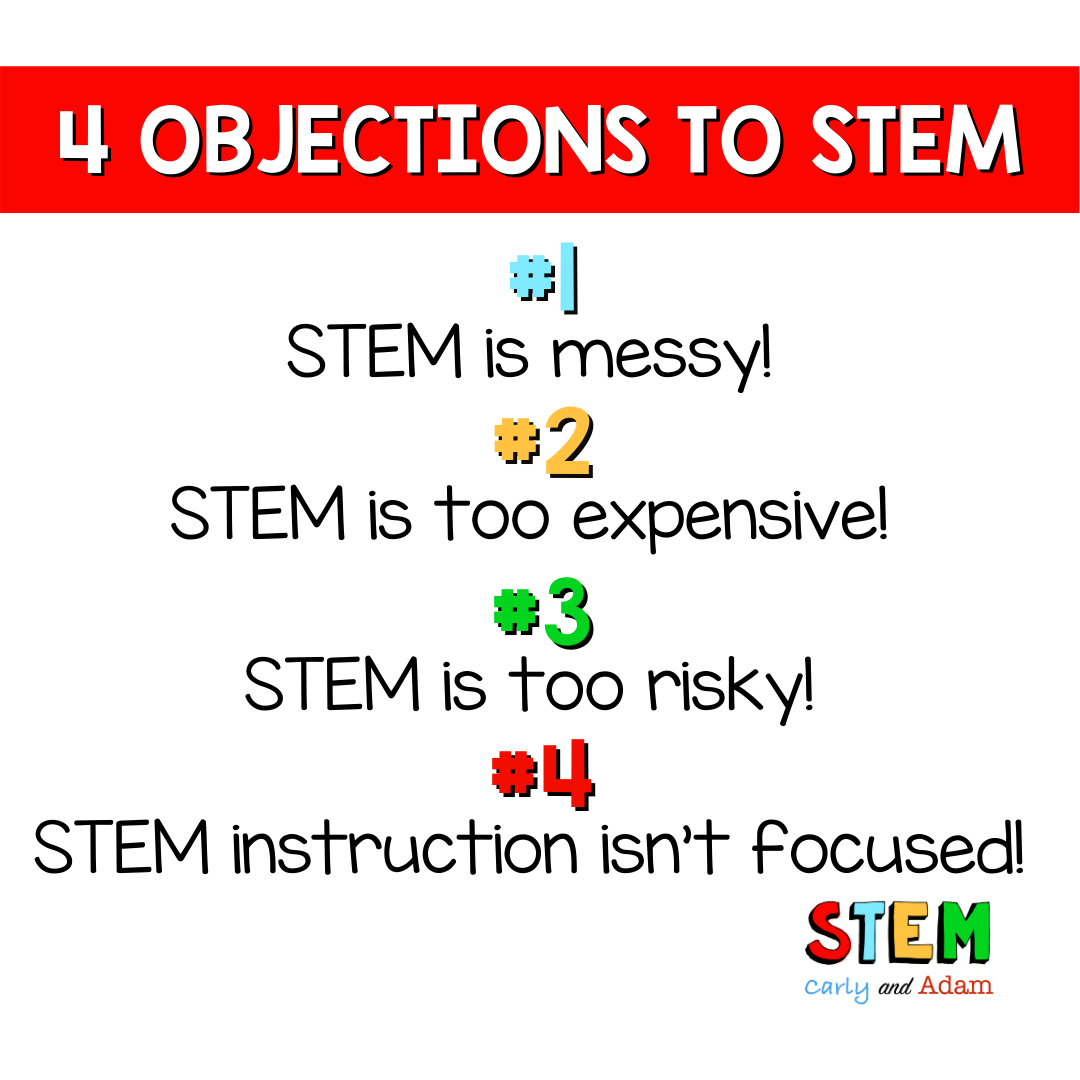
OBJECTION #1
STEM is messy.
Well, yes it is, but that is why kids love it! STEM activities can include lots of different materials and some can be messy. Whether your students are building with cardboard or experimenting with a new slime recipe, this learning can get out of order. However, it is also important to recognize the benefits of this learning format.
When other subject areas are more focused on paper and pencil tasks, reading books, or learning about content through a device, STEM allows learners to get dirty and learn by doing. This active approach to learning gives students the chance to try things out and tinker in a way that leads to new learning.
OBJECTION #2
STEM is too expensive.
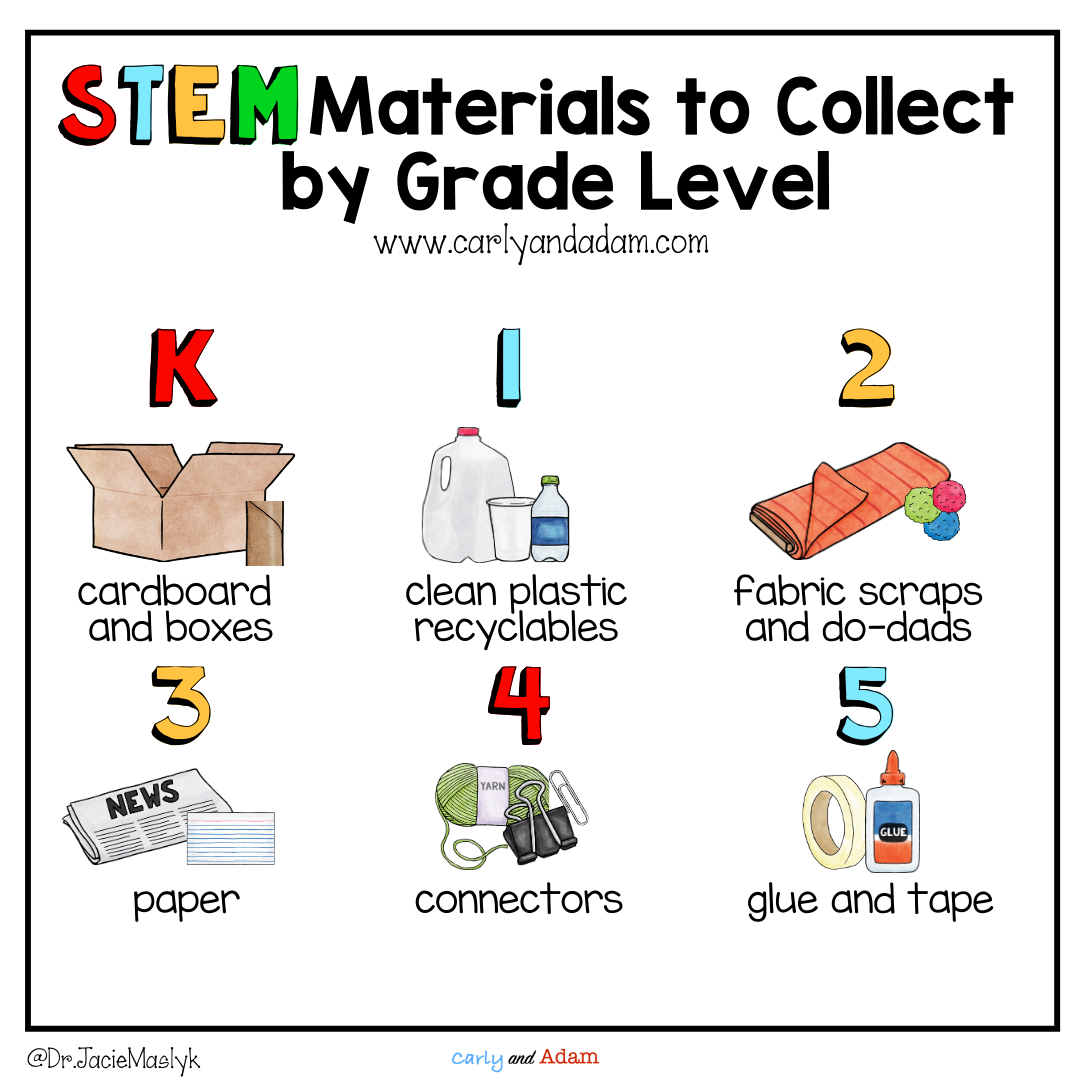
There are certainly items in the STEM space that can be costly, but there are tons of ways to engage in meaningful learning with low cost or no cost items. Don’t let the budget be a barrier to meaningful learning for students.

Create a donation plan.
How will you request and accept donations for your STEM program?
Will you have donation bins in your school lobby?
Will grade levels be asked to provide specific items?
Will you set up an Amazon Wish List or Donors Choose site to acquire materials?
How will you reach out to community members or local businesses for items that they might donate?
Big fancy equipment can be an exciting addition to your STEM space but students do not need 3D printers and laser cutters to build a STEM mindset and learn essential skills in science, technology, engineering, and math.
When our district opened its first space. We did it for under $1,000. Spending some money on paint for the walls and the installation of a Lego wall, we invested money in storage bins, art supplies, and a few task-specific items. (We started with some Makey-Makeys, Spheros, and K’Nex, since these connected directly to existing parts of our curriculum.) You don’t need to spend a lot of money on STEM. Start with the things that most interest your students and build from there.

OBJECTION #3
STEM is too risky.
STEM instruction can be a risk. It can represent an instructional risk that the teacher takes as they offer open-ended design challenges and exploration opportunities for students. These types of learning experiences may not have one set outcome, but rather outcomes only limited by the imagination and problem solving abilities of our students.
That type of risk is one worth taking as students learn and grow in classrooms where they are provided voice and choice in collaborative, creative thinking processes.

It can also be risky for students as they share new designs and ideas with others, demonstrating flexibility, perseverance, and vulnerability. Fostering these skills will build a growth mindset for students that will benefit them far beyond the STEM classroom.
Keep in mind there are also safety risks that need to be addressed. Whether using soldering irons or hot glue guns, students will need to learn how to make safe choices and use tools appropriately in the STEM space so that risks can be mitigated.
Be sure to have set procedures for safety and expectations so that anyone with objections to STEM learning will see that you have thought through all necessary aspects to keep students engaged and safe while they are learning.
OBJECTION #4
STEM instruction isn’t focused.
Walking into a STEM classroom for the first time, it might look busy, sound noisy, or even feel chaotic. Look closer and you will see students who are busy working on their designs and locating materials they need.

It may sound noisy because students are talking about the problems they are working to solve. They are collaborating with their classmates, asking and answering questions. It may look chaotic to those on the outside who may value students sitting in their seats and teachers in front of the class teaching.
STEM instruction may not look as if it is focused on one topic, project, or standard… and it may not be. Students may be working on a number of different standards that span multiple subject areas. This shows students that what happens in math impacts science and art and that engineering can be enhanced through technology. The interrelated nature of these topics become clear when students are working on something that appears to be architectural for example but students are using math to measure, technology to research, and art to create something aesthetically pleasing.

Present Your Evidence
Not everyone you encounter is going to support instruction that may look different from what they are comfortable or used to doing. While they may share their objections, you can respond by presenting your evidence. Invite them into your space. Share student work. Demonstrate collaboration and integration across subject areas. When you have evidence to support the value of your work and of student learning, the objections to STEM will no longer be relevant.
Case closed.
Join our FREE Facebook group Elementary STEM Teachers with Carly and Adam! Learn more about how to incorporate STEM in your classroom or at home and collaborate with other STEM teachers! JOIN NOW!

We hope you have found this blog post helpful. To stay connected with Carly and Adam's teaching tips and classroom freebies be sure to follow us on Facebook, Pinterest, Teachers Pay Teachers, and subscribe to our blog!