
3 Ways to Unlock Creativity in Teachers and Students
The following is a guest post from Dr. Jacie Maslyk. You can watch her Video Session on this topic in The Elementary STEM Teachers Club Membership.
When I’m getting ready to write, (my primary creative outlet), I head over to my comfy chair and sink in. If it’s a nice day, I go outside onto the deck where I can enjoy the fresh air and sunshine. I don’t use headphones or play music. I like it quiet. If there’s some noise outside, that’s ok, but I tune that out to concentrate on my process.
My friend Jeff prefers to work in a busy location with a noisy buzz in the background. He likes to see people around him, moving, working, engaging. Sometimes he throws on his headphones and taps into this playlist. He chooses songs that inspire and motivate him. He says that the activity and noise builds momentum and motivates him to keep working.
Despite us both feeling that we are creative individuals, we enter into our creative processes in very different ways. I recently reached out to my #PLN on Twitter and asked them about their preferred environment when they are creating.
Whether writing, sketching, building, or making, 62% of the individuals who responded to the poll preferred a quiet and calm environment, while the other 38% liked some kind of noise.
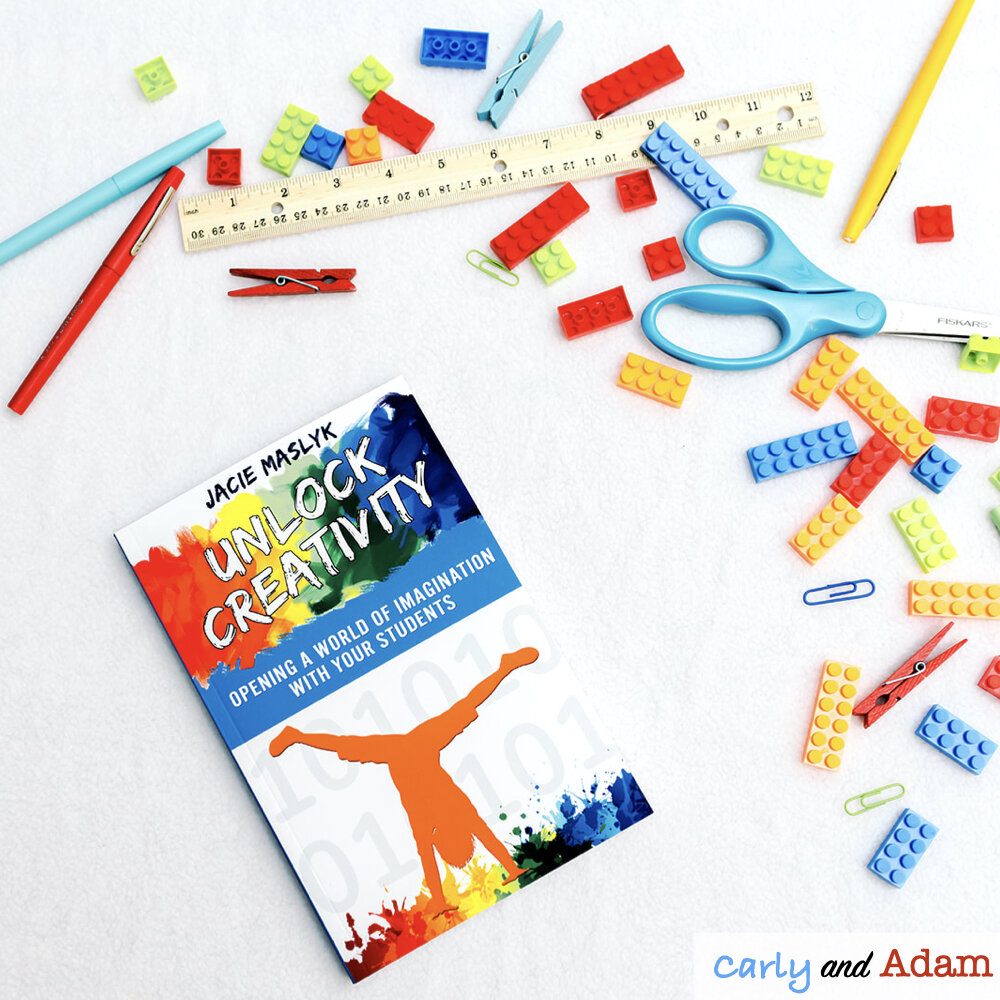
Unlock Creativity: Opening a World of Imagination with Your Students By: Dr. Jacie Maslyk
1. Design an Environment that Supports Creativity.
What are the conditions that support your creativity? Everyone is different. The way that we enact our creativity feels unique for each individual. How do we reflect that awareness within our classrooms? Do we design learning environments for students that offer flexibility and choice?
Think about the way that you set up your classroom. In a traditional face-to-face model of instruction, we ensure that all students have access to a variety of materials in the classroom. We organize materials and provide supplies that offer creative exploration. That might be in the form of an “art center” or a “maker corner”. It might be a shelf or a bin with markers, crayons, Play-Doh, paint or other materials for learners.
This became a challenge when remote learning impacted all schools. Not all families have access to creative materials at home. Thinking ahead, we may need to consider ways to support student creativity at home and ensuring that every learner has access to the materials they need to create.
2. Develop Creative Strength and Agility.
Our creative abilities aren’t set. I believe that we can strengthen our creativity just as we can strengthen our physical muscles. While we might not feel that we have innate creativity in a certain area, we can take steps to build our creative capacity. We can build creative strengths and agility in the classroom by activating varied skills--thinking, designing, making, and writing. We can build capacity in our students by providing opportunities for building, creating, performing, planning, and exploring.
We can can build these creative muscles if we take steps each day to infuse creativity into our daily routine. It doesn’t take giant sweeping acts of creativity to be creative. We can use our imaginations in small thoughtful ways at home and at school. When I say “we”, I mean ourselves as educators and leaders.
When we flex our creative muscles, we are modeling for our students the importance of wondering, trying, and reflecting. We can take steps towards building our creative capacity right alongside our students. Together, we can unlock creativity in ways that will support learning in the classroom, as well as beyond the school walls.
3. Take Small Steps.
In my book Unlock Creativity: Opening a World of Imagination With Your Students, I share seven keys to fostering creative thinking in your school. There are simple ways that you can embed creative learning opportunities that can activate student imagination. What can you do to get started? Do something playful. Explore something new. Share ideas with others. Here are a few ideas for how to take these creative steps:
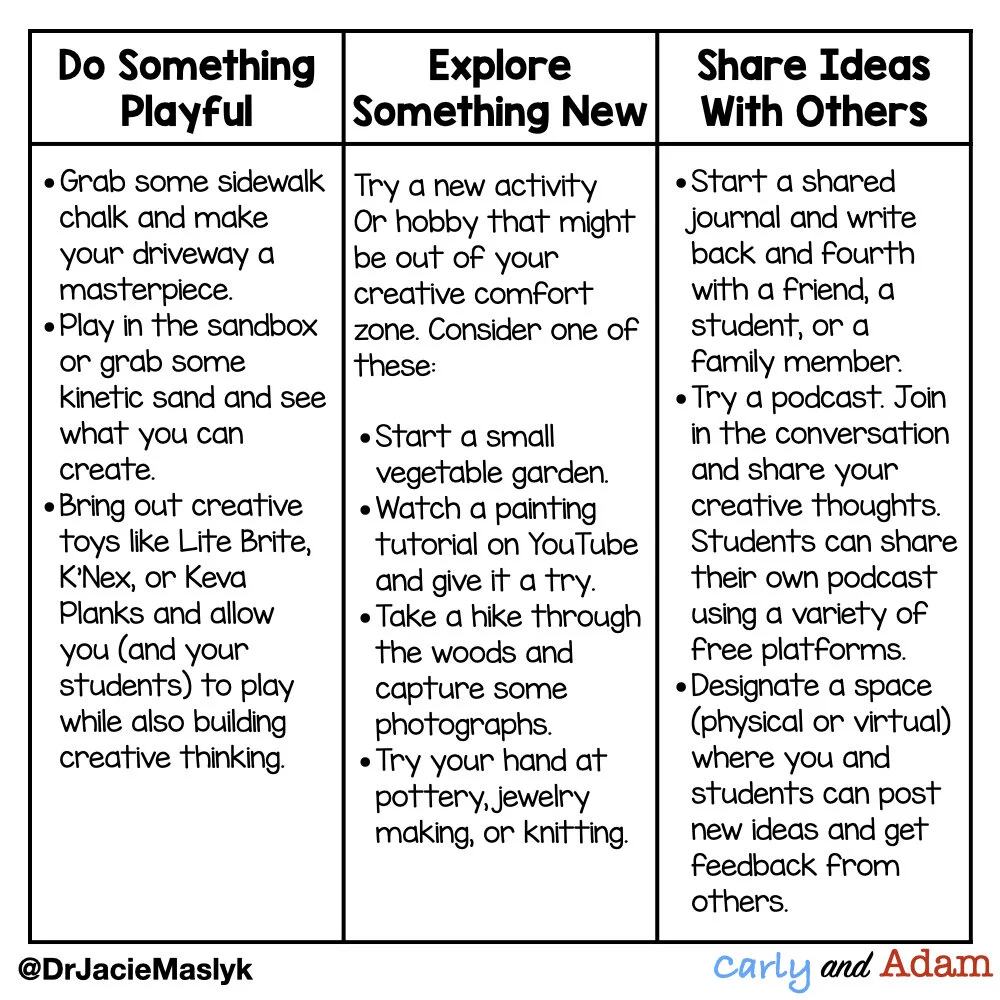
Get Creative!
If you’re ready to commit to building your creative muscles, start with setting the conditions that make you feel most creative. When you return to your classroom, ask your students about the conditions that help them to feel creative as well. Building your creativity can start with small steps. Commit to doing one thing each day. Take time to play, explore new things, and talk about new ideas with others. When you set aside time to do these types of activities, you will be amazed at the creative thoughts that come your way.
If you are looking for more creative ideas, check out the STEM Teachers Club Membership. I share a lot of simple ideas in the first workshop session on creativity. You can also check out my website www.steam-makers.com for more ideas on creativity, STEM, literacy, and maker education.
Want more Tips for Teaching increasing teacher and student creativity? Get access to the full training video when you join The STEM Teachers Club Membership!

We hope you have found this blog post helpful. To stay connected with Carly and Adam's teaching tips and classroom freebies be sure to follow us on Facebook, Pinterest, Teachers Pay Teachers, and subscribe to our blog!