
3 Tips for Teaching STEM Virtually
The following is a guest post from Dr. Jacie Maslyk.
As we all settle into this “new normal” in school, educators continue to search for the best tips and tricks to keep students engaged and active in their STEM learning. With science, technology, engineering, and math being hands-on subjects, navigating what STEM looks like may be a challenge. Whether learning from home or working in the classroom, this post will share some tips for teaching and learning STEM in 2020.

I am certainly a “STEM Enthusiast,” but I don’t claim to have all the answers when it comes to classroom practices, so I reached out to my professional learning network on Twitter and asked them. Within just a few hours, I had responses from across the globe--teachers posting ideas from their classrooms (home and school), STEM experts sharing their best go-to resources, and authors offering their suggestions. There is real power in the collaborative connections that you can establish on social media networks. Knowing that you can connect with experts in the field at the click of a button is an important tip. If you are on Twitter, be sure to follow all of the STEM educators that are mentioned in this post.
#1 Know Your Learners
In order to teach anything effectively, you need to know the students you are working with. This means understanding their strengths and needs as well as knowing their interests as individuals. When you know your learners, you will design instruction that will meet their needs and push their thinking forward. Know what your students can handle and provide them with a balance of structure and ownership. Know their preferred learning styles so that you can build on their strengths but also stretch their areas of need.
Here are some other tips from STEM educators:
Erik Murray @MrSTEmurray shared:

Whatever your expectations are, cut them in half. This is stressful for everyone. Don't give extra work. Mental health- yours and your students should be your number one priority.
Ms. McKenzie @orm2023 wrote:

Know your learners and how they learn. Scaffold content so that it doesn’t become confusing to learn new material. For example, 504 students would have extended time to complete their assignments, but instead of 10 hwk problems, only assign 5.
Emily Hunt @HowToSTEM shared:

My best tip for virtual #STEMeducation is to keep it simple & avoid ‘right’ or ‘wrong’ answers (fear of failure=barrier to learning).
Students should:
a) quickly grasp what they need to do
b) have the resources in their home already
c) have one or two open-ended questions to explore
#2 Know Your Resources
There are tons of STEM resources out there, but searching for the right one can be time-consuming. Having several “go-to” resources makes life a little simpler. This might mean that you have a few websites that you consult regularly. It might also mean that you have several educators in your PLN that you go to for ideas and inspiration. Another great place to go for collaboration is Facebook groups like the STEM Teachers Club. When you surround yourself with quality resources and quality educators, it makes the responsibility of finding the right resource easier than you can imagine.
David Lockett @DavidJLockett suggests this NASA resource for STEM educators Explore STEM resources for Informal Education. As an Albert Einstein Fellow at NASA, David frequently shares STEM-related resources on social media.
Another Twitter friend Mike Ransford @MikeRansford recommends that educators have a template for the engineering design process that you can share out through Google Classroom. Make sure it has time and date guidelines. Students are really struggling with organization and time management. Here’s one example of a template you might use or you can create your own.
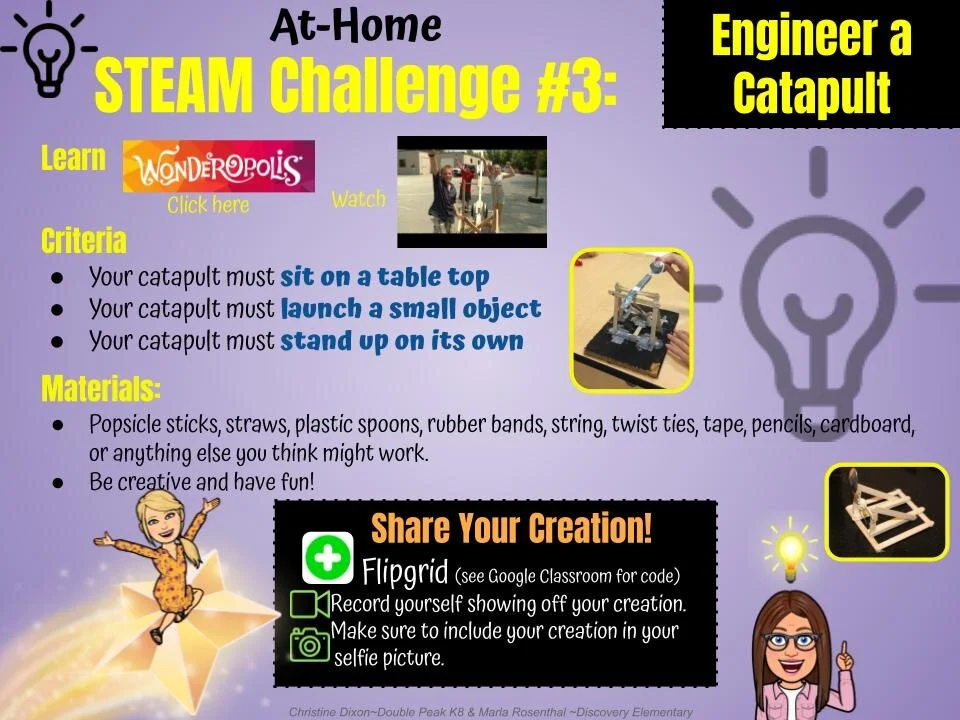
Candace Buchanan@candytechideas shared these at-home #STEAM Challenges from @christinekdixon! These are amazing and perfect for our #remote learners! Click here to view the lessons.
#3 Know How to Spark Engagement
Some students become engaged in STEM when they get to work with interesting materials. With others, engagement is sparked when students get to collaborate. Other learners need to be more active. When you know your students and have access to quality resources, you will be well-equipped to spark student engagement.
Engaging students in the engineering design process and other aspects of STEM learning provides opportunities for collaboration and feedback from others. This important part of the learning process is echoed by educator @isteamprof who offers her best tips for teaching: Focus on the process, not the product. Get kids engaging in peer review.
Educator Chris Woods @DailySTEM regularly shares his Macguyver-like knowledge of STEM on social media. He is also the author of a new book on the topic. He suggests:
Get kids to find making supplies at home and start a "STEM" or "Creating" kit...
Possible supplies are blocks, scissors, pipe cleaners, aluminum foil, recyclables, broken toys, and more!
When it comes to maker education materials and supplies at home or at school
Kristina A. Holzweiss is #HackingSchoolLibraries @lieberrian agreed tweeting “Recyclables = Sustainability!”
Using recycled materials to engage in STEM learning at home is a great way to get students thinking creatively about the materials around them.
Rachelle Dené Poth |@ThriveinEDU #ARVR #AI @Rdene915 tweeted
“Just read a blog post from @spencerideas about scavenger hunts and doing some of those for Maker Ed or STEM.” Spencer shared some ideas on Scavenger Hunts as a way to engage students in divergent thinking at home using household materials. If you are looking for a technology twist to the typical scavenger hunt, check out GooseChase suggested by @annavblake.
Teaching STEM in class or virtually can be a challenge. It requires that you know your learners, know your resources, and know-how to engage students in learning. Take a look at the resources suggested within this post and don’t forget to follow your favorite STEM educators on social media.
Join our FREE Facebook group Elementary STEM Teachers with Carly and Adam! Learn more about how to incorporate STEM in your classroom or at home and collaborate with other STEM teachers! JOIN NOW!

We hope you have found this blog post helpful. To stay connected with Carly and Adam's teaching tips and classroom freebies be sure to follow us on Facebook, Pinterest, Teachers Pay Teachers, and subscribe to our blog!