
3 Tips for Starting a STEM Lab
The following is a guest post from Dr. Jacie Maslyk.
Creating a new unit plan, designing a differentiated lesson, or creating a virtual field trip for students--all of these tasks require time and effort on the part of the teacher. Looking for the right resources, exploring digital content, and making sure it is all grade-level appropriate, these describe the work of teachers when it comes to quality instruction.
Imagine now, that your principal has come to you and asked that you take all of your knowledge and skills and lead the efforts to start the school’s STEM space. (Remember, it doesn’t matter what you call it, the STEM, STEAM, STREAM, space, lab, studio, etc., it all comes down to meaningful learning opportunities for students.) This is a monumental task! It goes beyond the resource finding and lesson planning process. It requires a great deal of imagination and a lot of organization.
Whether you are starting a brand new space in your school or you are looking for tips to re-energize your current space, this post will share 3 ideas to get you moving in the right direction.

1.) Proceed With Caution
It is easy to get quickly caught up in all the “shiny things” related to a new space--painting the room, getting the right furniture, and buying all the stuff. Don’t get me wrong--those are fun to plan and coordinate, but I urge you to maintain your focus on the WHY. What is the purpose of your space? What grade levels will it focus on? What are the areas of interest? What curricular content should be supported in the space?
These are likely questions that you cannot (and should not) answer on your own. Connect with a team and brainstorm the WHY of your space. Why is the space being created? Why should learners want to visit there? Why is it an important part of student learning?

To-Do List: One idea to get to the heart of this is to survey your students. Find out the things that they are interested in and then consider ways that your space can support that work. Ask them if they are interested in robotics and coding or building and engineering. (Check out this blog by Jorge Valenzuela for great ideas on coding and beyond.) Do your students like hands-on maker tasks or do they like experiments and inquiry activities? Maybe your students are into circuitry and electronics or maybe they prefer design and inventions. Whatever the case may be, you can design a STEM space that will meet their needs.
2.) Look For Supports
Starting up a new STEM space cannot be accomplished alone. Seek out a team to help you. Create an advisory group to share ideas. Find partnerships with local organizations, companies, and groups. They may be able to provide funding, materials, or mentorships to advance the work of your STEM space.
Determine your donation strategy. Yes, I said strategy. Will you post needed donations to your school website or push it out through social media channels? Will you ask homeroom parents to donate specific items only or are you open to any donations at any time? Having an ongoing list of materials that you will go through quickly is smart if you are managing a new STEM space. Check out what one elementary school asks of their grade level parents:
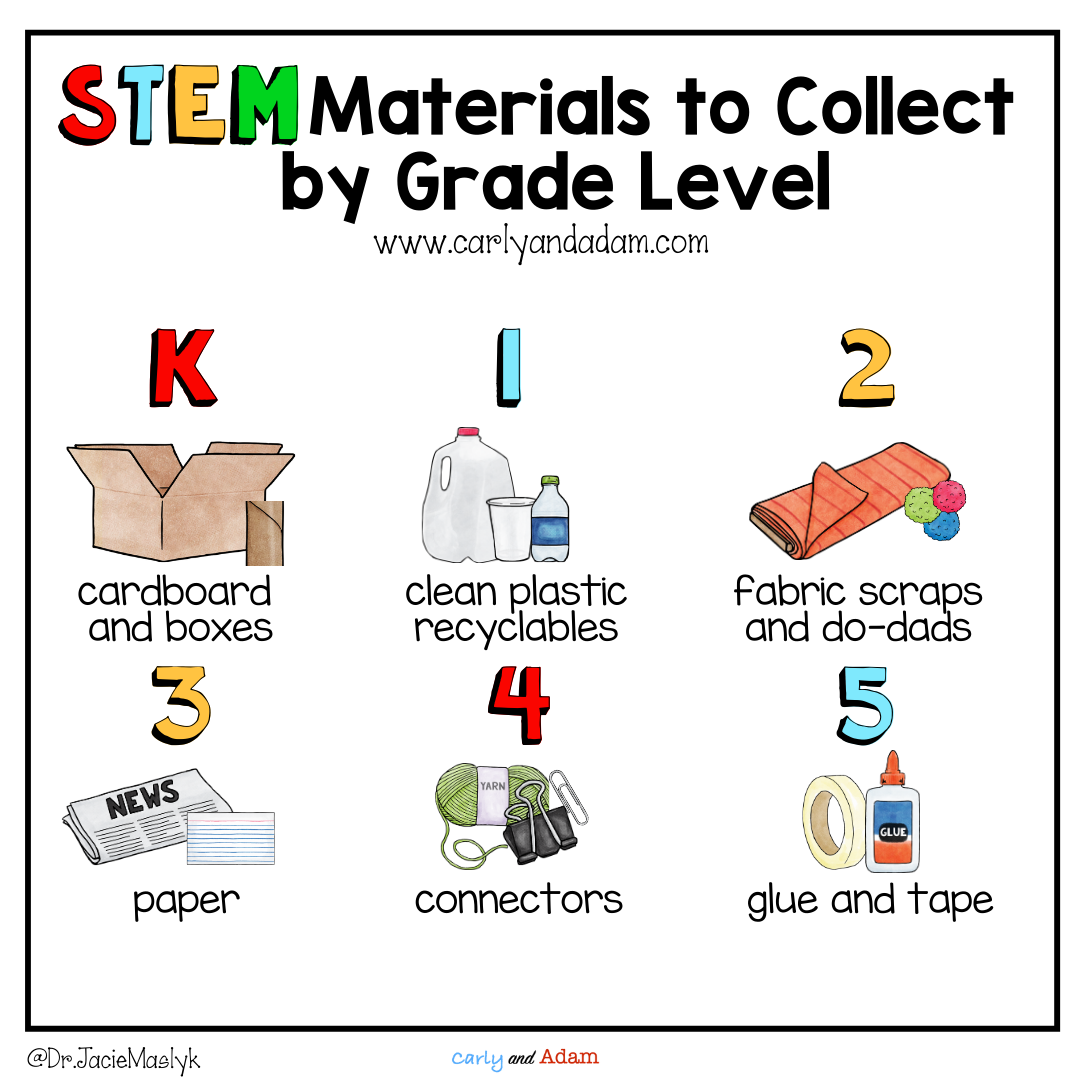
You might also keep a “wish list” posted in your school and on your website. This might be a list of more costly items that would be nice to have, but are not essential to your day to day work. Small electronics and robotics toys might be on your wish list. Building kits, tools for circuitry, or 3-D printing might also make the list. If you are just starting out, you don’t have to have all of these items at first. You can build the supplies in your space over time. Your needs will evolve as students engage in more STEM learning experiences.

Look for supports within your school community and explore ways they might help. Can you tap into local businesses to donate specific items? For example, pizza boxes from a local pizza shop can turn into a tabletop green screen for students. It’s also a great way to store student projects. Your local grocery store might be willing to donate plastic or paper bags which can have many uses in the STEM space. Check out this post for more ways to source cheap or free materials for your STEM space.
To-Do List: What other local resources can you leverage to help students in your STEM lab? Create a list of local businesses or organizations and think about the ways they might be able to support your work.
3.) Leverage Social Media
Build your network on social media--whichever platform works best for you. If you are on Facebook you can join Facebook groups like the Elementary STEM Teachers Club to collaborate with other teachers. If you enjoy Instagram, you’ll find great images and ideas for your STEM space. If you are on Twitter, there are lots of educators who are actively posting the great things they are doing in their schools. Not only will this provide some inspiration, but it will also give you connections with other educators who are focused on advancing STEM learning like you!

Join our FREE Facebook group Elementary STEM Teachers with Carly and Adam! Learn more about how to incorporate STEM in your classroom or at home and collaborate with other STEM teachers! JOIN NOW!

We hope you have found this blog post helpful. To stay connected with Carly and Adam's teaching tips and classroom freebies be sure to follow us on Facebook, Pinterest, Teachers Pay Teachers, and subscribe to our blog!