
3 Things Teachers Can Do To Support STEM at Home
Making has grown in popularity over the years and makerspaces have become commonplace in classrooms, libraries, and schools.
As teachers rethink how they teach during this time of remote and socially distanced learning, they are also having to reimagine the traditional makerspace.

One way that teachers can support families with STEM at home is by providing them with the resources and tools for creating a designated hands-on learning and making space.
The following post shares 3 ways teachers can support families in setting up a makerspace at home.

1.) Finding a Space
As teachers we know that not all families have access to the same resources. Fortunately, families don’t need to devote an entire room to making or purchase expensive supplies in order to engage their students in this type of hands-on learning.
For families that are short on space, one option is to set up a makerspace cart or bin to store supplies. With a cart or a bin supples can be moved to a designated working space such as the kitchen or dining room table. When the project is complete or ready to be stored the supplies can easily be packed away for later use.

2.) Locating Materials and Supplies
Once families have established a maker area, cart, or bin what materials do they need to stock the space with?
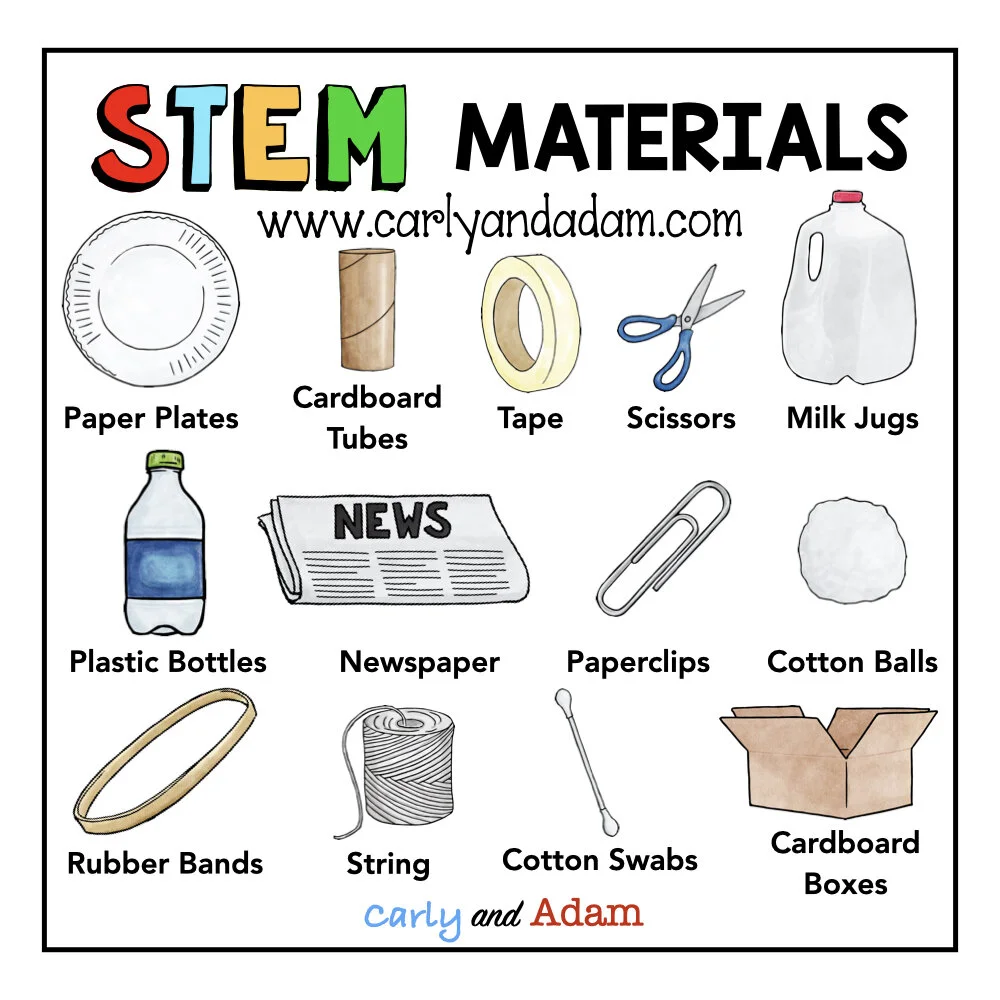
Just like space is not a necessity for creating a makerspace, fancy materials are not a requirement either. Start by encouraging families to stock their makerspaces with recyclables. Students can complete projects using items such as empty cereal boxes, paper towel and toilet paper rolls, and empty milk jugs.
In addition to recyclables students will need adhesive materials such as tape or glue and scissors. They may also want some basic art supplies to decorate their creations with such as makers, crayons, or paints. Many of these items can be found at the dollar store.
3.) Projects to Try
Now that your families have a designated maker area at home that is stocked with supplies, what projects should they work on?
As you choose projects you will want to keep in mind the resources that your families have available at home. Keep the material list simple. The following blog post has a list of project ideas that involve just paper and tape.
Join our FREE Facebook group Elementary STEM Teachers with Carly and Adam!
We hope you have found this blog post helpful. To stay connected with Carly and Adam's teaching tips and classroom freebies be sure to follow us on Facebook, Pinterest, Teachers Pay Teachers, and subscribe to our blog!