
What is the Engineering Design Process and How Do You Teach It?
The following is a guest post from Dr. Jacie Maslyk.
A classroom of second graders listen attentively as their teacher asks for their help. “I had a rough morning and I’m hoping you can help me. My alarm clock didn’t go off this morning, so I was running late. Then, I realized that I forgot to pack lunches for my kids, so I had to hurry up and throw those together.
Since it snowed last night, my car was covered in snow and I couldn’t find my snow scraper. Ugh! Then I spilled my coffee as I walked into the school building. Can you design something that can help me solve one of my problems?”
The students then spent some time talking and brainstorming. A buzz arose in the room as students started sketching ideas and sharing their thoughts. As ideas developed into more concrete plans, students chose one of their designs and began to build prototypes. Some students chose to build with cardboard. Others worked with building bricks to bring their ideas to life.
After some work time, the class got back together to share their prototypes and get feedback from the teacher and classmates.

These students are beginning to work through the engineering design process.
They are engaging in collaborative dialogue and creative thinking about problems and working to solve them. They are tapping into their imaginations as they design items or processes to help others. Not only do these types of learning scenarios push students to think differently, but it also allows them to increase their communication skills while solving real-world problems.
The engineering design process is a cycle of thinking, working, and sharing that is used by engineers, inventors, and anyone looking to solve a problem.
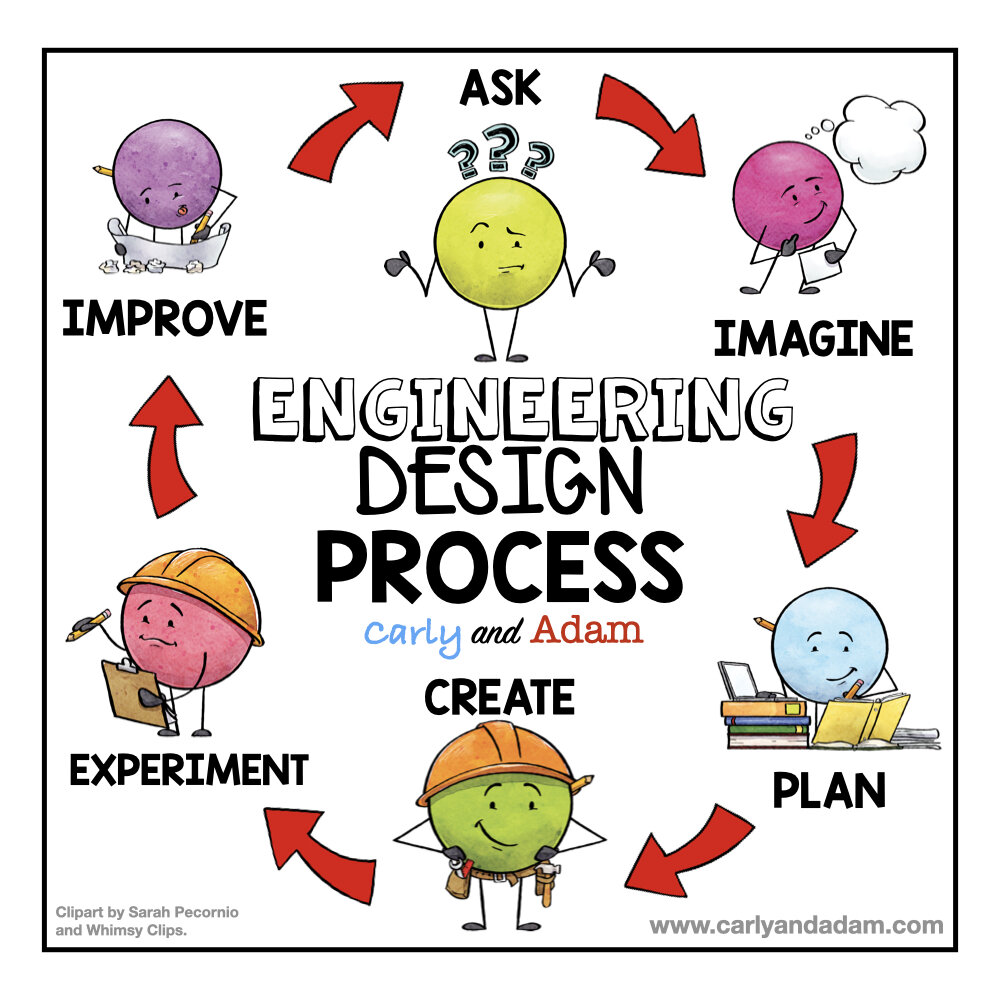
Engineering Design Process
There have been different steps included in various versions of the engineering design process. Different authors and educators may define and label these parts of the process slightly differently. Most include 5-8 steps, including some degree of thinking, planning, building, testing, and sharing as a part of this cycle.
At the heart of it is the opportunity for students to engage in thinking and communication about a problem and potential solutions, then coming up with different designs to determine if that solution can work. Student engineers then build or create some object, process, or experience as a solution. The process is ongoing and may include the repeated movement back and forth between various steps.

Now let’s see how each step relates to the classroom scenario shared at the beginning of this post.
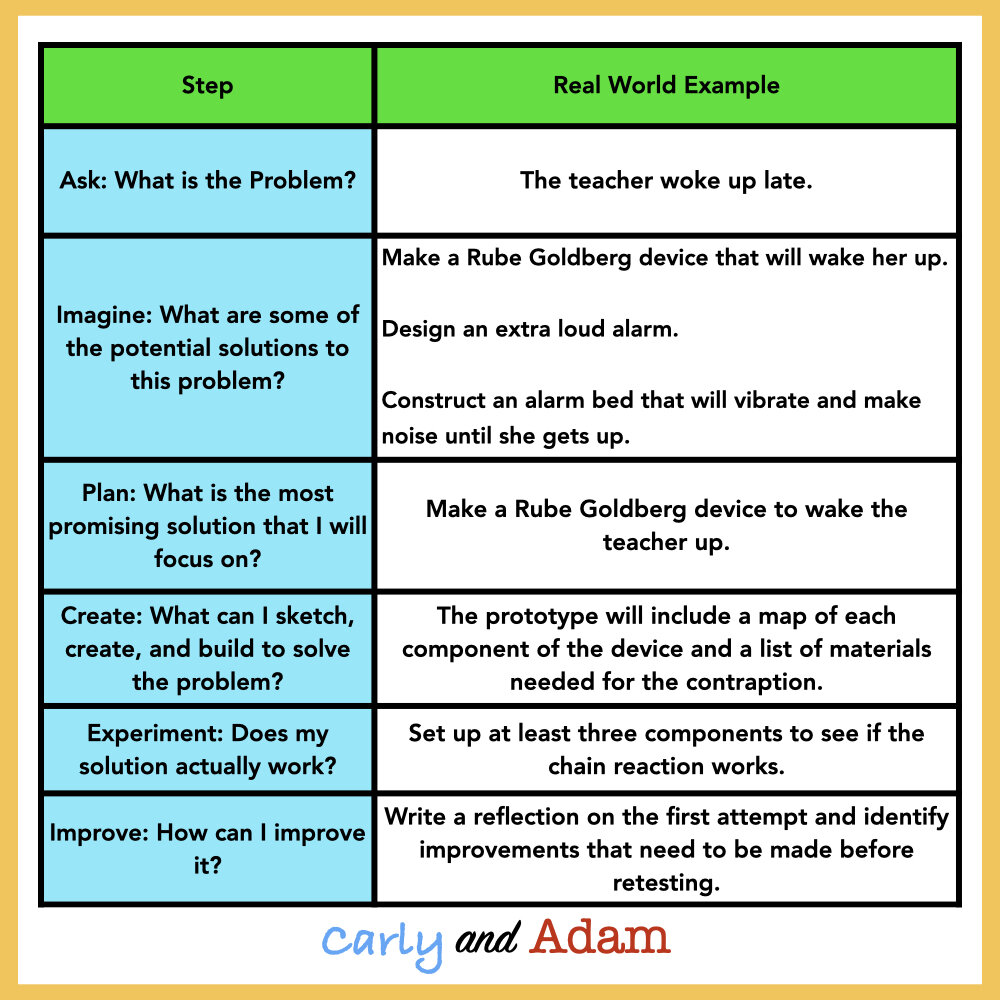
This scenario provides just one example of what this might look like in the classroom. Engineering design challenges can be created around scenarios like this one that you develop as a teacher, problems that your students find within their environment or within the stories you read together.

A great read-aloud selection, like Rosie Revere Engineer (and many other books), provide opportunities for young engineers to generate ideas and create something based on those ideas. Working through this process develops important skills for students including communication, collaboration, creativity, and critical thinking. Teachers can even incorporate these into lessons in ELA, math, or science classes. You can also check out these great mini clip charts and posters and other helpful resources to use in your classroom to support the engineering design process.

Ideas to Try Tomorrow
There are lots of ways to incorporate the engineering design process into your classroom tomorrow. Try some simple engineering challenges with students. These can be done virtually or in school with some basic materials and a little imagination.
Not ready to dive into a full challenge yet?
Start with some smaller steps like tinkering with new materials or practicing problem finding. Whether in kindergarten or even upper elementary, exposing students to the engineering design process will help them to build critical thinking skills that are needed in school and in life.

Problem Finding
Many students who are just starting into the engineering design process may struggle to identify problems to solve. Give them practice with “problem finding” through group brainstorming activities.
Ask them:
What are the great things about our school lunches?
What are some things that can be better?
What do you like about our school playground?
How would you improve it?
These conversation starters will allow students to begin thinking about the things that they interact with daily and how the engineering design process might help them to make it better.

Tinkering
If your students are not used to engaging in maker learning or hands-on tinkering, they may need some opportunities to try some low-stakes activities. Time to tinker means giving students different materials to explore in different ways.
Angela Stockman, author and designer suggests using loose parts as a way to engage students in creative writing.
She shares ideas for tinkering on her website. She offers the idea of tinker trays where students explore with found materials while they are working on their writing. Household materials like string or fabrics can be used, as well as found materials like rocks or pinecones.
Creative exploration of materials is a good first step towards developing innovative solutions to problems.

Taking small steps and using different activities like these will prepare your students for some of the work involved in the engineering design process in the classroom.
Some students will be ready to dive into any challenge, while others may need more support. No matter what level of implementation you and your students are ready for, the engineering design process is a great way to promote problem solving and creativity in any classroom.
Join our FREE Facebook group Elementary STEM Teachers with Carly and Adam!
Spend Less Time Planning and More Time Teaching!
Hands-on STEM learning starts here.
Find ready-to-use STEM Activities and Science Curriculum, Practical Professional Development, and a Community of Educators to help you teach STEM with confidence.
You can get all 1000+ STEM Challenges by Carly and Adam as part of the STEM Teachers Club. Save 30% on your first month/year using coupon Code: CarlyAndAdamBlog.