To Assess or Not to Assess STEM Challenges (Free Rubrics Included)
The following is a guest post from Dr. Jacie Maslyk.
If there’s one question that I’ve been asked over and over again when it comes to STEM and STEAM education it is, “How do you assess this type of learning?” Formal assessment is something I’ve always struggled with.
The idea that we are asking our students to take a risk in their learning, but then we are going to evaluate them in the process is conflicting.
I have concerns about our desire for them to persevere and create iterations of their learning, but yet, at some point, we have to grade the work they have done. Sometimes it just feels like we are creating a mixed message.
This is a dilemma many teachers are facing, especially those who are explicitly in STEM teaching positions and are told they must grade their students. It is not a content area that lends itself to tests and quizzes.
With its hands-on nature and exploratory processes, it is important to consider multiple ways to assess what students understand in STEM.
Let’s think about what we want students to know and be able to do when it comes to their work in STEM and STEAM.
What Should We Assess?
There are many things we can do to measure student learning within our STEM spaces (physical or virtual). We have to ask ourselves what is our purpose. Is the purpose of assessing because we want to measure growth or is it that we are required to provide a letter grade for a course or class? These two ideas are very different for me.
I want to know that students are learning, growing, and improving over time.
This can be determined through observations and conversations. We can ask them key questions to determine their understanding of concepts. We can watch students throughout the learning process and collect anecdotal notes.
Listening in on dialogue among learners allows us to hear how they are engaging with one another and what their problem-solving process is like. By doing these things as a teacher, we can be certain that quality learning is taking place.
On the other hand, if teachers are required to assign a letter grade or percentage to quantify student learning, that requires a closer look.
How might we use the knowledge that students are gaining in STEM in a way that translates to the school grading system?
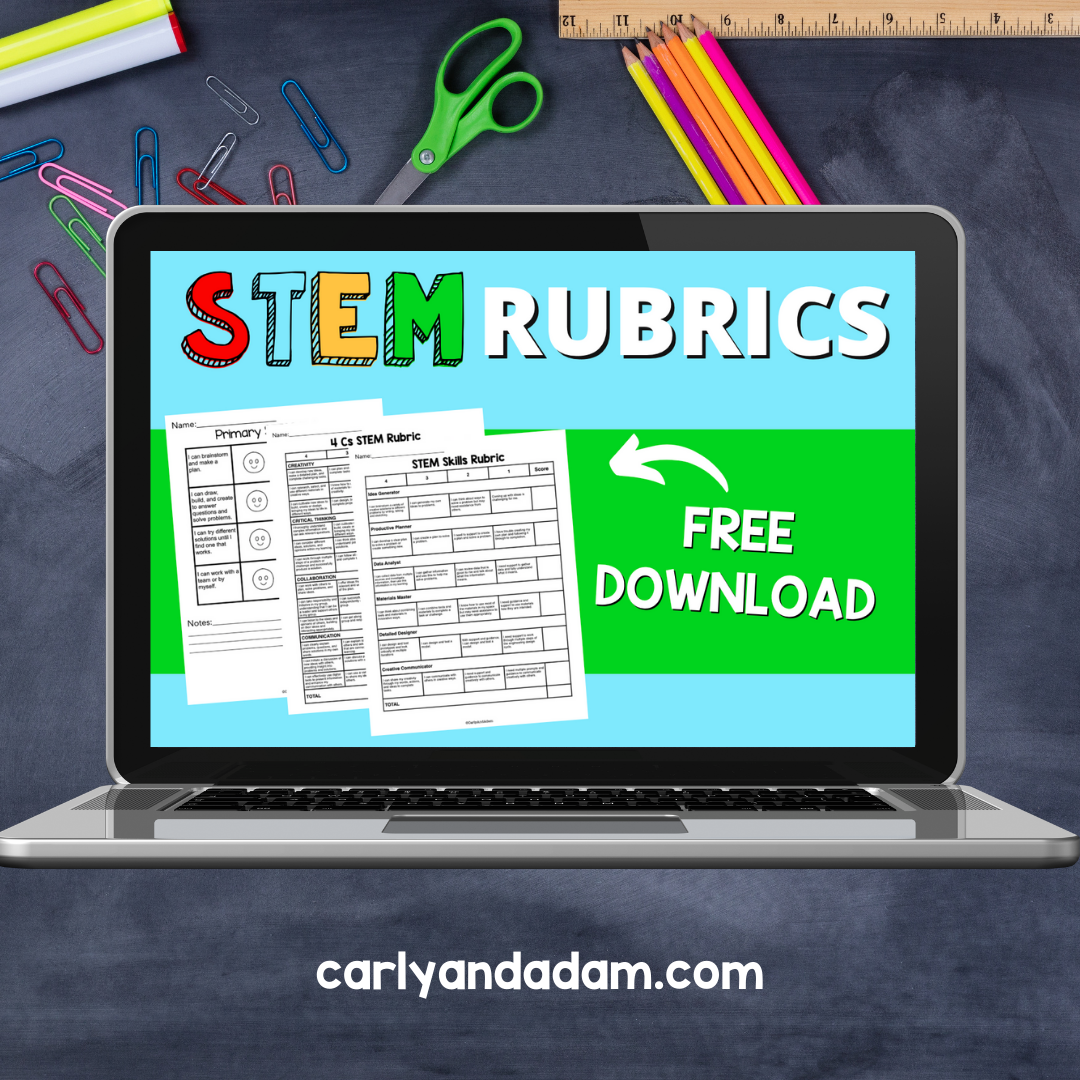
We can use rubrics and checklists to measure and document student learning. We can also design projects and incorporate student demonstrations as components of our assessment plan.
Assessing the 4 Cs
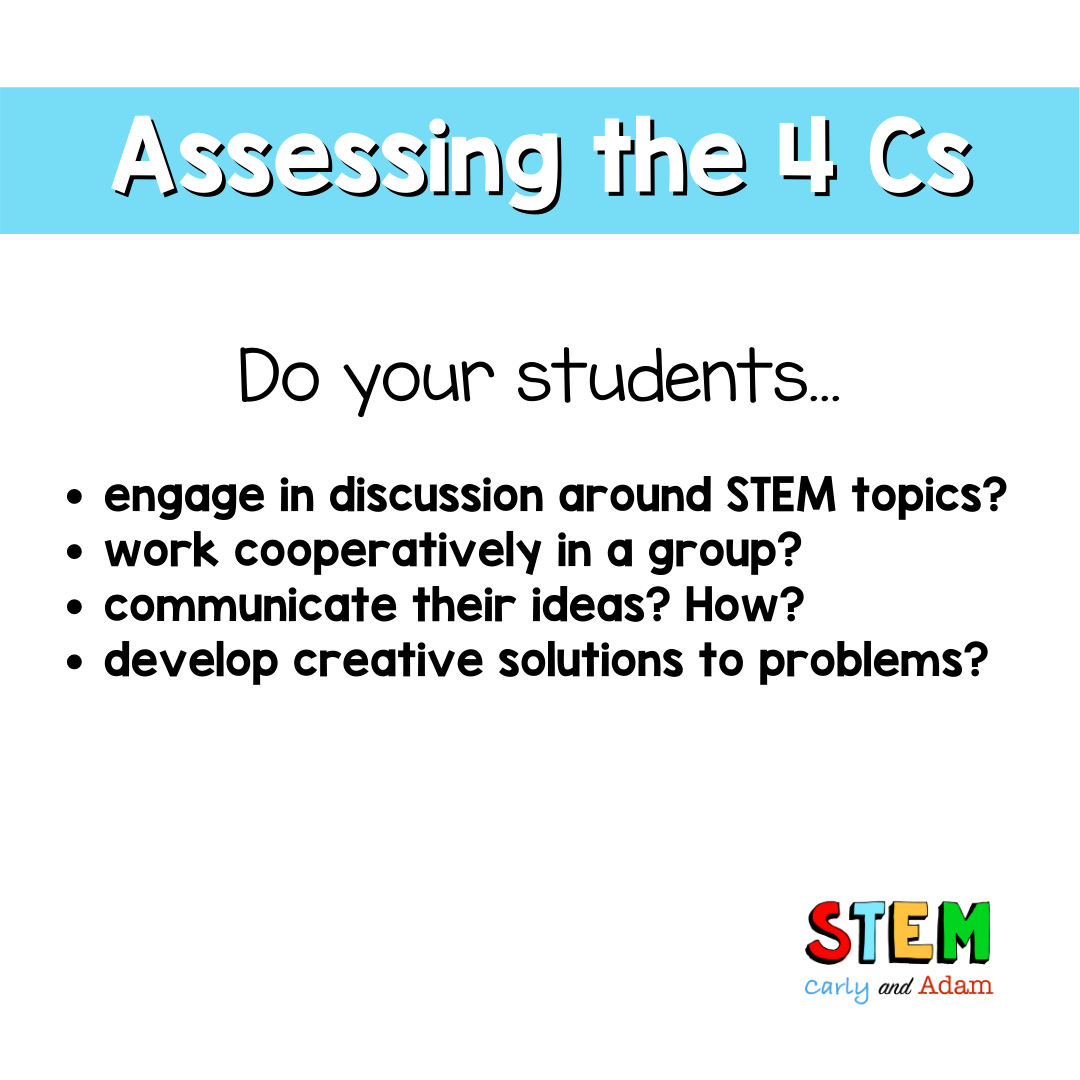
As we continue to promote the 4 Cs in our classroom, we need to consider how students are doing in these areas: communication, collaboration, creativity, and critical thinking. At first glance, these may seem hard to evaluate, so consider what it is that you define as success.
Do your students engage in discussion around STEM topics?
Do they work cooperatively in a group?
How do they communicate their ideas?
Are they able to develop creative solutions to problems?
STEM Mindset
One goal of STEM learning is the development of attitudes that make up a growth mindset. These characteristics and personal dispositions that we build in our students will help them become successful students, global citizens, and productive members of the workforce.
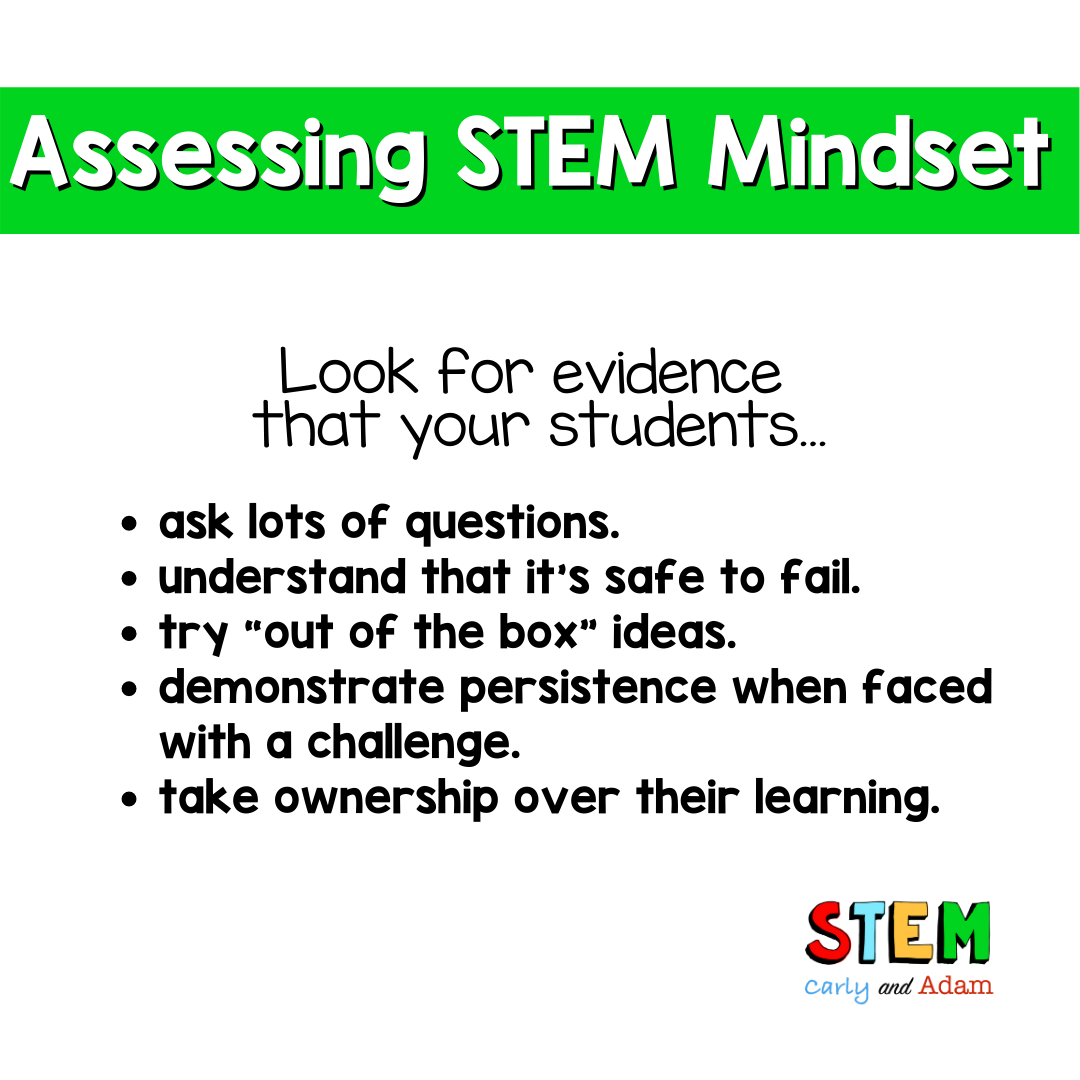
As students engage in STEM instruction, they will demonstrate indicators of a STEM mindset.
Think about how your students react during STEM lessons. Observe how students interact. Take note of their thought processes. Probe into their discoveries.
Look for evidence that your students:
Ask lots of questions
Understand that it’s safe to fail
Try “out of the box” ideas
Demonstrate persistence when faced with a challenge
Take ownership over their learning
STEM Skills
Our society and the future of work will require individuals who understand how to tackle problems and navigate unconventional situations. STEM lessons can help students build skills that will enable them to be successful in this unknown future. As we engage students in STEM learning, we are developing their ability to do new and challenging things.
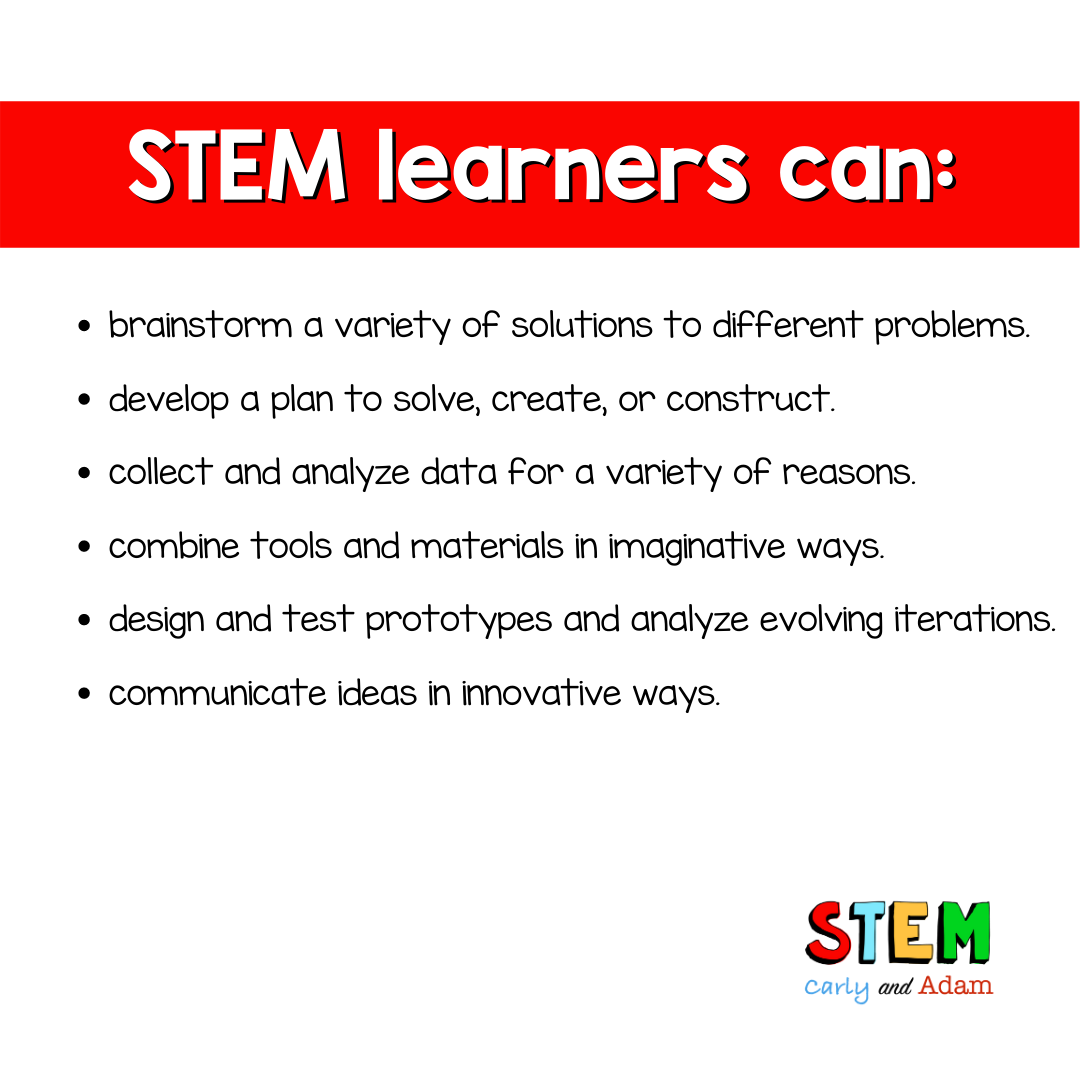
STEM learners can:
Brainstorm a variety of solutions to different problems
Develop a plan to solve, create, or construct
Collect and analyze data for a variety of reasons
Combine tools and materials in imaginative ways
Design and test prototypes and analyze evolving iterations
Communicate ideas in innovative ways
We can measure these STEM skills in the way we observe and assess student learning. Rubrics can be designed to assess levels of understanding in each area. Assessing STEM skills and the mindset that goes with it, is the job of many educators.
Developing the tools to evaluate STEM learning may require a lot of time, energy, and research on your part.
Join our FREE Facebook group Elementary STEM Teachers with Carly and Adam!
We hope you have found this blog post helpful. To stay connected with Carly and Adam's teaching tips and classroom freebies be sure to follow us on Facebook, Pinterest, Teachers Pay Teachers, and subscribe to our blog!