STEM Teacher Interview Questions and Answers
The following is a guest post from Dr. Jacie Maslyk.
*This blog post contains Amazon affiliate links. By clicking on the links and making a purchase, we may receive a small commission at no additional cost to you.
Congratulations! You’ve been searching for the ultimate STEM job and you finally landed an interview. This is your moment to shine. Hopefully you are using your time leading up to the interview to prepare.
You’ve picked out your professional attire.
You’ve prepared your electronic portfolio.
You’ve done your research on the school and district initiatives, but now what?

The interview is your big chance to take the next step in the STEM classroom. Maybe you’re interviewing to be a STEAM coordinator, a classroom teacher or even a STEM coach. No matter what the title is for the position, there are plenty of things you can do to get ready for any STEM interview.
Do some reading. Check out the latest edtech articles, read a few blogs, or grab a professional book on STEM.
Use social media to your advantage. Explore some STEM related hashtags (#STEM, #STEMeducation, #STEAM, #STEAMMakers), or join a STEM related Facebook Group. This will help to give you a snapshot of what is currently happening in STEM classrooms across the globe while also connecting you to other STEM educators.
Talk to your colleagues. Find out what is happening in other STEM classrooms in your area or across the state. Talking with other STEM educators will give you a sense of what is currently valued in the STEM environment.
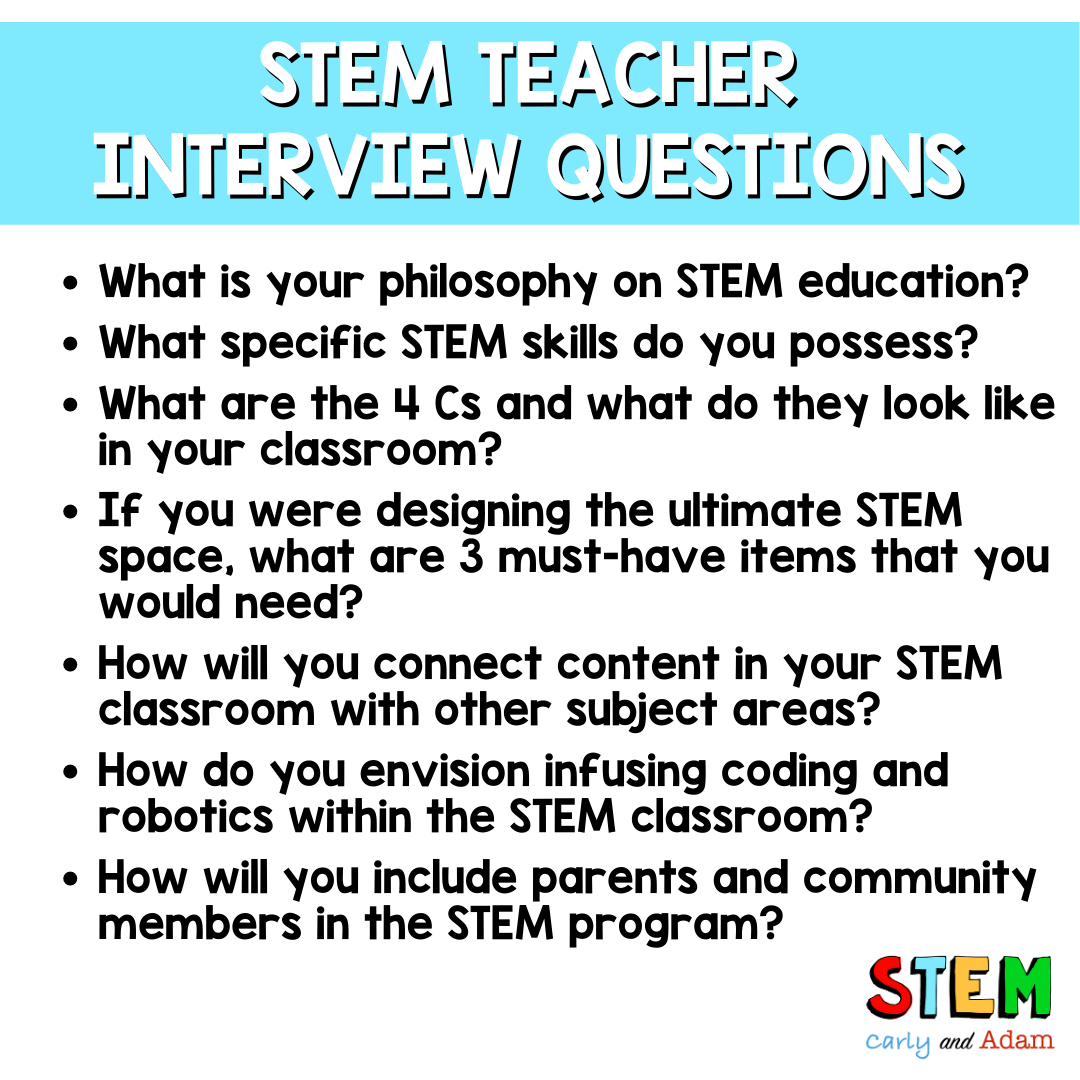
Here are some STEM interview questions that you might be asked and some potential answers to the questions.
Question: What is your philosophy on STEM Education?
Answer: Be prepared to articulate your belief about a hands-on, integrated approach to learning. Share some examples of successful STEM learning in action, citing exemplar lessons or students who benefitted from this type of experience allow you to expand on your experience. When you talk about real examples you will also show your passion for this type of work.
Question: What specific STEM skills do you possess?
Answer: Here’s your chance to highlight your accomplishments. If you are fluent in any programming languages or if you are Google certified, let the committee know. Do you have educational certifications in educational technology, physics, or middle school math? Unique certifications will set you apart from other candidates, but don’t stop there!
Are you a product ambassador? Tell the committee about your expertise with the tool (Ozobots, Osmo, Nearpod) and how this can enhance engagement and understanding in STEM. Don’t forget to include your hobbies or other specialized skills. Can you solder or sew? Are you into woodworking or writing? These skills can provide benefits as a STEM educator, so be sure to share your skills.

Question: What are the 4 Cs and what do they look like in your classroom?
Answer: Creativity, Collaboration, Communication, and Critical Thinking should be evident in your responses. Let the interview panel know that you value these skills and offer examples of projects that you’ve planned that can highlight student development in these areas.
Have you done any cross grade level activities or collaborative projects that connect students with learners across the globe? Do you value creativity and advocate to include the “A” in STEM in favor of STEAM? In what ways do you ensure that students are thinking and problem solving in your classroom? Discuss the opportunities that you intend to provide to students to build all of these skills.
Question: If you were designing the ultimate STEM space, what are 3 must-have items that you would need?
Answer: Respond honestly about the most critical components that you would expect in a space. Maybe you favor more technology-centered activities. Explain the reason why you would want these items in your space. Perhaps you are more interested in the “maker” side of STEM, using recyclable materials and engineering design challenges to develop a STEM mindset. Flexible furniture is a high ticket item but one that is also very helpful in the design of a collaborative learning space.

Question: How will you connect content in your STEM classroom with other subject areas?
Answer: Talk about specific ways that you are connecting STEM to areas like social studies and English language arts. These areas are often overlooked but yet provide great opportunities for integration. Check out this post on STEM read alouds or grab a copy of my book Remaking Literacy to explore ways to connect children’s literature to engaging STEM content.
Question: How do you envision infusing coding and robotics within the STEM classroom?
Answer: Offer an example of how you have used a coding program like Scratch Jr. with primary students or Tynker with upper elementary kids. Share classroom ideas regarding the use of Ozobots or Sphero and how you have used these in your lessons. Be sure to share how coding builds important dispositions in students like bouncing back from failures, thinking flexibly, and striving for accuracy.

Question: How will you include parents and community members in the STEM program?
Answer: STEM family nights or other outreach activities are great ways to engage the community in your program. Bringing in parent volunteers or inviting them in as guest speakers (when permitted) also provides the opportunity to further connect home and school. Seek out community support by tapping into your local STEM community. Local businesses, universities, or museums might be willing to partner with you to expand your STEM programming.
What else?
As a part of the interview process, you may also be asked to do a demonstration lesson. Sometimes this is done for the interview panel and they are active participants in the lesson. Other times the lesson is done with a small group of students and the interviewers just observe. A demonstration lesson will likely have parameters set by the committee, letting you know how long the lesson should be and what topic it should address.

In general, make sure that you provide a lesson plan so that the interview panel knows your thought process from beginning to end. Submitting a lesson plan will also document all of the essential components of the lesson, just in case you don’t get the chance to do every part. The lesson plan can also highlight any accommodations you might plan for diverse learners, including instructional options for extending the learning. Consider which components you’d like to include in your lesson:
An experiment
An engineering design challenge
A make and take activity

Think about whether your lesson will incorporate technology. (Always ask about what tech will be available prior to the interview.) If you are engaging the participants in a hands-on activity, be sure to bring enough materials. (Check ahead of time on the number of people who will be involved in the lesson.) Most importantly--have fun! If you are showing how much you enjoy teaching STEM, the committee will be able to envision you teaching in their school.
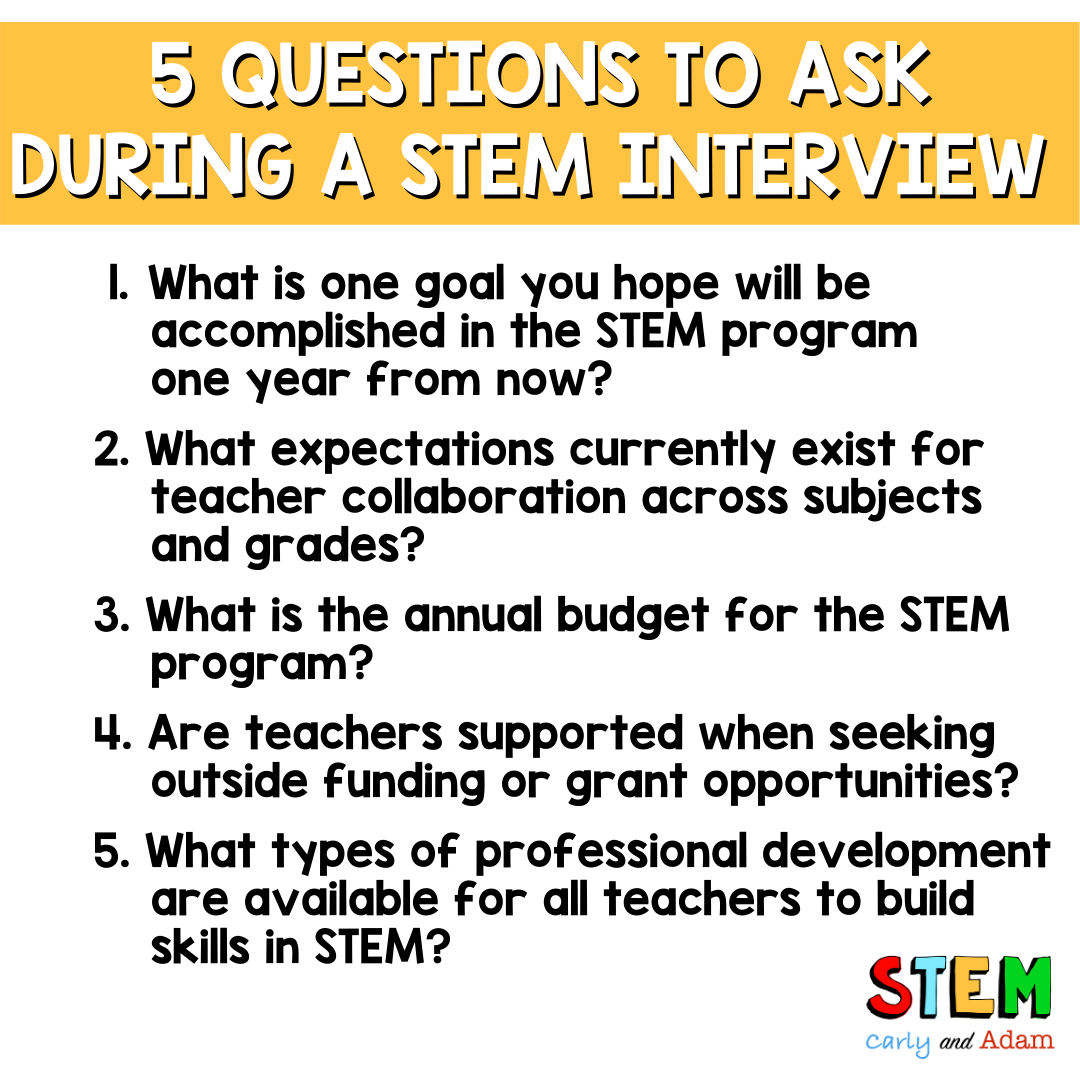
Often interviews end with the committee asking if you have any questions. Many people are caught off guard by this and aren’t sure what to ask. Below are a few ideas that you might want to consider.
Join our FREE Facebook group Elementary STEM Teachers with Carly and Adam! Learn more about how to incorporate STEM in your classroom or at home and collaborate with other STEM teachers! JOIN NOW!

Spend Less Time Planning and More Time Teaching!
Hands-on STEM learning starts here.
Find ready-to-use STEM Activities and Science Curriculum, Practical Professional Development, and a Community of Educators to help you teach STEM with confidence.
You can get all 1000+ STEM Challenges by Carly and Adam as part of the STEM Teachers Club. Save 30% on your first month/year using coupon Code: CarlyAndAdamBlog.