
Second Grade Activity for International Dot Day
International Dot Day, celebrated on September 15th, is a global celebration of creativity, courage, and collaboration. Inspired by Peter H. Reynolds' book The Dot, this day encourages everyone to make their mark and see where their creativity leads.
In The Dot, a young girl named Vashti discovers her potential when she bravely makes a single dot on a piece of paper, which blossoms into an exciting journey of self-discovery and artistic expression. International Dot Day invites children and adults alike to embrace creativity and share their unique talents with the world.
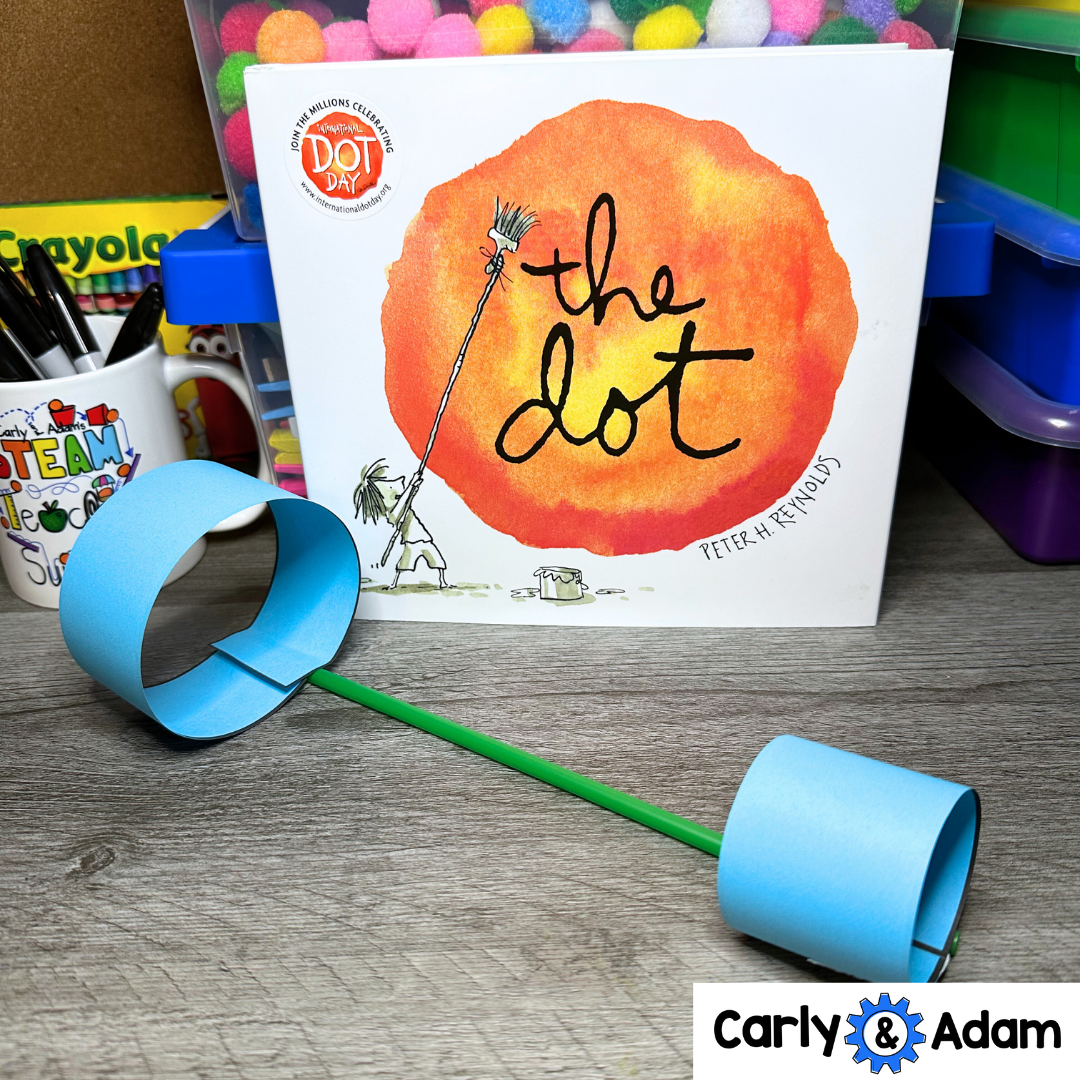
For second graders, International Dot Day provides an excellent opportunity to blend creativity with hands-on STEM learning through the Hoop Flyers activity.
In this engaging experiment, students explore the principles of aerodynamics by designing and testing hoop flyers to see which design flies the farthest. This activity not only ties into the themes of discovery and experimentation found in The Dot but also introduces young learners to important scientific concepts in a fun and interactive way.
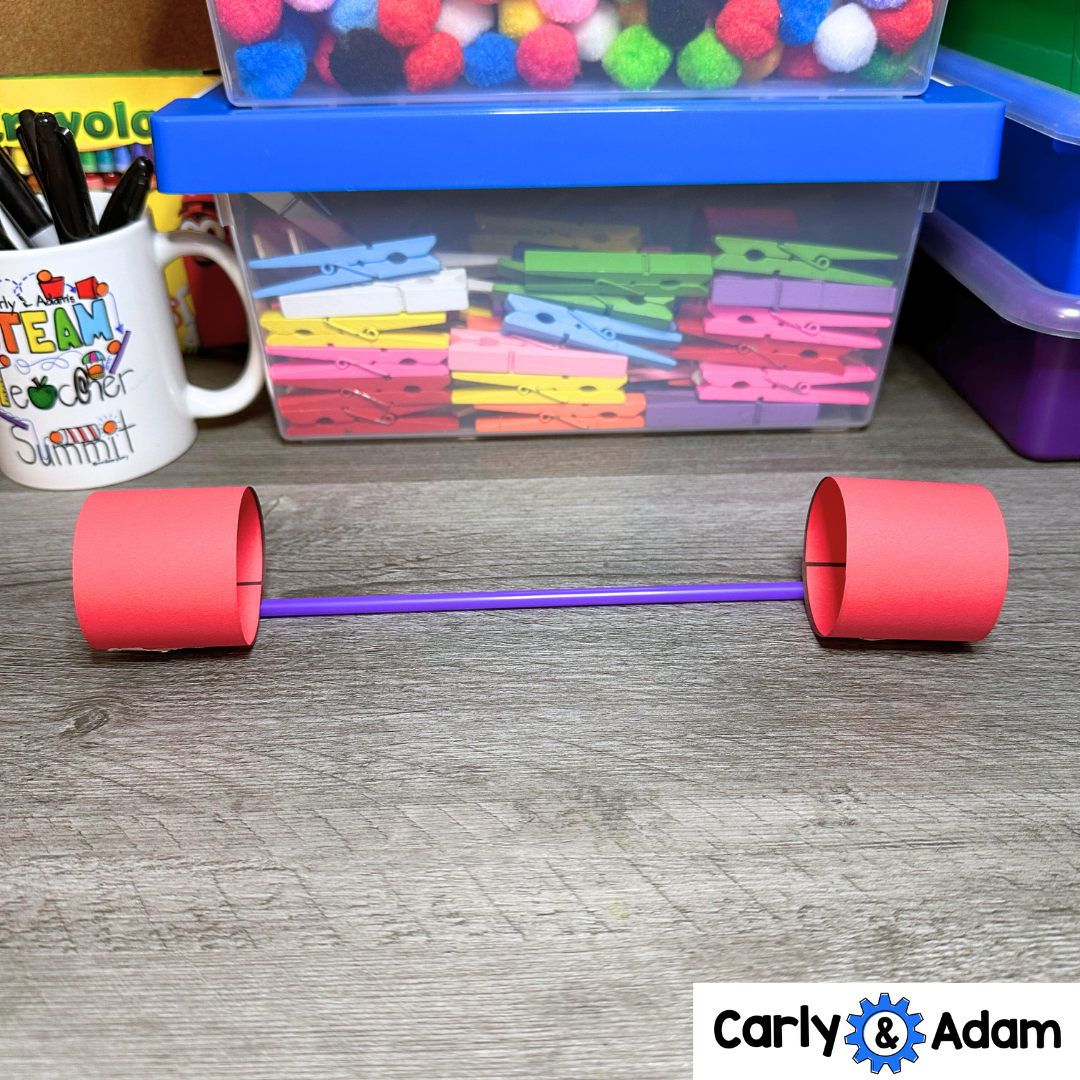
Materials Needed
Tape
3 straws
Scissors
Distance markers (e.g., measuring tape, ruler)
Pencils and science journals
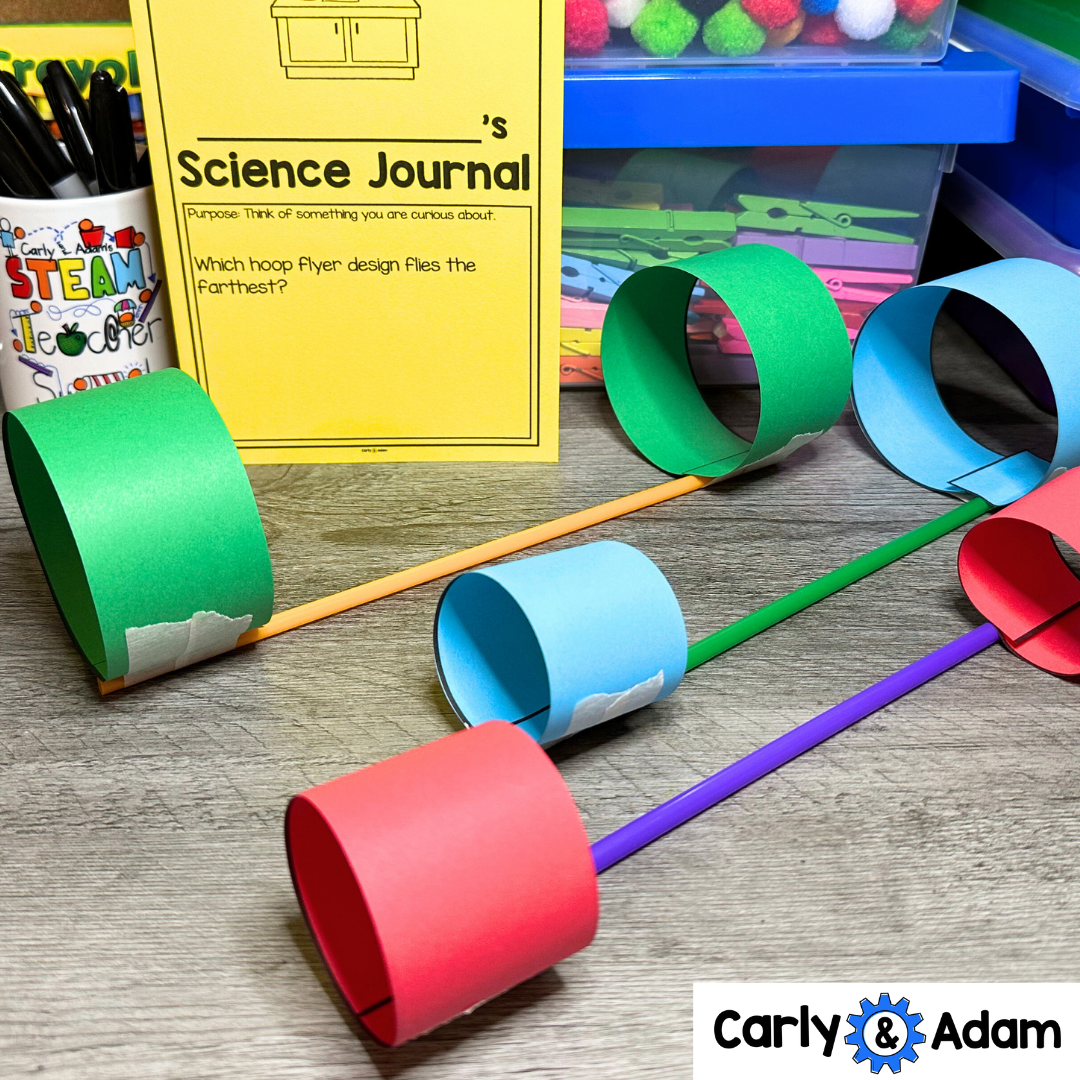
Steps for the Science Investigation
Read Aloud: Start by reading The Dot by Peter H. Reynolds to the class. Discuss the story and inspire students to think creatively about flight. Then, introduce the concept of aerodynamics and explain that they will be experimenting with different hoop flyer designs to see which one flies the farthest.
Formulate a Hypothesis: Ask students to predict which hoop flyer design they think will travel the farthest. Encourage them to record their predictions in their science journals.
Conduct the Experiment:
Cut out paper strips to create hoop templates: 2 large strips, 2 small strips, and one set with a large and small strip.
Attach two large hoops to the ends of one straw using tape.
Attach two small hoops to the ends of another straw.
Attach one large hoop at one end and one small hoop at the other end of the third straw.
Go to an open space, either outdoors or in a large indoor area, and have students stand at a starting line.
Each student should throw their hoop flyers three times, measuring how far each one travels and recording the results.
Analyze the Results: After the tests, return to the classroom to discuss the results. Compare the students’ predictions with the actual outcomes. Ask them questions like: Which hoop flyer flew the farthest? Was it consistent across all trials? Why do they think one design performed better than the others?
Conclusion: Review what the students learned about aerodynamics and how different flyer designs can affect flight distance. Discuss how balancing stability and drag can optimize flight performance. Encourage students to think about how they might improve their designs if they were to repeat the experiment.
Simplifying Your Planning Process
The STEM Teachers Club Membership not only provides high-quality lesson plans but also offers a structured approach to implementing them. With weekly themes and suggested read-alouds, you can easily integrate STEM into your daily schedule. The detailed planning samples and customizable templates help you stay organized and ensure that your STEM activities are aligned with educational standards.
New Membership resources now include editable Canva Slides! We also host monthly STEM planning parties to help you plan your K-5 STEM lessons.
Watch the replay from our September STEM Planning Party here!
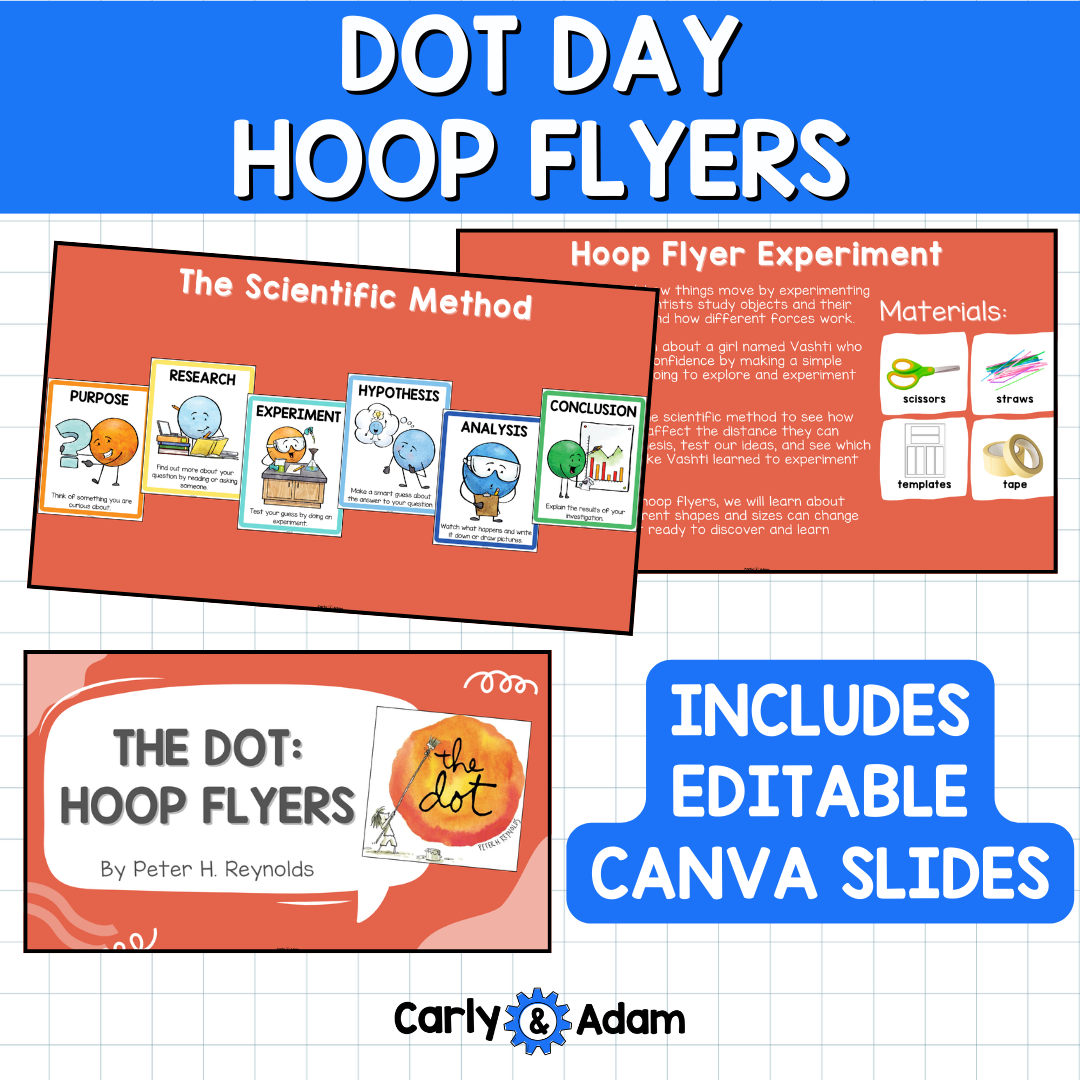
While this resource is available on Teachers Pay Teachers, the Carly and Adam STEM Teachers Club Membership offers the best value for educators. With this membership, teachers gain unlimited access to Carly and Adam's extensive library of STEM resources, including ready-to-use lesson plans, activities, and challenges like the International Dot Day STEM activity.
The membership is flexible, allowing educators to download as many resources as needed and cancel anytime without any hassle. This makes it a cost-effective solution for teachers looking to continuously inspire their students with high-quality, creative STEM activities. Don't miss out on the opportunity to enrich your classroom—join the STEM Teachers Club today and take your teaching to the next level!
*This resource can also be purchased on Teachers Pay Teachers, but the STEM Teachers Club Membership is the Best Deal.
Have more questions or need additional resources?
You can get all 500+ STEM Challenges by Carly and Adam as part of the STEM Teachers Club Membership. Save $5 on your first month using coupon Code: CarlyAndAdamBlog.
We hope you have found this blog post helpful. To stay connected with Carly and Adam's teaching tips and classroom freebies be sure to follow us on Facebook, Pinterest, Teachers Pay Teachers, and subscribe to our blog!