
Printable Number Tangram Puzzles
Tangrams are a simple but powerful classroom tool. With only seven geometric pieces, students can explore shapes, solve problems, create designs, and explain their thinking.
Using Tangram Puzzles, Tangram Printables, and Tangram Cards turns this classic manipulative into an engaging math and STEM activity. They are the perfect addition to any makerspace bin or STEM Center. Try Carly and Adam’s Tangram Puzzles in your classroom.
What Are Tangrams?
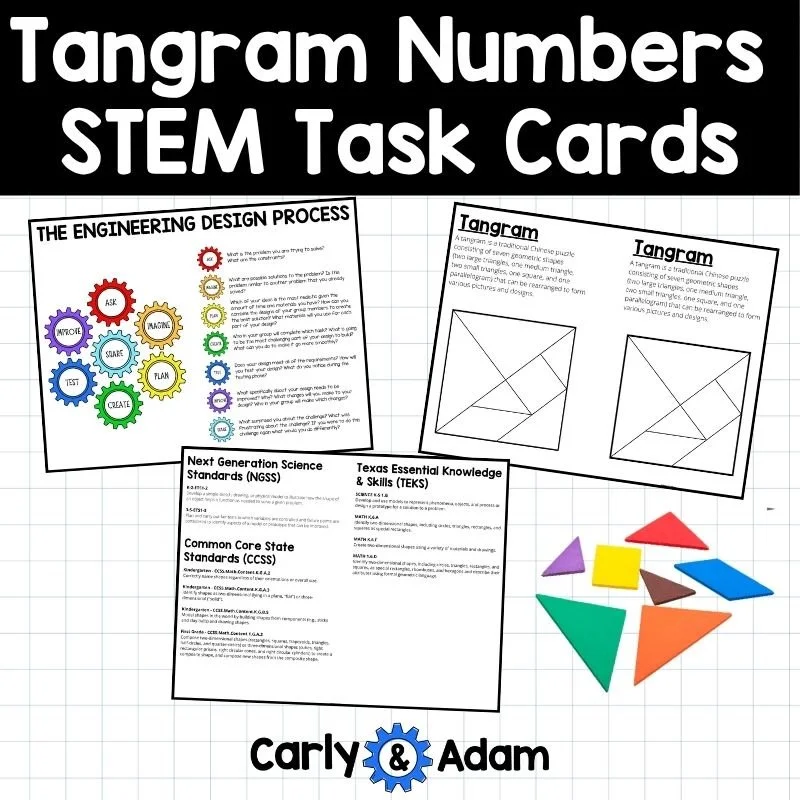
A traditional tangram set includes seven shapes:
Two large triangles
One medium triangle
Two small triangles
One square
One parallelogram
Students rearrange these pieces to create pictures, numbers, and other designs. As they build, students practice identifying, composing, and decomposing two-dimensional shapes.
Why Use Tangram Puzzles?
Tangrams make geometry hands-on. Students physically rotate, flip, and combine shapes instead of only identifying them on a worksheet.
They also encourage productive struggle. When a piece does not fit, students can adjust their design and try again. This simple process helps develop perseverance, flexible thinking, and problem-solving skills.
Tangrams also connect math with the engineering design process. Students imagine a solution, create a design, test it, make improvements, and share what they learned.
Using Number Tangram Cards
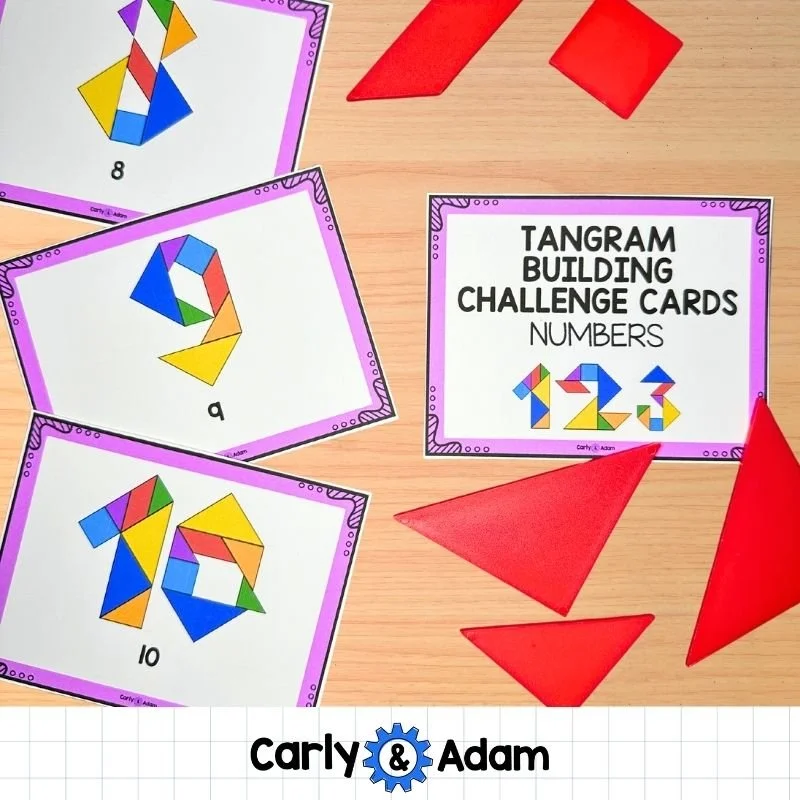
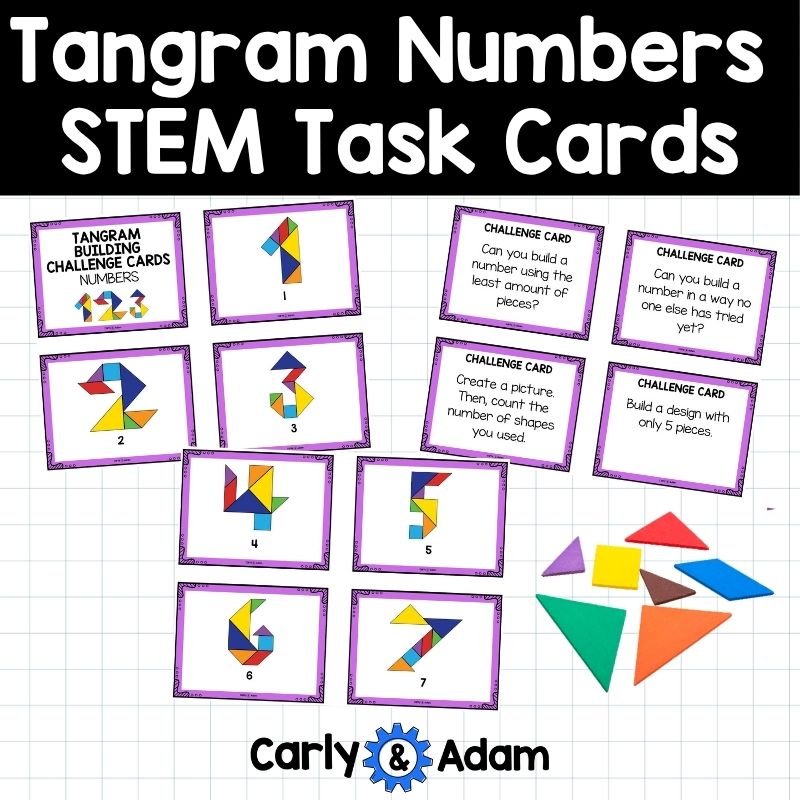
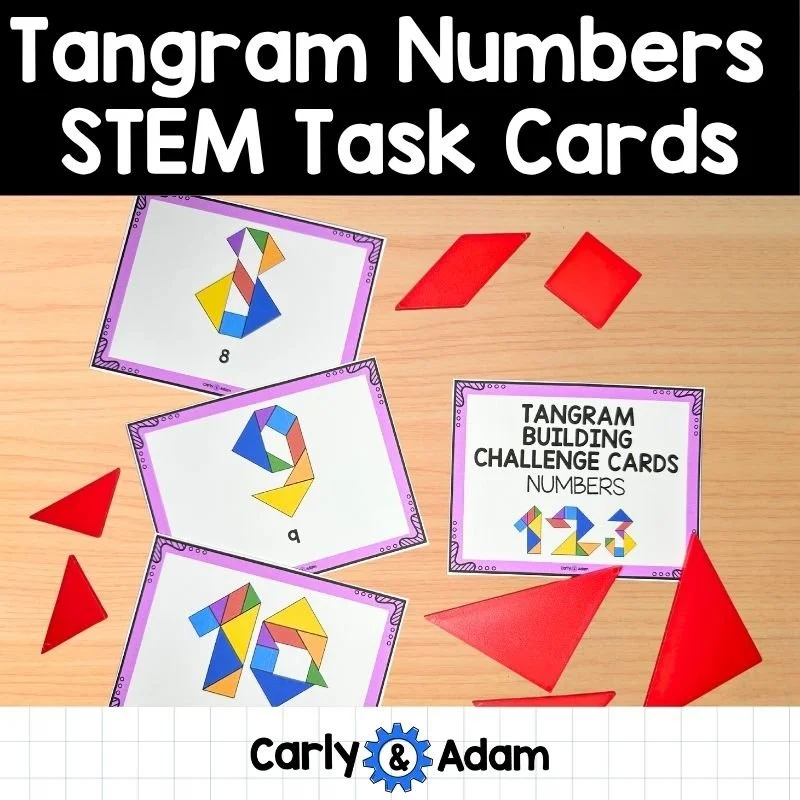
Number Tangram Cards challenge students to use geometric pieces to build the numerals 1 through 10. Students can copy a model before moving on to open-ended challenges such as:
Build the same number two different ways.
Create a number using the fewest pieces.
Build a number in a way no one else has tried.
Create a picture and count the shapes.
Build a design using only five pieces.
These challenges are easy to differentiate. Younger students can match pieces to a model and name the shapes they use. Older students can compare solutions, follow design constraints, and explain how they improved their work.
How to Set Up a Tangram Challenge
Choose a challenge. Select a number card, picture puzzle, or open-ended design prompt.
Organize the materials. Place complete tangram sets in bags, trays, or center containers.
Explain the criteria. Tell students whether they must use all seven pieces, a limited number of pieces, or the fewest pieces possible.
Encourage questions. Ask students what they notice, wonder, or expect to find challenging.
Allow time for redesign. Encourage students to test their first solution and make at least one improvement.
Share the thinking. Have students compare designs, sketch their solutions, or explain their strategies.
Easy Ways to Use Tangram Printables
Tangram printables can fit into routines you already use:
Add Tangram Cards to math centers.
Use a puzzle for morning work.
Place laminated cards in early-finisher tubs.
Include tangrams in a STEM station.
Use them during small-group geometry instruction.
Display one challenge for the entire class.
To deepen student thinking, ask questions such as:
How could you rotate or flip that piece?
Can you build the same number another way?
What is one change that would improve your design?
What did you learn from an attempt that did not work?
Try Tangrams Puzzles With Your Students
Tangram Puzzles give students a playful way to practice geometry, creativity, perseverance, and engineering thinking.
Add the Numbers Tangram Engineering Challenge Cards to a math center, STEM station, or whole-class activity. With ready-to-use Tangrams Printables and reusable pieces, you can provide meaningful hands-on learning with very little preparation.

Have more questions or need additional resources?
You can get all 900+ STEM Challenges by Carly and Adam as part of the STEM Teachers Club Membership. Save $5 on your first month/year using coupon Code: CarlyAndAdamBlog.
We hope you have found this blog post helpful. To stay connected with Carly and Adam's teaching tips and classroom freebies be sure to follow us on Facebook, Pinterest, Teachers Pay Teachers, and subscribe to our blog!