Two pieces of paper, a little tape, and a big design question: how much candy corn can your cornucopia hold? Our Candy Corn Cornucopia Thanksgiving STEM Activity turns a familiar fall decoration into a building and measurement challenge. Students plan a container, construct their design, and compare what happens when they test it.
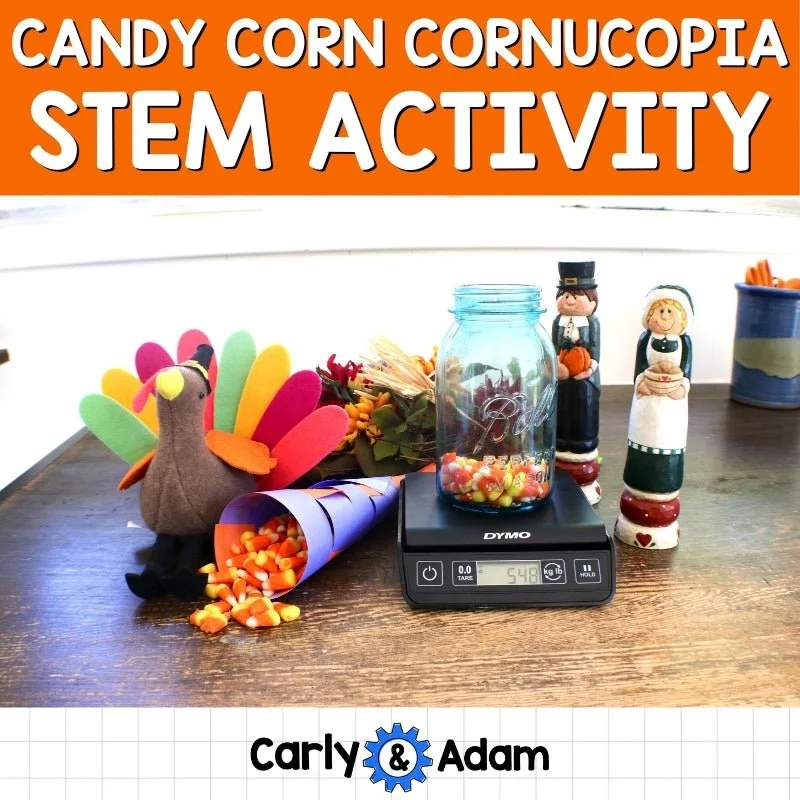
Candy Corn Cornucopia activity cover with a paper cornucopia and a digital scale. How much candy corn can a paper cornucopia hold? Explore a Thanksgiving STEM challenge that combines planning, construction, measurement, teamwork, and reflection with simple classroom supplies. This image previews Candy Corn Cornucopia Thanksgiving STEM Activity from Carly and Adam. Use it to take a closer look at the resource before preparing your lesson. Give students time to explain what they notice. Keep the materials organized before students begin. Invite children to share their thinking with a partner. Use the teacher directions to prepare for the activity. Leave time for a short conversation about the learning. Let students describe a choice they made. Explore this activity in Carly and Adam’s store.
Start with the Design Question
Introduce the cornucopia as the horn-shaped container students will be making. Their task is to build one that holds as much candy corn as possible using the assigned materials.
Before handing out supplies, ask students what could make a paper container useful. Where might candy spill out? How could the paper be joined? These questions help students think about the relationship between their design and what it needs to do.
Prepare a Material Set for Each Group
For each group of two or three students, gather two pieces of construction paper or colored cardstock, 2 feet of tape, and scissors. The testing station needs candy corn, a food scale, and a plastic cup or similar container for weighing.
The lesson includes teacher and student directions, individual and group planning pages, a testing page, and reflection questions. Keep the materials consistent across groups so students can discuss how different designs worked within the same limits.
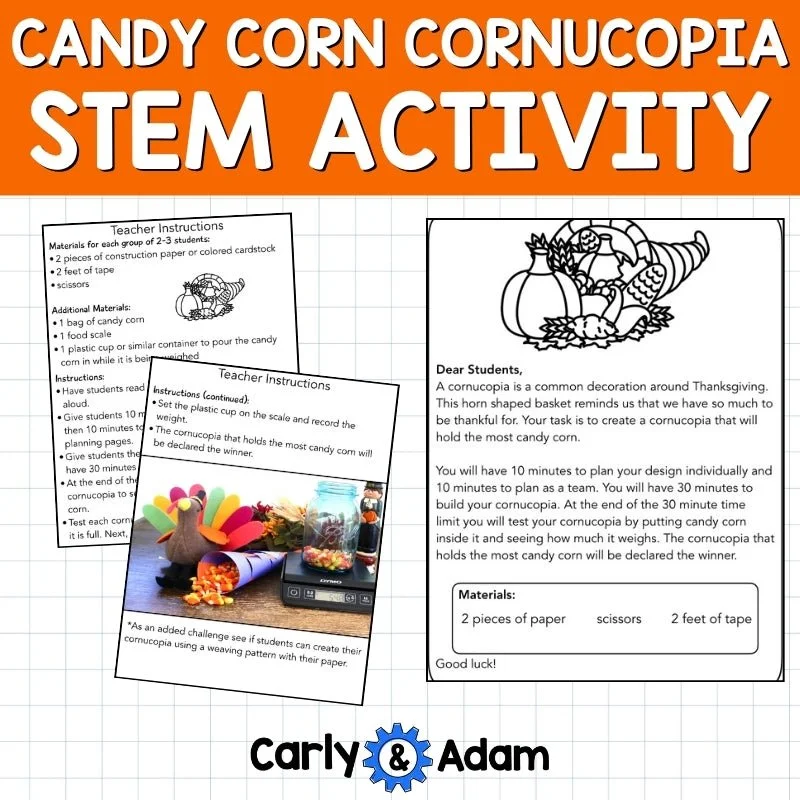
Preview of cornucopia directions and student challenge page. How much candy corn can a paper cornucopia hold? Explore a Thanksgiving STEM challenge that combines planning, construction, measurement, teamwork, and reflection with simple classroom supplies. This image previews Candy Corn Cornucopia Thanksgiving STEM Activity from Carly and Adam. Use it to take a closer look at the resource before preparing your lesson. Invite children to share their thinking with a partner. Use the teacher directions to prepare for the activity. Leave time for a short conversation about the learning. Let students describe a choice they made. Keep the focus on the process as well as the finished work. Plan a hands-on learning experience with a seasonal connection. Save this idea for your next November lesson!
Give Every Idea a Starting Point
The teacher directions provide 10 minutes for individual planning, 10 minutes for group planning, and 30 minutes for construction. Beginning with individual sketches gives everyone an idea to bring to the team.
When groups come together, invite students to explain why they think their design will hold a large amount. Encourage them to predict possible problems before building. Their planning does not have to be perfect; it should give them a place to begin.
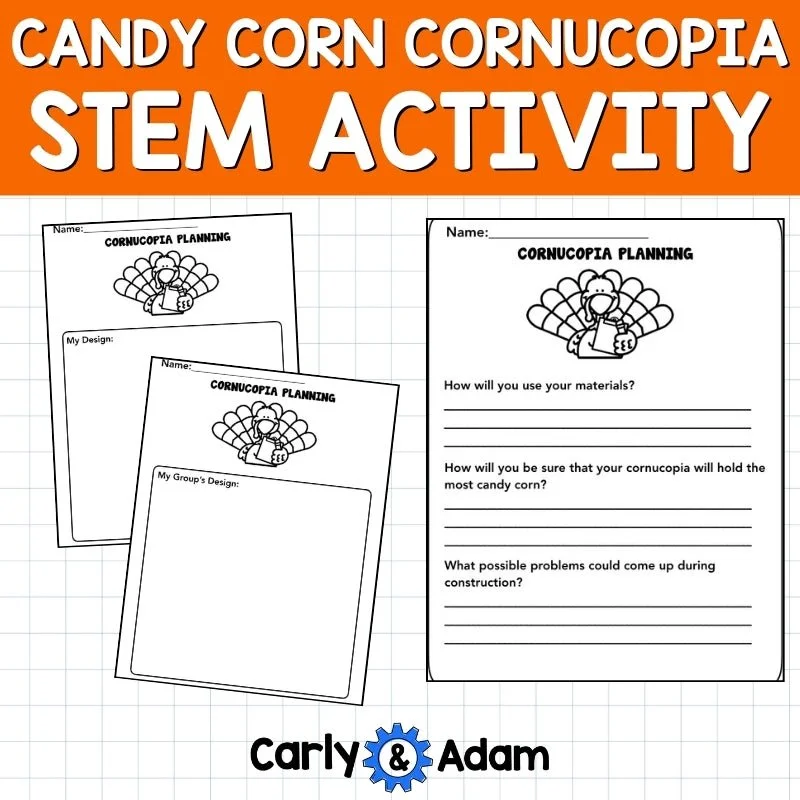
Cornucopia STEM preview showing student planning pages and the building challenge. How much candy corn can a paper cornucopia hold? Explore a Thanksgiving STEM challenge that combines planning, construction, measurement, teamwork, and reflection with simple classroom supplies. This image previews Candy Corn Cornucopia Thanksgiving STEM Activity from Carly and Adam. Use it to take a closer look at the resource before preparing your lesson. Keep the materials organized before students begin. Invite children to share their thinking with a partner. Use the teacher directions to prepare for the activity. Let students describe a choice they made. Make space for questions, observations, and student ideas. Choose the support that fits your students. Explore this activity in Carly and Adam’s store.
Test Capacity and Record Results
Fill each cornucopia with candy corn, then transfer the candy to the testing cup for weighing. Use the same cup for each group and account for the empty container’s weight so comparisons reflect the candy held. Record each result on the testing page.
Talk about what the results show. Did a wide opening make filling easier? Did a seam hold? Did a group change its plan during construction? The measurements give students evidence they can use when explaining their ideas.
If you use an alternative filler, make it an optional classroom adaptation and use the same material for every group’s comparison.
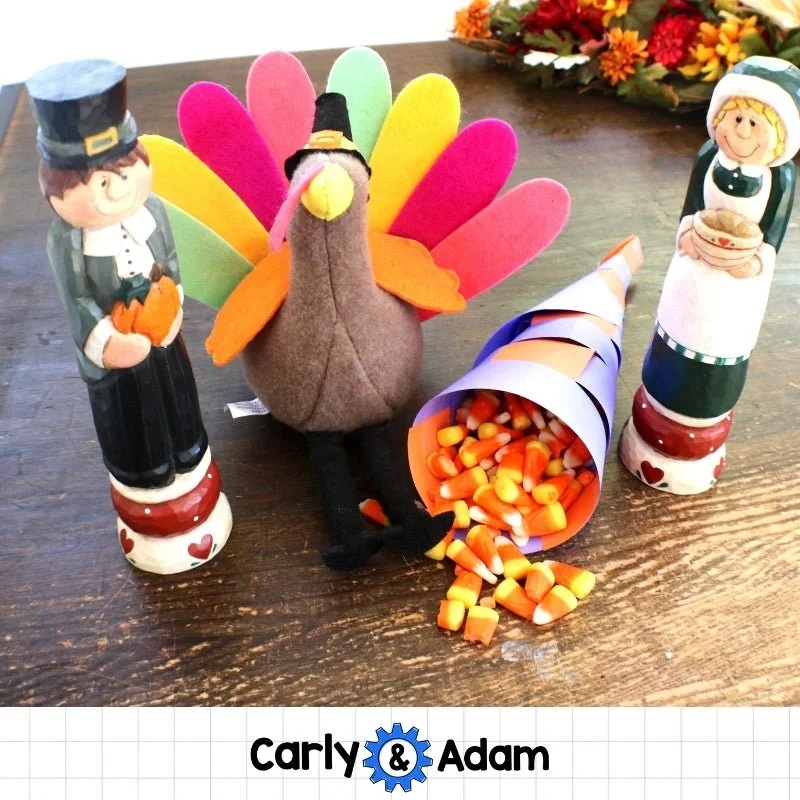
Paper cornucopia filled with candy corn beside Thanksgiving decorations. How much candy corn can a paper cornucopia hold? Explore a Thanksgiving STEM challenge that combines planning, construction, measurement, teamwork, and reflection with simple classroom supplies. This image previews Candy Corn Cornucopia Thanksgiving STEM Activity from Carly and Adam. Use it to take a closer look at the resource before preparing your lesson. Keep the materials organized before students begin. Invite children to share their thinking with a partner. Use the teacher directions to prepare for the activity. Leave time for a short conversation about the learning. Let students describe a choice they made. Keep the focus on the process as well as the finished work. Save this idea for your next November lesson!
Keep the Thinking Going After the Test
Use the reflection questions to discuss what worked, what students would change, and how the team shared responsibilities. A cornucopia that holds less than expected can still lead to a useful explanation and a better next design.
For students ready for an additional challenge, the lesson suggests constructing the cornucopia with a paper weaving pattern. Let students consider how that approach might affect the way their container holds together.
Add this activity to your Thanksgiving STEM plans or a fall engineering lesson. The supplies are simple, but the decisions students make give them plenty to build, measure, and discuss.
Spend Less Time Planning and More Time Teaching!
Hands-on STEM learning starts here.
Find ready-to-use lessons, practical professional development, and a community of educators in the STEM Teachers Club. Spend less time planning and more time helping students create, explore, and learn together!