
How to Plan Winter Olympics STEM in the Classroom for the 2026 Winter Olympic Games
The 2026 Winter Olympic Games in Milan–Cortina, Italy are the perfect opportunity to bring hands-on STEM, collaboration, and global learning into your classroom. Instead of just watching highlights, students can design, build, test, graph, and compete—just like real Olympic athletes and engineers.
With a little planning (and the right resources), you can transform your classroom into a full Winter Olympics STEM experience your students will remember long after the torch is extinguished.
Here’s how to plan a meaningful and manageable Winter Olympics STEM unit using a ready-to-go lesson plan that does the heavy lifting for you.
Step 1: Introduce the 2026 Winter Olympic Games
Get all of the lessons in both Winter Games bundles as part of the STEM Teachers Club.
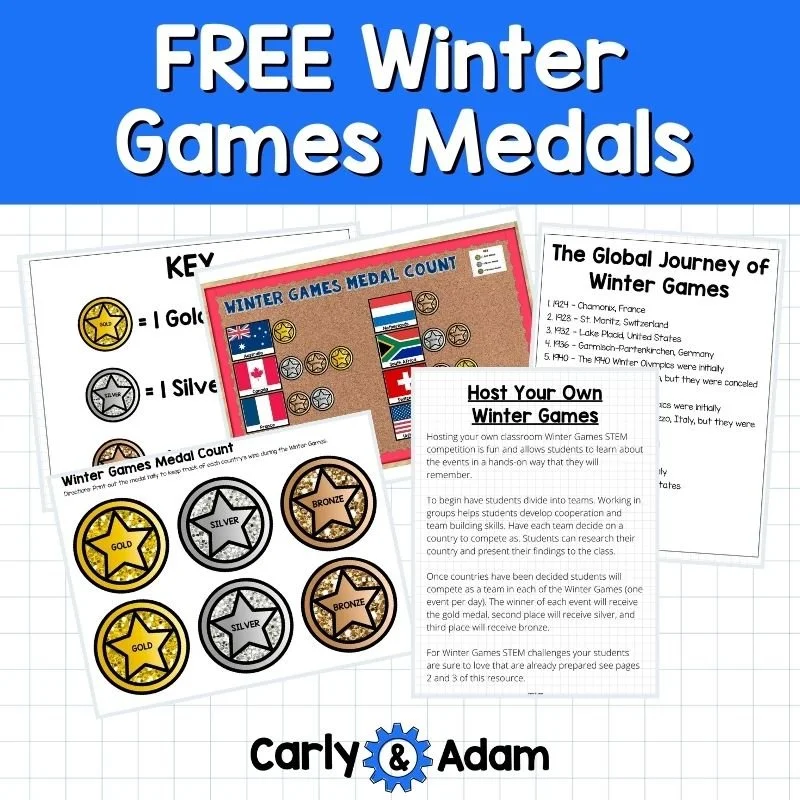
Start by building excitement around the upcoming Winter Olympics.
Have students explore:
Where the 2026 Games will be held (Milan–Cortina d’Ampezzo, Italy)
Past Winter Olympic host cities and how the Games have evolved over time
Winter sports events they may already recognize
This lesson plan includes a visual timeline of Winter Olympic host cities that makes this discussion concrete and age-appropriate, helping students see the global journey of the Games before diving into the challenges.
Step 2: Form Teams and Assign Countries
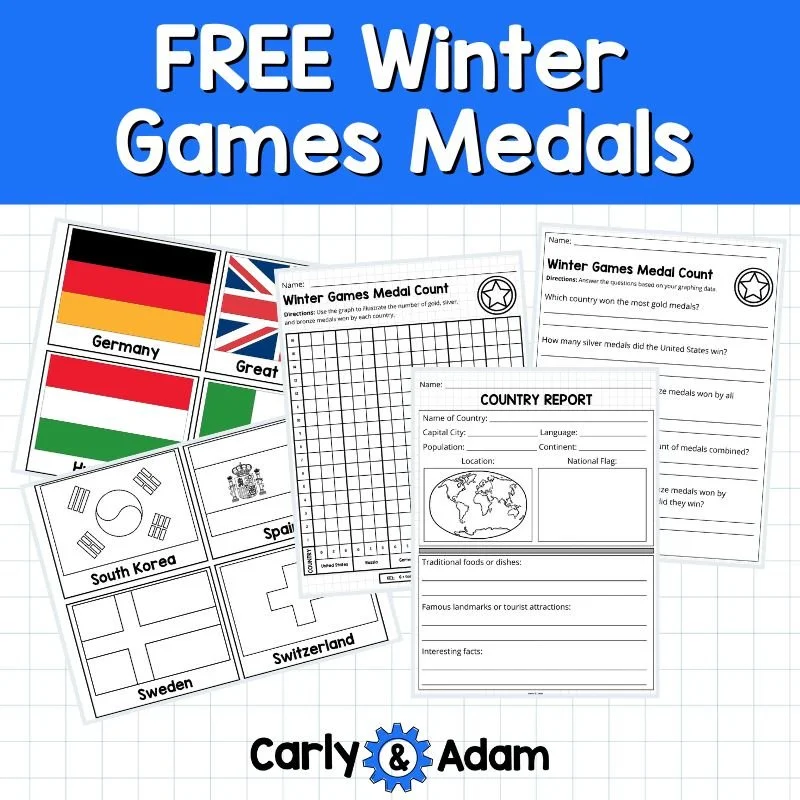
To mirror the real Olympics, divide students into teams and assign (or let them choose) a country to represent.
Each team can:
Research basic facts about their country
Learn about the country’s flag, language, location, and culture
Present their findings to the class
The included country report templates and flag visuals make this easy to implement while naturally integrating social studies, geography, and research skills alongside STEM.
Step 3: Schedule Daily Winter Olympics STEM Events
One of the best ways to run a Winter Olympics STEM unit is to host one event per day. This keeps students engaged without overwhelming your schedule.
K–2 Winter Games STEM challenges such as figure skating, skiing, speed skating, luge, skeleton, and building a bobsled run.
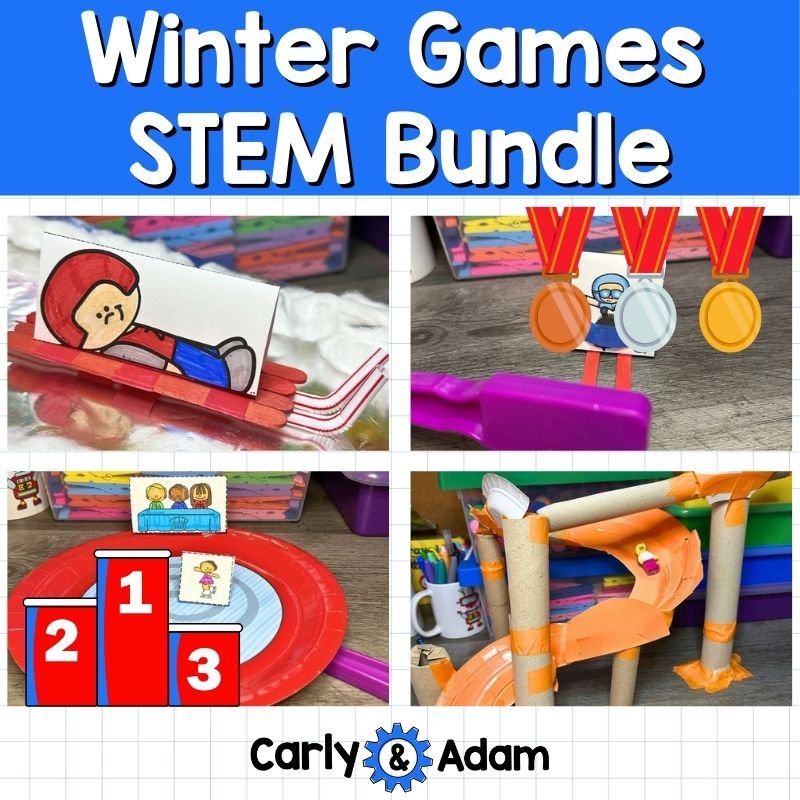
Grades 3–5 Winter Games STEM challenges including bobsled design, curling, ice hockey, ski jumping, snowboarding, and biathlon-inspired builds.

Each challenge is hands-on, age-appropriate, and designed for teamwork—perfect for STEM centers, whole-class challenges, or enrichment days.
Step 4: Track Results With Olympic-Style Medals

Competition is fun, but data makes it STEM.
After each event:
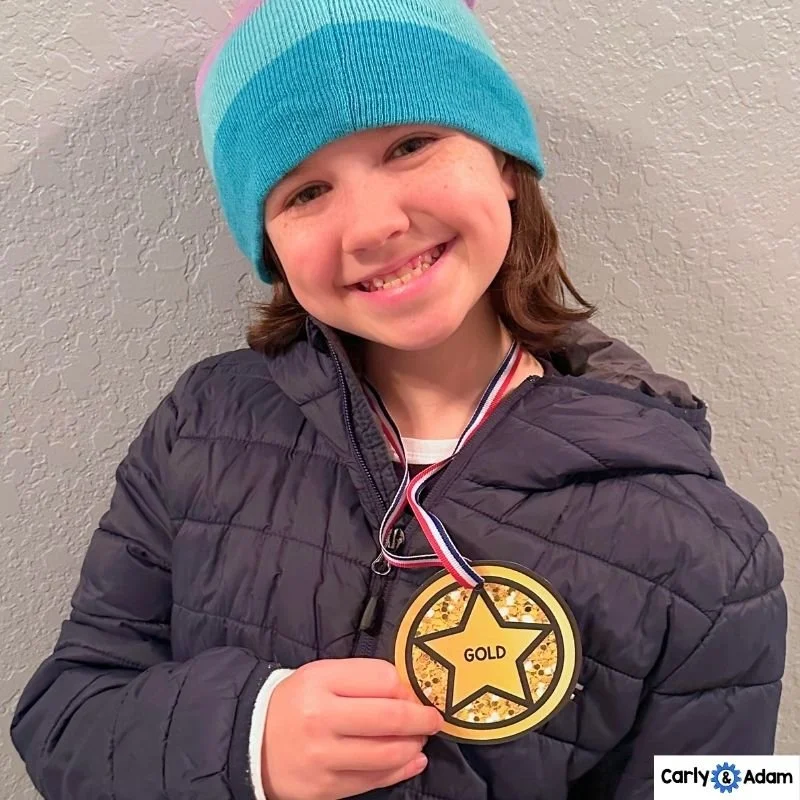
Award gold, silver, and bronze medals
Record results on a class medal tally
Compare totals across teams and countries
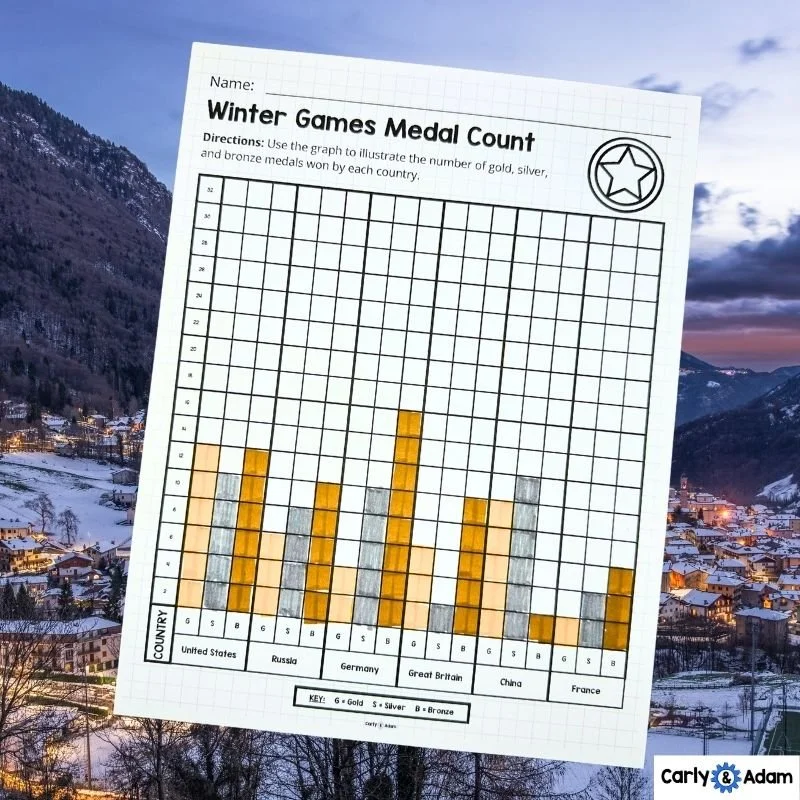
The lesson plan includes printable Winter Games medals and medal count tracking pages, which students can use to graph results, analyze totals, and answer data-based questions. This seamlessly integrates math skills like graphing, comparison, and problem-solving.
Step 5: Reflect, Analyze, and Celebrate
Wrap up your Winter Olympics STEM unit by having students:
Analyze medal data using graphs and questions
Reflect on which designs worked best and why
Discuss how teamwork and iteration improved their results
End the unit with a classroom medal ceremony or celebration day—it’s a simple moment that makes the entire experience feel authentic and memorable.
Everything You Need—All in One Place
All of the activities mentioned above are included in the Winter Games STEM lesson plans by Carly and Adam, making it easy to plan an engaging Olympic-themed STEM experience without starting from scratch.
STEM Teachers Club Members can download all of these activities for free
The full resource is also available for purchase on Carly and Adam’s store
Whether you’re planning a full multi-day unit or just a few special STEM days during the 2026 Winter Olympics, this lesson plan gives you everything you need to bring the Games to life in your classroom.
Get all of the lessons in both Winter Games bundles as part of the STEM Teachers Club.
Spend Less Time Planning and More Time Teaching!
Hands-on STEM learning starts here.
Find ready-to-use STEM Activities and Science Curriculum, Practical Professional Development, and a Community of Educators to help you teach STEM with confidence.
You can get all 1000+ STEM Challenges by Carly and Adam as part of the STEM Teachers Club. Save 30% on your first month/year using coupon Code: CarlyAndAdamBlog.