
How to Plan a Luge Winter Olympic Games STEM Challenge in Your Elementary Classroom
Looking for an engaging Winter Olympics STEM activity for the 2026 Winter Olympics in Milan that works for K–2 students and uses simple materials? The Luge Winter Games STEM Challenge by Carly and Adam is a hands-on engineering experience that introduces young learners to speed, friction, gravity, and the engineering design process—all through play.
Here’s how to implement this STEM challenge step by step in your classroom.
Step 1: Build Background Knowledge About Luge
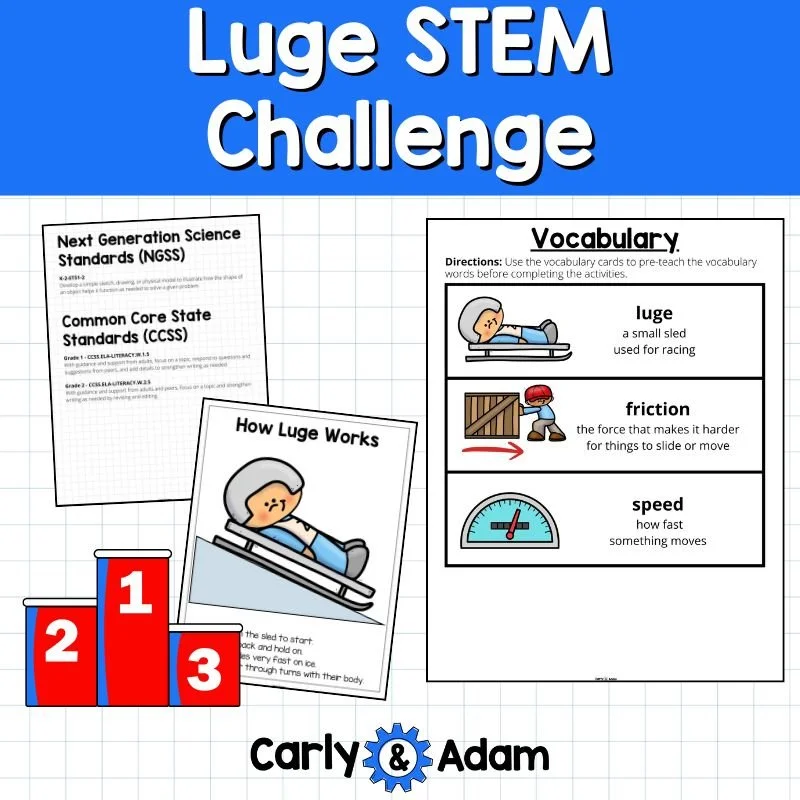
Before students begin building, introduce the sport of luge.
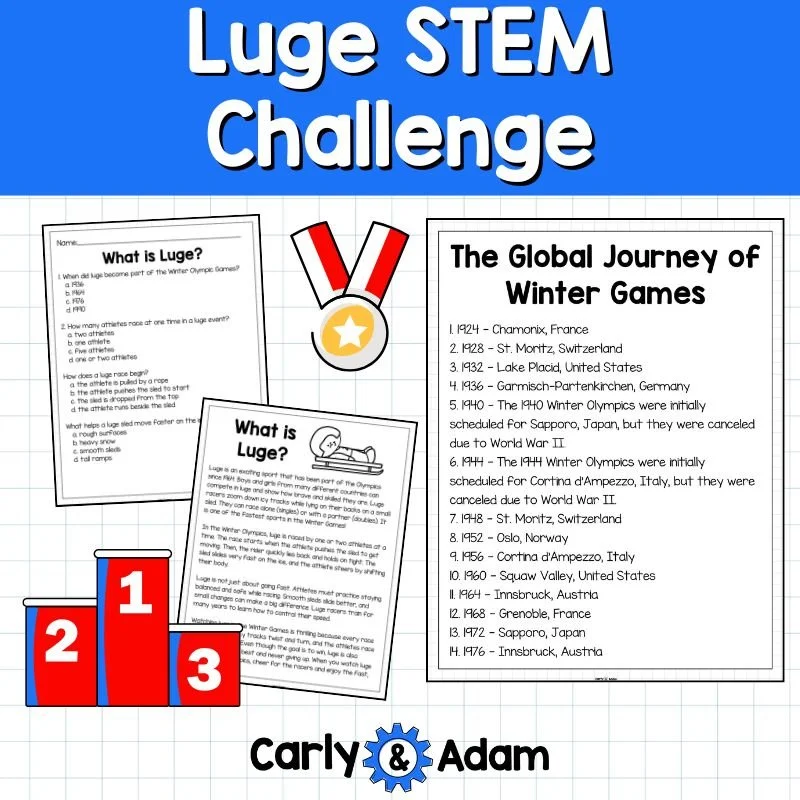
Use the included student-friendly reading pages and visuals to explain:
What a luge is
How athletes race in the Winter Olympics
Why smooth surfaces and design choices affect speed
Vocabulary cards for luge, friction, and speed help students understand key concepts in an age-appropriate way and prepare them for the engineering challenge ahead.
Step 2: Introduce the Engineering Challenge
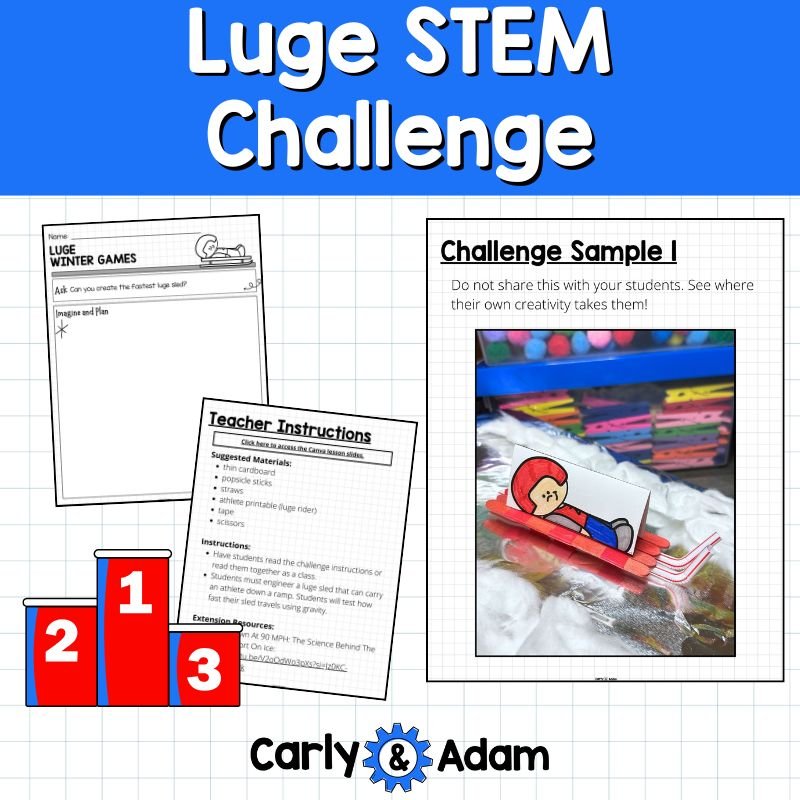
Present students with the guiding question:
Can you design a luge sled that can carry an athlete down a ramp as fast as possible?
Explain the constraints:
Students must use the provided materials.
The sled must safely carry the luge rider.
The sled will be tested using gravity on a ramp.
Step 3: Follow the Engineering Design Process
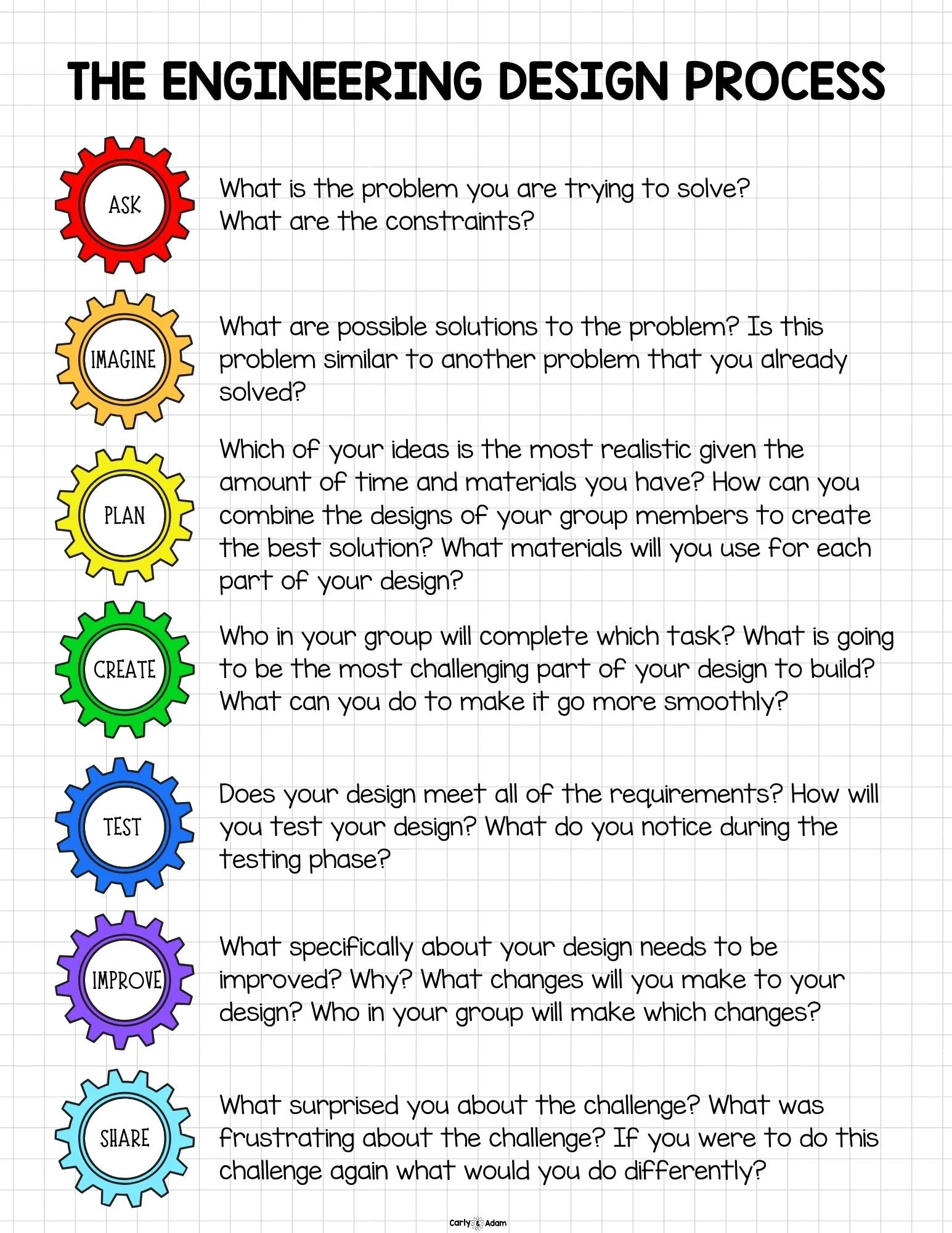
Students work through each stage of the engineering design process:
Ask – What is the problem we’re trying to solve?
Imagine & Plan – Brainstorm and sketch luge sled ideas
Create – Build the sled using classroom or makerspace materials
Test – Send the sled down the ramp and observe speed
Improve – Make changes based on what worked (or didn’t)
Share – Reflect on results and explain design choices
Reflection questions and planning sheets guide students through each step while encouraging productive struggle and teamwork.
Step 4: Test, Observe, and Redesign
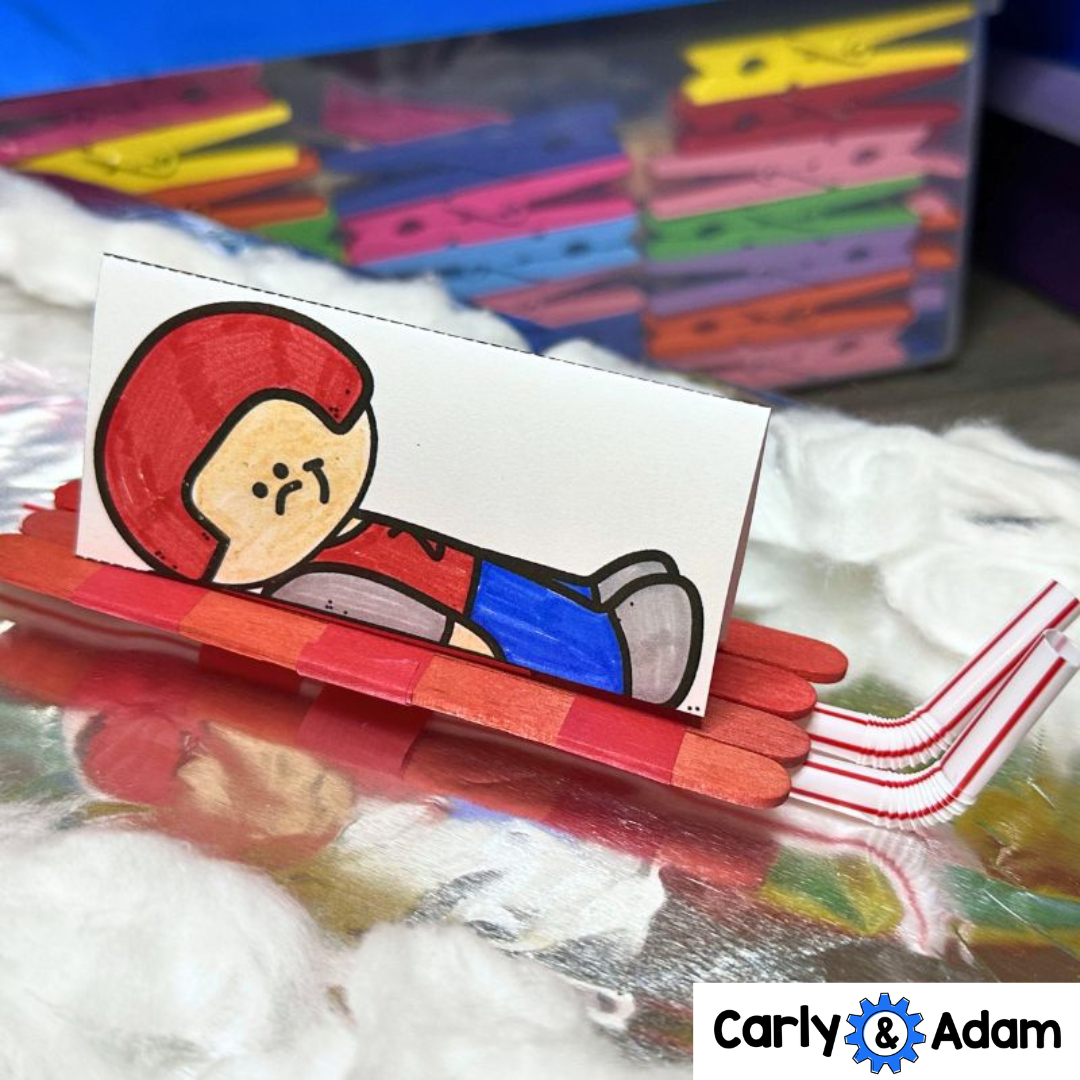
Testing is where the learning really happens.
As students send their luge sleds down the ramp, prompt them to notice:
Which designs move faster
How friction affects motion
What changes improve performance
Students quickly see that small design changes make a big difference, reinforcing real-world engineering thinking.
Step 5: Reflect and Connect to the Winter Games
Wrap up the challenge with reflection and discussion:
What worked best in your design?
What would you change next time?
How is this similar to real Olympic luge racing?
Optional writing pages allow students to record what they learned, making this challenge easy to connect to ELA standards as well.
Everything You Need—All in One Place
All of the activities mentioned above are included in the Winter Games STEM lesson plans by Carly and Adam, making it easy to plan an engaging Olympic-themed STEM experience without starting from scratch.
STEM Teachers Club Members can download all of these activities for free.
The full resource is also available for purchase on Carly and Adam’s store.
Whether you’re planning a full multi-day unit or just a few special STEM days during the 2026 Winter Olympics, this lesson plan gives you everything you need to bring the Games to life in your classroom.
Get all of the lessons in both Winter Games bundles as part of the STEM Teachers Club.
Spend Less Time Planning and More Time Teaching!
Hands-on STEM learning starts here.
Find ready-to-use STEM Activities and Science Curriculum, Practical Professional Development, and a Community of Educators to help you teach STEM with confidence.
You can get all 1000+ STEM Challenges by Carly and Adam as part of the STEM Teachers Club. Save 30% on your first month/year using coupon Code: CarlyAndAdamBlog.