
The Best Read Alouds to Introduce STEM in Elementary School
The following is a guest post from Dr. Jacie Maslyk.
Introducing STEM to your students is a BIG deal!
Using children’s literature is the perfect way to introduce the idea of the engineering design process or developing a growth mindset.
This post will highlight some great books to introduce STEM to your students. These are also the books that we’ve chosen as a part of our introductory lessons in our new NGSS STEM Curriculum.

What is Science?
As students begin to acclimate to school, we are introducing them to lots of different routines, procedures, and content. This rhyming introduction to science is a great first STEM book to share in kindergarten.
In the book, we introduce students to the to the basic ideas in science. Students see that space, fossils, and tornadoes are all a part of science. This book builds a foundation for the study of engineering, earth and space science, physical science, and life science.
In STEM classrooms, students learn that scientists explore different topics.
They also learn that questioning is a big part of what scientists and engineers do. Students can begin to ask and answer questions and take their first steps into researching topics and finding answers.
This kindergarten introduction lesson includes the creation of an anchor chart that is all about science. Students will also engage in a hands-on activity building their names--perfect for the start of the school year.
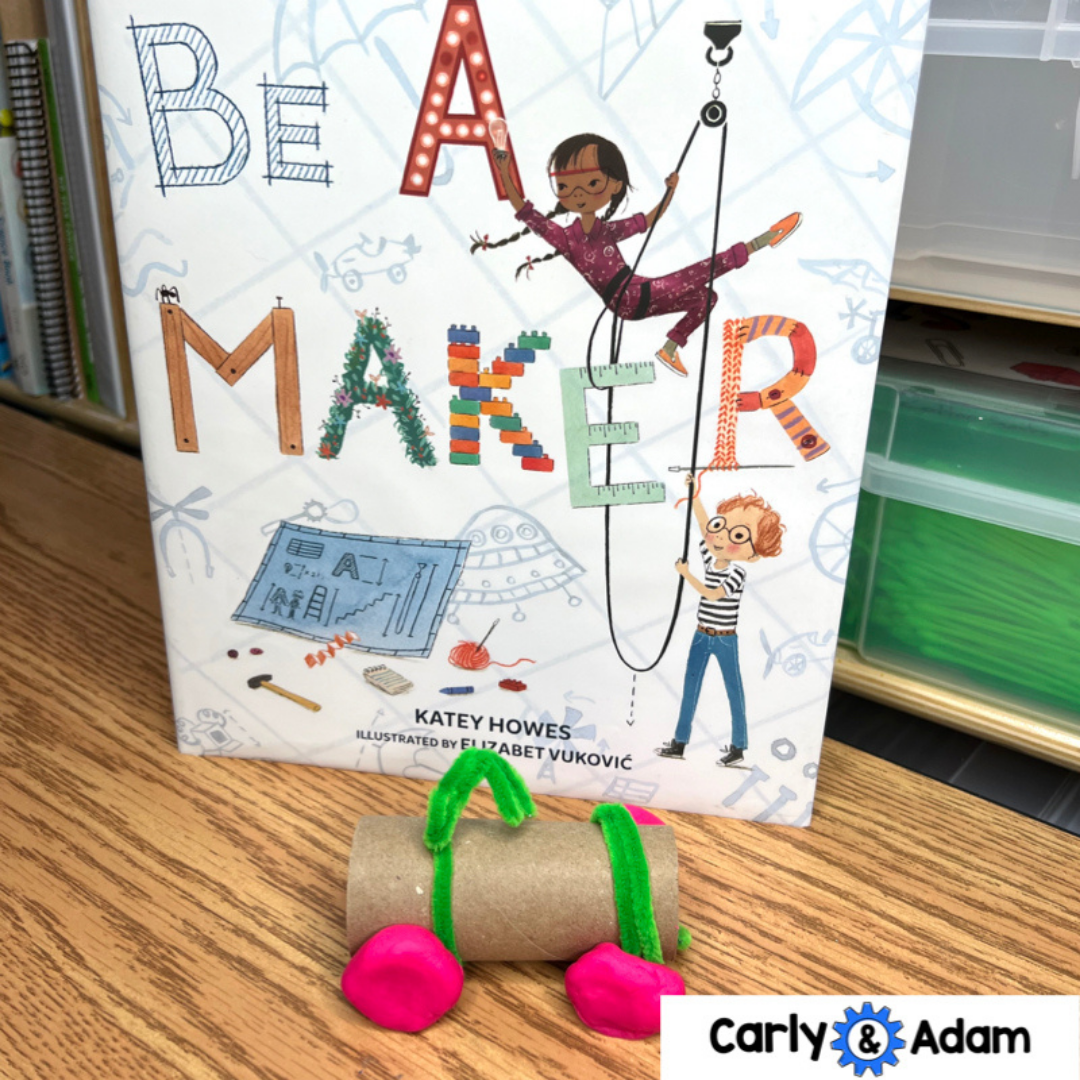
Be a Maker
Part of STEM is making, creating, and doing.
In the story Be a Maker, students will be engaged with the imaginative making of the main character. As she uses materials around her to create towers, she encourages readers to explore their ideas through engineering, design, art, and music. Students will learn that working together and using their strengths can help to change a community.
In STEM classrooms, students can begin to explore different materials for their own designs.
They’ll learn that thinking and planning are an important part of their work. Making blueprints, maps, or plans for a project guide students through the process. Students will learn that collaborative work can solve problems and benefit communities.
In the first grade introduction lesson, students will learn and practice routines for how to use classroom materials. They will collaborate with a small group using simple materials to design transportation.
Working together, they will solve problems.
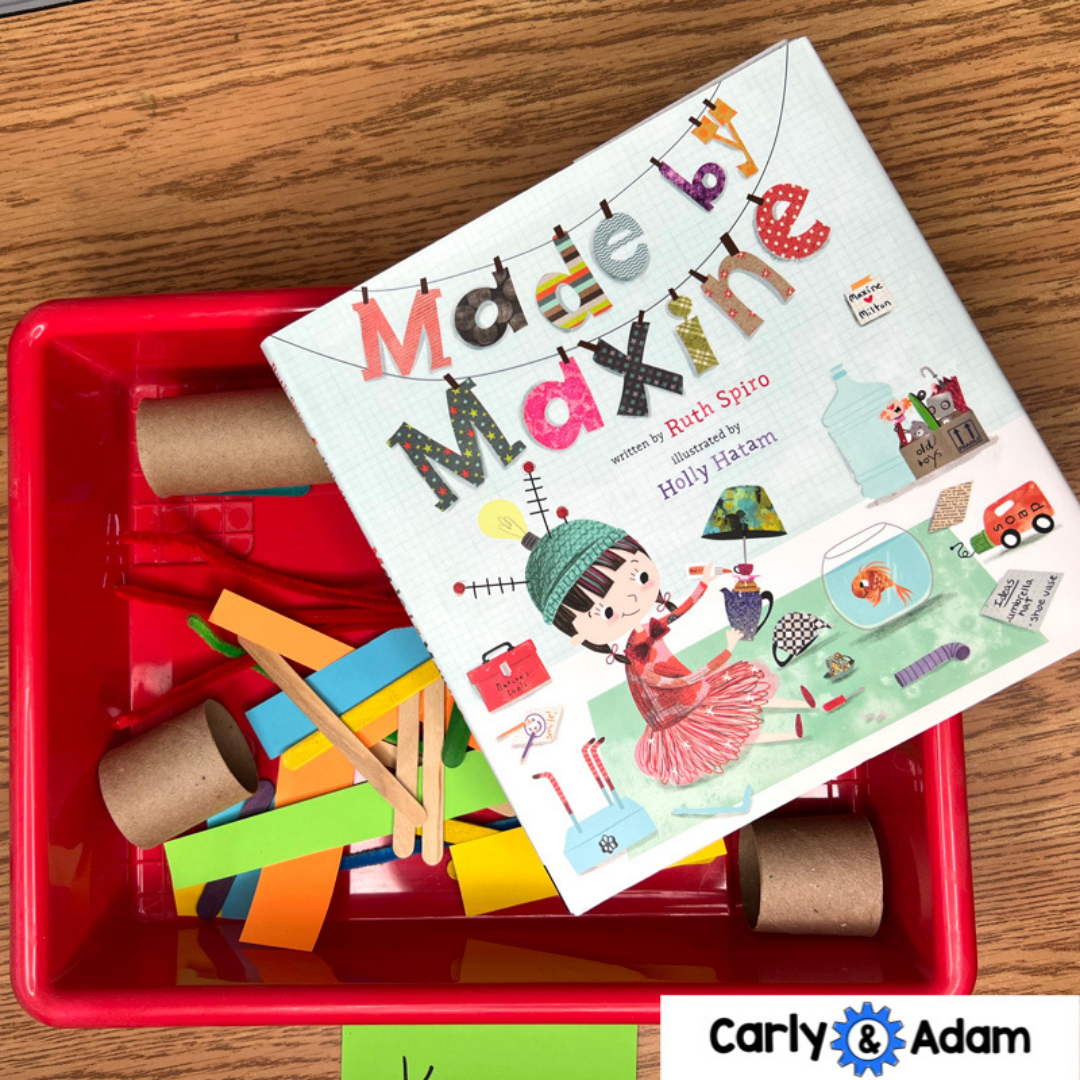
Made By Maxine
Maxine makes new things from old things. This story will inspire students to rethink how they might reuse and recycle materials. As a creative inventor, Maxine tries to make things to solve problems which comes in handy when she needs to design a way to get her pet fish to school.
Maxine uses everyday materials in her invention, although she does encounter different problems to solve as she works.
In STEM classrooms, students will be encouraged to find problems and design solutions.
Like Maxine, they will need to construct and deconstruct things, learning that is part of the design process. Utilizing different tools and materials, students will learn what to use and when. They will discover that solutions don’t always work and that is part of STEM learning.
The second grade introduction lesson the class will create an anchor chart or a bulletin board comparing materials that are reusable and recyclable. They will review guidelines for how to work in a group and complete a design challenge using recyclable materials.

Miss Makey and the Magic Bin
Author Mandi Figlioli shares a great story about a teacher and her magic bin that uncovers possibilities for students. The quirky teacher brings interesting things into class each day and students are excited about what the bin will include.
In STEM classrooms, students will find inspiration to think outside the box, generating imaginative design solutions and using materials in interesting ways.
Students will think about ways to approach new challenges.
The third grade introduction lesson will have students using a mystery bag of items to complete a group challenge. Students will demonstrate the way to work collaboratively with their group.
Students will discuss what it means to be an engineer, setting a foundation for work with the engineering design process.

What Do You Do with an Idea?
Beginning in only black and white, this story turns to color as the boy learns how to nurture the idea. Never giving up, he sticks with the idea, feeding and protecting it until there is a big change.
In STEM classrooms, students develop lots of ideas.
They design solutions to problems and try different iterations. Sometimes they stick with their first idea and other times their plans change drastically. This is all part of the engineering design process!
The fourth grade introduction lesson will present the idea of a growth mindset and why this is important in STEM.
Students will engage in a challenge that will have them failing fast and revisiting their design plans with their team to make improvements.
The Girl Who Never Made Mistakes
Let’s face it, students don’t like making mistakes. For some students it is downright stressful. This story shares the almost-perfect record of Beatrice and how she comes to terms with making a mistake. Beatrice learns how to be resilient and bounce back from mistakes and use them to her advantage. She lets go of her perfect persona and begins to have fun!
In STEM classrooms, making mistakes is a regular part of learning.
As students create, test, and fail, then learn to rebound quickly and improve their designs. Making mistakes is an important part of learning, but especially in STEM.
In the fifth grade introduction lesson, students will review the importance of connecting, communicating, and collaborating in their groups. Their team challenge will emphasize that making mistakes is a part of the learning process and that working through mistakes together will make for a stronger team.
Put It All Together
When STEM learning starts in the elementary grades, we have the opportunity to build student knowledge and skills in STEM. We can do this through the experiences we design, the lessons we plan, and the books that we share.
We have incorporated these books (and so many other amazing stories) together in our NGSS Curriculum. These stories will introduce STEM concepts, followed by lessons for every grade level that are aligned to the NGSS standards. With opportunities to research, design, and experiment, students will engage in science topics that will excite them about STEM.
Have more questions or need additional resources?
Download our Free STEM challenges from our Free STEM Resource Library.
Join our Free Facebook Group.
For more STEM ideas, inspiration, and collaboration with other STEM teachers be sure to join our FREE Facebook group Elementary STEM Teachers with Carly and Adam!

We hope you have found this blog post helpful. To stay connected with Carly and Adam's teaching tips and classroom freebies be sure to follow us on Facebook, Pinterest, Teachers Pay Teachers, and subscribe to our blog!