Hands-On Math with Number Magnetic Tile Cards
Put a basket of magnetic tiles on the table and invite students to build a number.
Which shapes will they choose? How will they turn those shapes into a number someone else can recognize? A familiar building material becomes a starting point for math conversations, creative thinking, and hands-on problem solving.
The Number Magnetic Tile Building Challenge STEM Task Cards from Carly and Adam give this exploration a clear starting point. Students can build numbers, experiment with different designs, and extend their work into addition, subtraction, and shape investigations. It is an easy activity to work into a math center, STEM station, or morning tub.
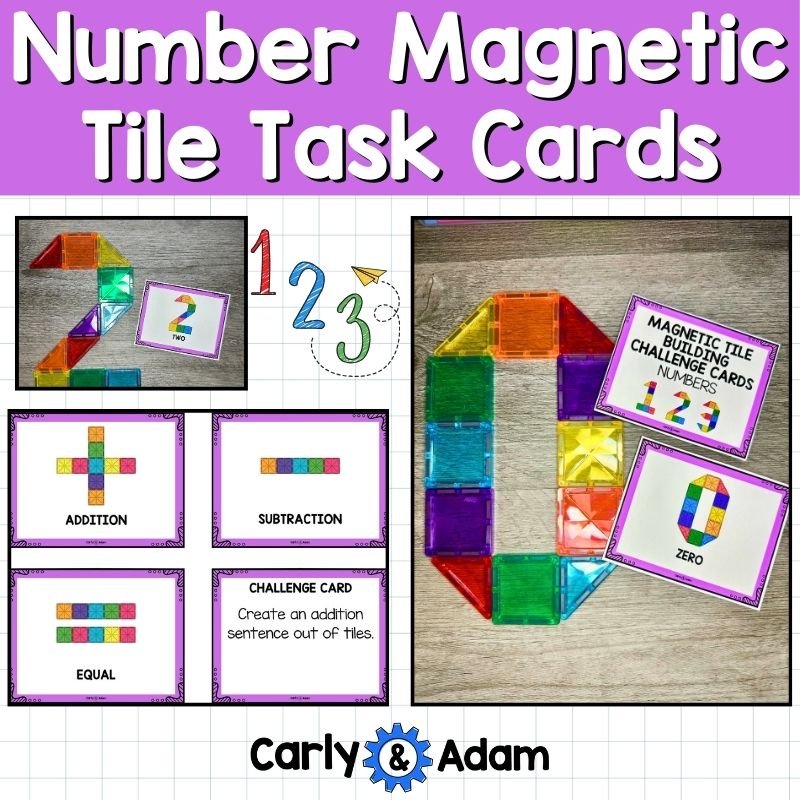
Turn magnetic tiles into hands-on math activities!
These Number Magnetic Tile STEM Task Cards include numbers 0–10, math symbols, and building challenges that encourage students to create, explore, and redesign.
Add them to kindergarten and first grade math centers, STEM stations, or morning tubs. Explore the resource from Carly and Adam and bring number building to your classroom!
Make Room for More Than One Solution
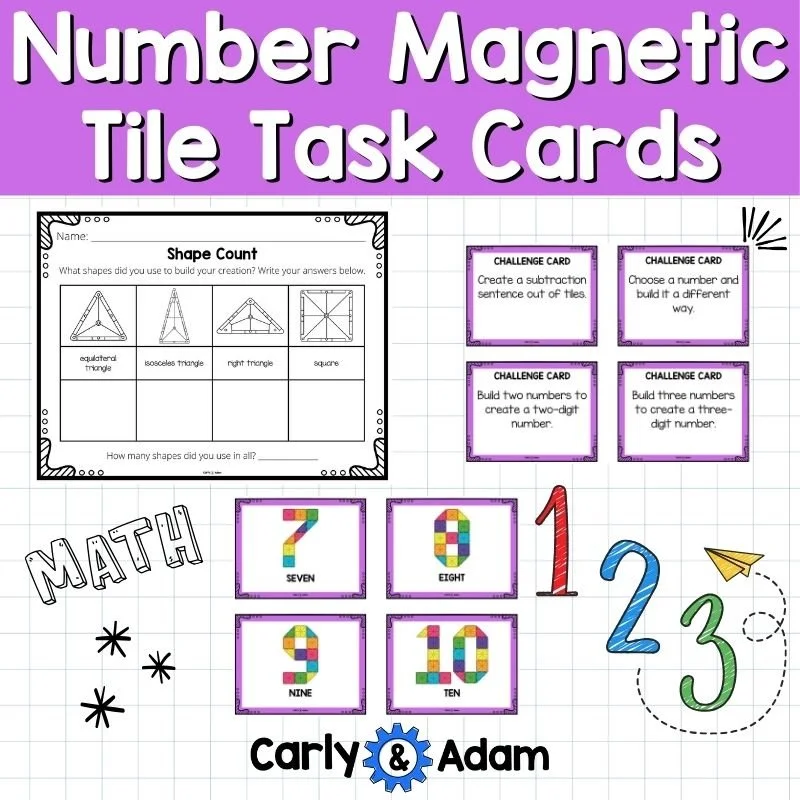
Ready to extend your magnetic tile math activities?
Challenge students to build a number a different way, create a subtraction sentence, or combine digits to make two-digit and three-digit numbers.
The included Shape Count page invites students to identify and count the shapes in their builds. Explore Number Magnetic Tile STEM Task Cards for creative math and STEM learning!
To get started, print and cut the cards, gather magnetic tiles, and give students a flat building surface. Laminating the cards is an optional way to prepare them for repeated use. Begin with a few number choices so students can spend their time exploring the tiles and planning a design.
The illustrated cards offer a visual starting point, but leave room for students to try their own arrangements. The teacher directions emphasize inquiry, reflection, and redesign, and the separate challenge sample pages are intended for teacher reference rather than showing students a finished solution.
Use Questions to Encourage Redesign
Try asking, “How could you build the same number another way?” or “What happens if you turn that triangle?” Students can compare arrangements and explain which parts make their number recognizable. For a partner activity, have one student describe a possible change while the other tries it, then switch roles.
Moving, rotating, connecting, and repositioning tiles gives students opportunities to practice fine motor control and spatial reasoning. When a design does not look the way they intended, encourage them to adjust one part and look again.
Extend the Learning with Equations and Shapes
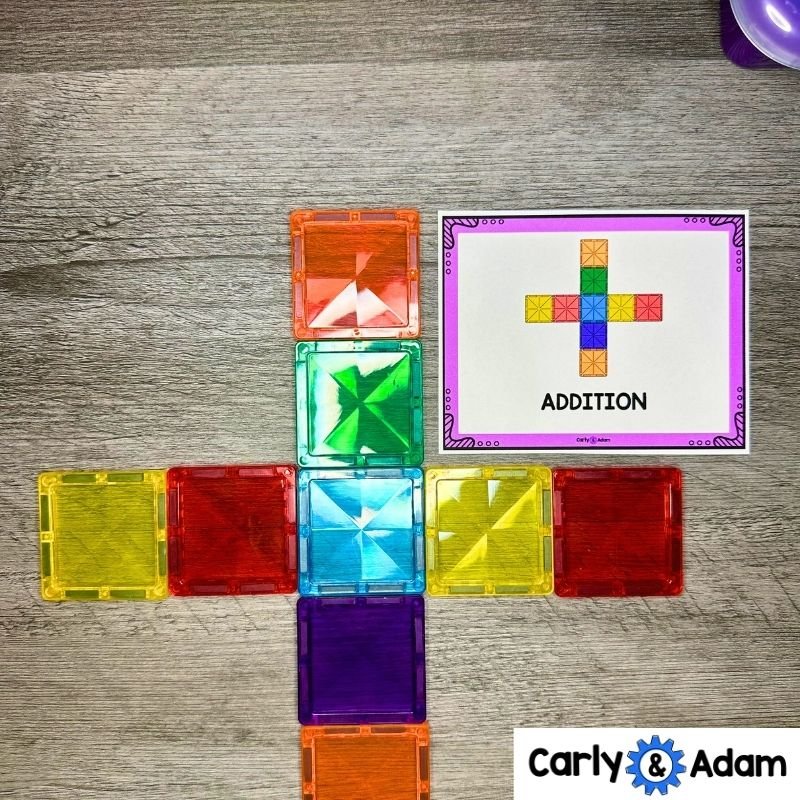
Bring addition to life with magnetic tiles!
Students can build a plus sign, create numerals, and put them together to form an addition sentence. Add counters to help students explain the quantities behind their equations.
These Number Magnetic Tile STEM Task Cards from Carly and Adam make a creative addition to hands-on math centers and STEM stations.
When students are ready, introduce the operation cards and invite them to build a complete number sentence. For example, students might make 2 + 3 = 5 with tiles and use counters to explain why the equation is true. This connects the symbols they build with the quantities and relationships those symbols describe.
Count and Graph the Building Materials
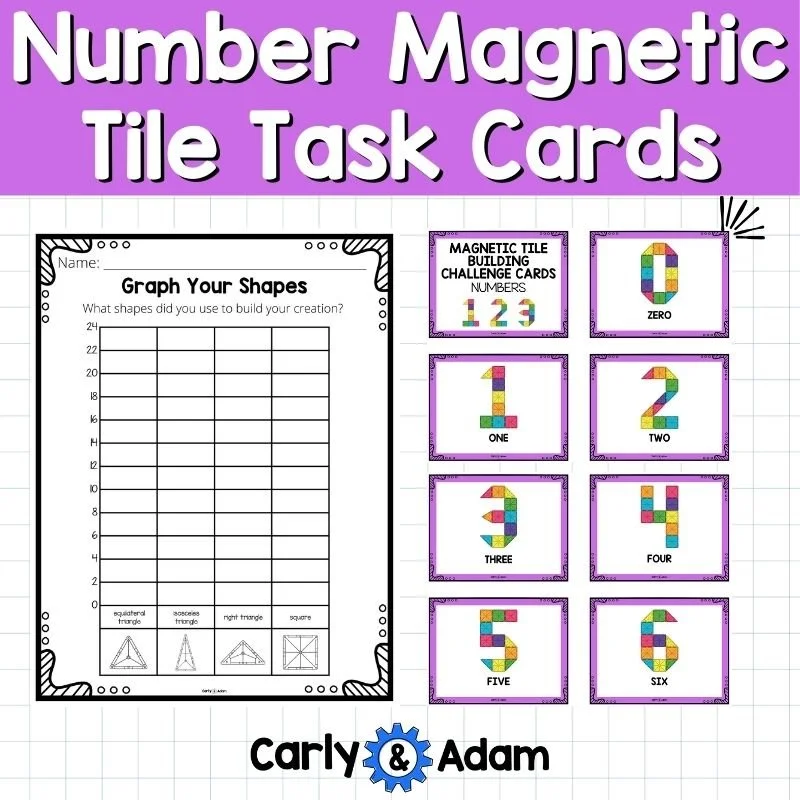
Build a number, count the shapes, and graph the results!
Number Magnetic Tile STEM Task Cards connect hands-on building with shape identification and early math conversations.
Students can explore the shapes in their creations using the included Graph Your Shapes recording page. Try this magnetic tile activity in your kindergarten or first grade math centers!
After building, students can use the Shape Count page to record the shapes in their creation and find the total.
The page includes categories for equilateral triangles, isosceles triangles, right triangles, and squares. Introduce the shape vocabulary as needed and help students identify the tiles they actually used.
The Graph Your Shapes page offers another way to organize the same information. Its vertical scale counts by twos, so model how to record quantities, including odd numbers, before students work independently. Ask which shape they used most often and how their graph might change if they rebuilt the number.
Adjust the Challenge for Your Students
For students who need support, offer one familiar number and a smaller selection of tiles.
For students ready for more, use the included prompts to build two-digit or three-digit numbers. Add a conversation about place value by asking what each digit represents and what changes when its position changes.
You can also invite students to compare two versions of the same number. Which uses fewer tiles? Which uses more triangles? These teacher-created extensions give students a reason to explain their choices and revisit their designs.
Ready to bring number building to your classroom? Pair the Number Magnetic Tile Building Challenge STEM Task Cards with your magnetic tiles and start with one number. Leave time for students to build, talk, and try again—their explanations can be just as valuable as the finished creation.
You can download these task cards in Carly and Adam’s store and members of the STEM Teachers Club can download it for FREE.

Spend Less Time Planning and More Time Teaching!
Hands-on STEM learning starts here.
Find ready-to-use STEM Activities and Science Curriculum, Practical Professional Development, and a Community of Educators to help you teach STEM with confidence.
You can get all 1000+ STEM Challenges by Carly and Adam as part of the STEM Teachers Club. Save 30% on your first month/year using coupon Code: CarlyAndAdamBlog.