Can a small boat carry a load and move across the water? Those questions give students two different reasons to think carefully about a design. Our Mayflower Thanksgiving STEM Activities include a weight challenge and a speed challenge, with planning and reflection pages to guide students through both.
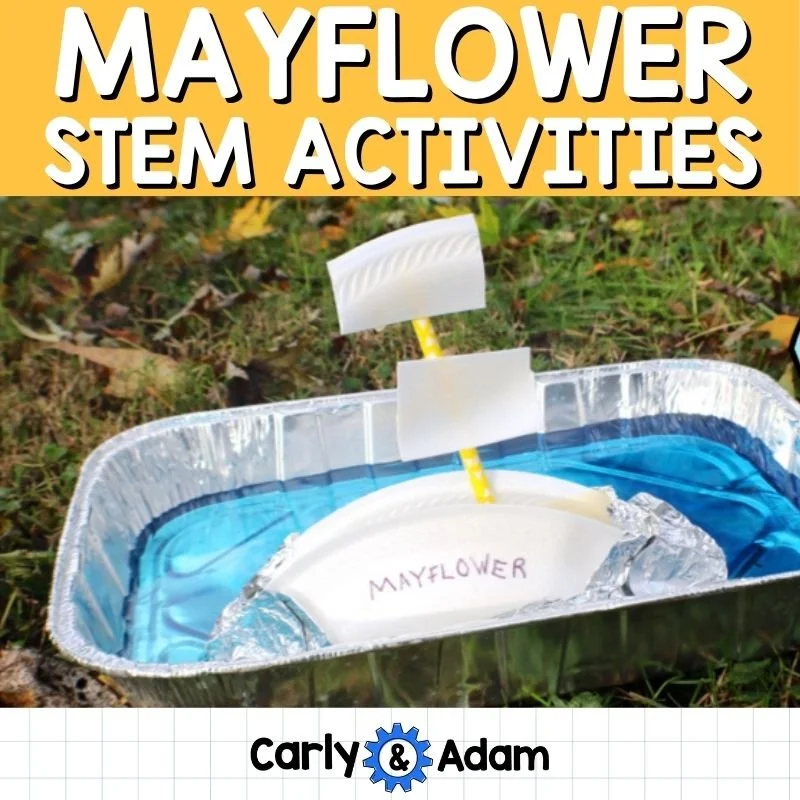
Mayflower STEM activities cover with a model boat floating in a foil pan. Plan a Thanksgiving engineering lesson with two Mayflower boat challenges. Students use foil, a foam plate, and tape to explore carrying a load and moving across water, then reflect on their designs. This image previews Mayflower Thanksgiving STEM Activities from Carly and Adam. Use it to take a closer look at the resource before preparing your lesson. Keep the materials organized before students begin. Invite children to share their thinking with a partner. Use the teacher directions to prepare for the activity. Leave time for a short conversation about the learning. Make space for questions, observations, and student ideas. Choose the support that fits your students. Explore this activity in Carly and Adam’s store.
One Boat Theme, Two Design Goals
Introduce the challenges separately so students understand what they are trying to accomplish. In the weight challenge, they design a boat and test how many pennies it can hold. In the speed challenge, they focus on how their boat travels across a tub of water.
A design that works well for one goal may need changes for the other. That gives students a useful reason to compare their ideas. Ask them which features they would keep and which they would reconsider when the goal changes.
Gather the Building Materials
The teacher directions use an approximately 8-by-8-inch piece of aluminum foil, a foam plate, and a 12-inch piece of masking tape for each group. A straw is included for the speed challenge. You will also need a tub of water and pennies for the weight test.
The speed lesson includes additional teacher-managed testing equipment described in its directions. Prepare and review that setup before class. The two activities include teacher and student instructions, individual and group planning pages, and reflection questions.
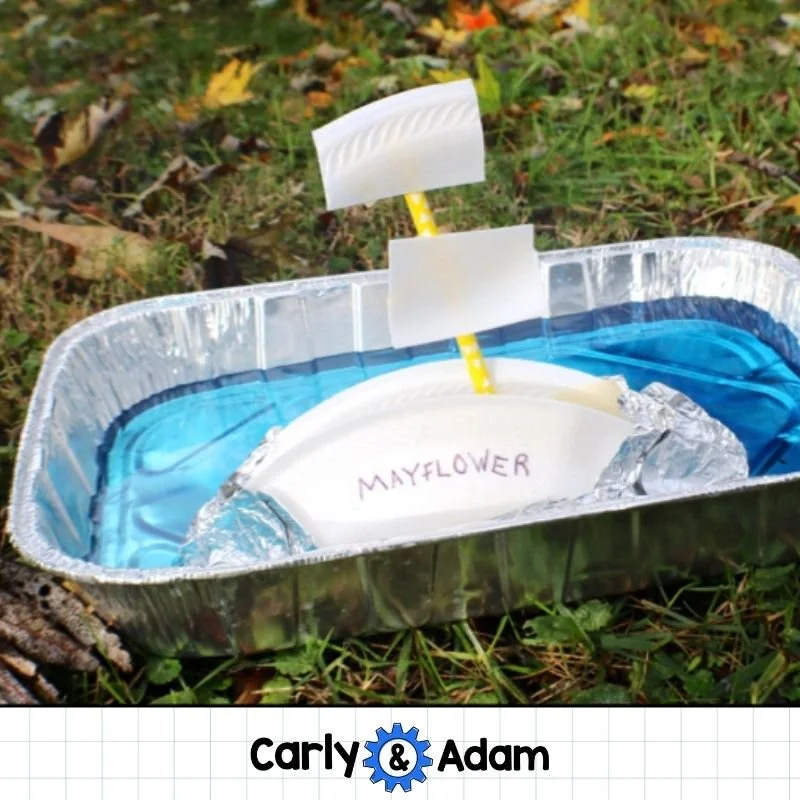
Foam-plate Mayflower model with a straw mast floating in a foil pan. Plan a Thanksgiving engineering lesson with two Mayflower boat challenges. Students use foil, a foam plate, and tape to explore carrying a load and moving across water, then reflect on their designs. This image previews Mayflower Thanksgiving STEM Activities from Carly and Adam. Use it to take a closer look at the resource before preparing your lesson. Use the resource with your November classroom plans. Invite children to share their thinking with a partner. Use the teacher directions to prepare for the activity. Let students describe a choice they made. Keep the focus on the process as well as the finished work. Plan a hands-on learning experience with a seasonal connection. Save this idea for your next November lesson!
Make Time for Individual and Team Planning
Students work in groups of three or four. The lesson suggests approximately 10 minutes of individual planning, another 10 to 20 minutes for team planning, and 30 minutes to build. Adjust the building time for the ages and needs of your students, as the teacher directions recommend.
Ask students to explain how they intend to use their limited materials. What part of the boat needs support? Where might water enter? How will the group decide which idea to try? Keep the planning conversation focused on choices students can investigate.
Test the Weight Challenge
Once the boats are ready, test how many pennies each can hold. For an optional teacher routine, have students predict a result before the test and add pennies consistently while watching the boat’s balance.
Invite groups to explain what they observed. Did one side dip lower? Did the boat keep its shape? A result becomes more useful when students can connect it with a feature of their design. Leave time to discuss what they would improve if they built again.
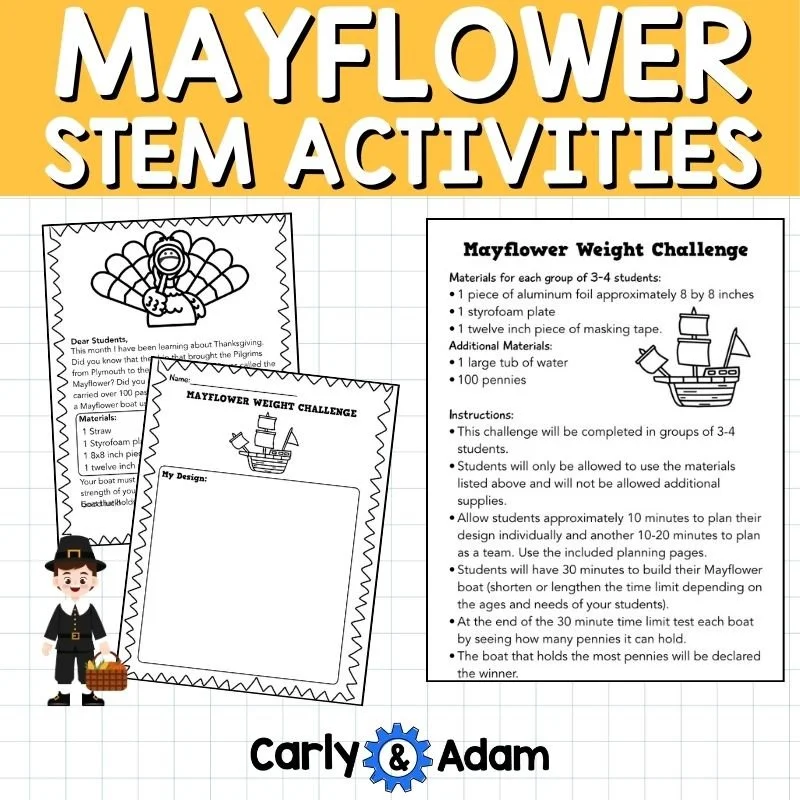
Preview of Mayflower weight challenge instructions and journal. Plan a Thanksgiving engineering lesson with two Mayflower boat challenges. Students use foil, a foam plate, and tape to explore carrying a load and moving across water, then reflect on their designs. This image previews Mayflower Thanksgiving STEM Activities from Carly and Adam. Use it to take a closer look at the resource before preparing your lesson. Give students time to explain what they notice. Keep the materials organized before students begin. Invite children to share their thinking with a partner. Use the teacher directions to prepare for the activity. Keep the focus on the process as well as the finished work. Plan a hands-on learning experience with a seasonal connection. Save this idea for your next November lesson!
Compare Designs with the Speed Challenge
The second challenge gives students a new goal: moving across the water quickly. Use the separate speed planning pages so students can explain how their choices support that goal. Follow the complete teacher directions for the testing setup.
Afterward, compare the thinking behind the two activities. Which features seemed helpful for carrying weight? Which mattered when the boat needed to travel? Students can use their reflection pages to describe a successful choice, a difficulty, and a possible improvement.
Use these challenges as a hands-on engineering connection within your November teaching. Keep any historical discussion grounded in the sources you use, and let the boat tests provide the evidence for students’ engineering explanations.
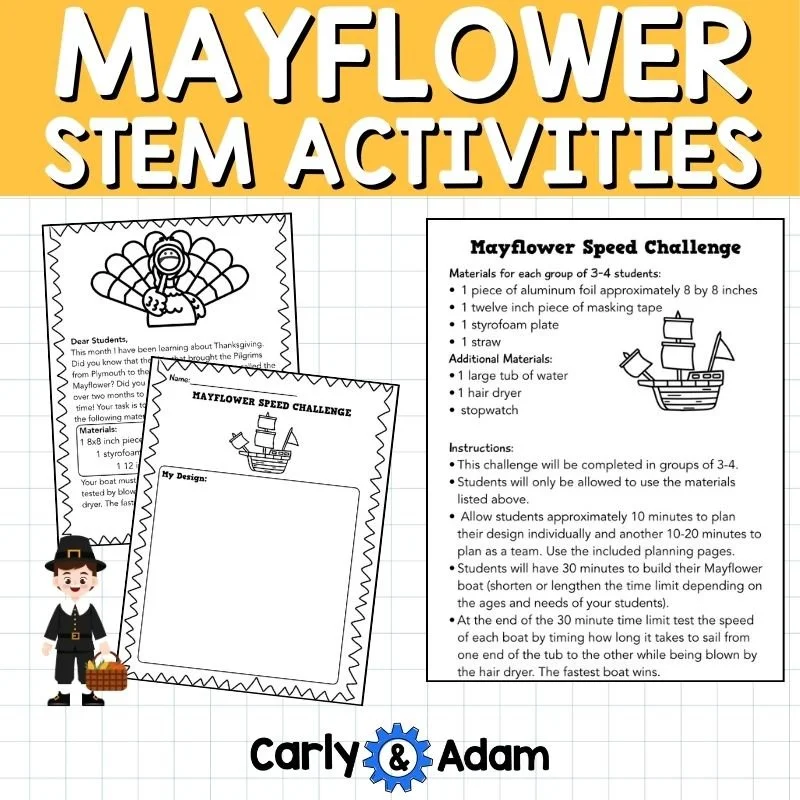
Mayflower speed challenge preview with teacher directions and student planning pages. Plan a Thanksgiving engineering lesson with two Mayflower boat challenges. Students use foil, a foam plate, and tape to explore carrying a load and moving across water, then reflect on their designs. This image previews Mayflower Thanksgiving STEM Activities from Carly and Adam. Use it to take a closer look at the resource before preparing your lesson. Keep the materials organized before students begin. Invite children to share their thinking with a partner. Use the teacher directions to prepare for the activity. Let students describe a choice they made. Make space for questions, observations, and student ideas. Save this idea for your next November lesson! Explore this activity in Carly and Adam’s store.
Spend Less Time Planning and More Time Teaching!
Find ready-to-use lessons, practical professional development, and a community of educators in the STEM Teachers Club.