
Kindergarten Fine Motor Activities
Developing fine motor skills is essential for kindergarten students as it sets the foundation for writing, cutting, and other crucial tasks. Here are some engaging and effective activities to help kindergarteners improve their fine motor skills:
13 Fine Motor Activities for Kindergarten
Pattern Stacking
Cutting
Tracing
Lacing
Stacking
Cutting and Gluing
Hole Punching
Play Dough Sculpting
Taping
Line Formation
Geoboards
Symmetry Cutting
Shoe Tying

What are fine Motor Skills in Kindergarten?
Fine motor skills refer to the ability to make movements using the small muscles in our hands and wrists. In kindergarten, these skills are crucial for tasks such as writing, cutting, buttoning, and using tools like pencils and scissors. Developing fine motor skills helps children perform everyday activities more independently and prepares them for more complex tasks as they grow.

How do you teach fine Motor Skills in Kindergarten?
Teaching fine motor skills in kindergarten involves incorporating a variety of hands-on activities that encourage children to use and strengthen their hand muscles. Educators and parents can provide materials such as play dough, blocks, and scissors, along with engaging activities like lacing cards, cutting exercises, and sensory bins.
By creating a playful and supportive environment, children are motivated to practice and develop these skills. Regularly rotating activities and increasing their complexity keeps children interested and challenged. Additionally, providing positive reinforcement and celebrating small achievements helps build confidence and encourages continued practice.

1.) Pattern Stacking
Materials: Pattern printables, Duplo bricks
Creating patterns by stacking Duplo bricks according to printed guides helps children recognize and replicate patterns, enhancing both fine motor skills and cognitive abilities related to sequencing.
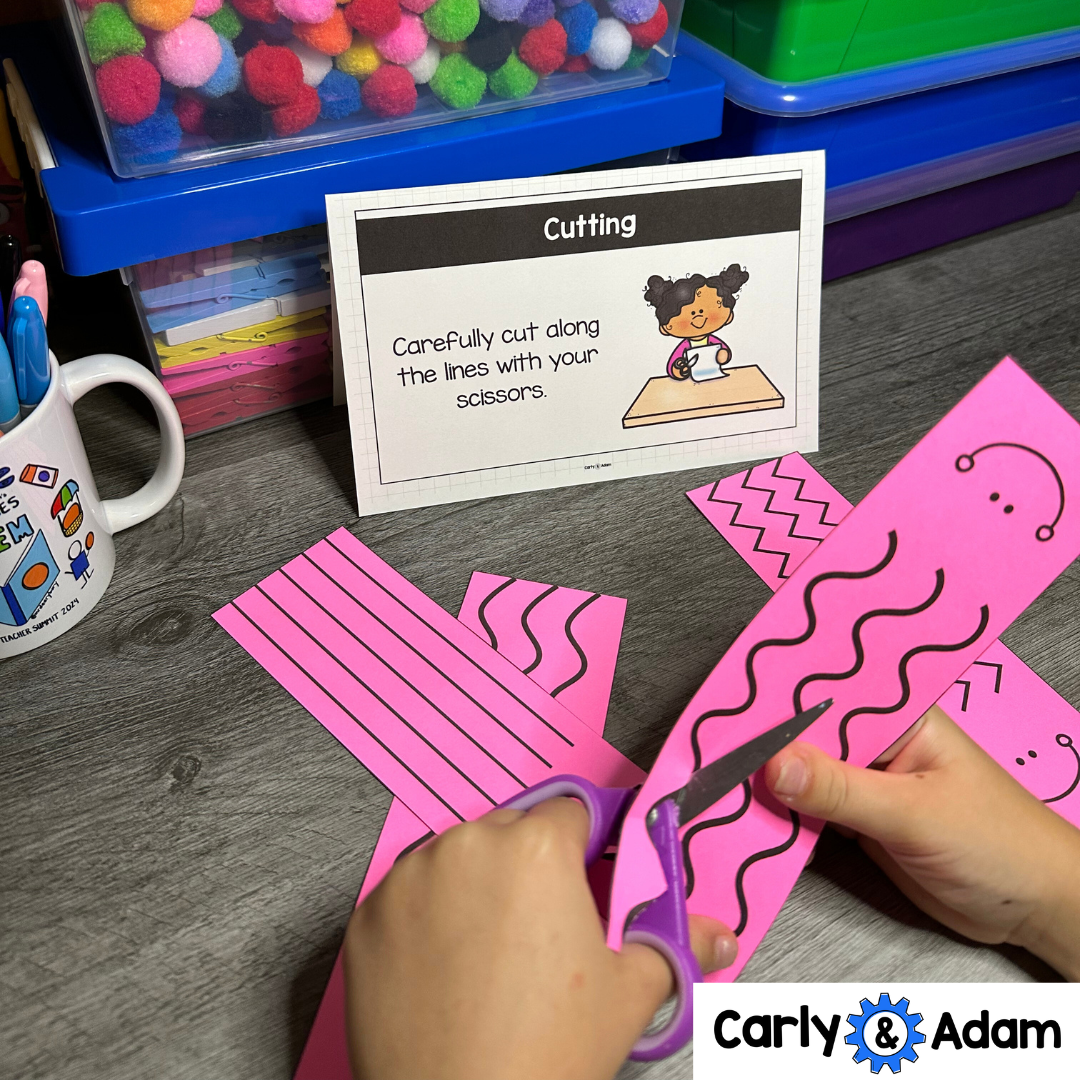
2.) Cutting
Materials: Cutting printables, scissors
Simply cutting along lines with scissors hones a student's ability to follow paths precisely, which is fundamental for tasks like cutting out complex shapes and improving overall hand coordination.

3.) Tracing
Materials: Printable tracing pages, pencils or crayons, dry erase pockets, and dry erase markers (optional)
Tracing over dotted lines on various shapes and letters helps children practice control over their hand movements, preparing them for writing tasks. Using dry erase pockets allows for repeated practice without wasting paper.

4.) Lacing
Materials: Printable lacing cards (laminated), yarn, tape
Lacing yarn through pre-punched holes in cards strengthens hand-eye coordination and dexterity. This activity mimics sewing, giving students a feel for threading and spatial awareness.

5.) Stacking
Materials: KEVA planks or similar building materials
Building towers by stacking blocks enhances spatial reasoning, hand stability, and fine motor control. It also encourages problem-solving and patience as students aim to balance their structures.

6.) Cutting and Gluing
Materials: Printables, scissors, glue (liquid or stick)
Cutting out shapes and gluing them onto paper to create pictures combines several fine motor skills, including cutting with precision and controlling glue application, fostering creativity and coordination.

7.) Hole Punching
Materials: Hole punch, printable dot strips
Using a hole punch to punch holes in designated spots on paper strips helps students develop hand strength and coordination. The repetitive motion of squeezing the hole punch enhances grip strength and precision.

8.) Play Dough Sculpting
Materials: Face printables (laminated or in page protectors), printable emotion cards, play dough
Using play dough to create faces that match various emotions encourages creativity and fine motor development. Manipulating the dough strengthens hand muscles and fosters an understanding of facial expressions and social emotional learning.

9.) Taping
Materials: Tape, shape printables or die-cut shapes, scissors, construction paper
Using tape to attach shapes to construction paper requires precision and control, teaching students how to manage sticky materials and use scissors effectively.
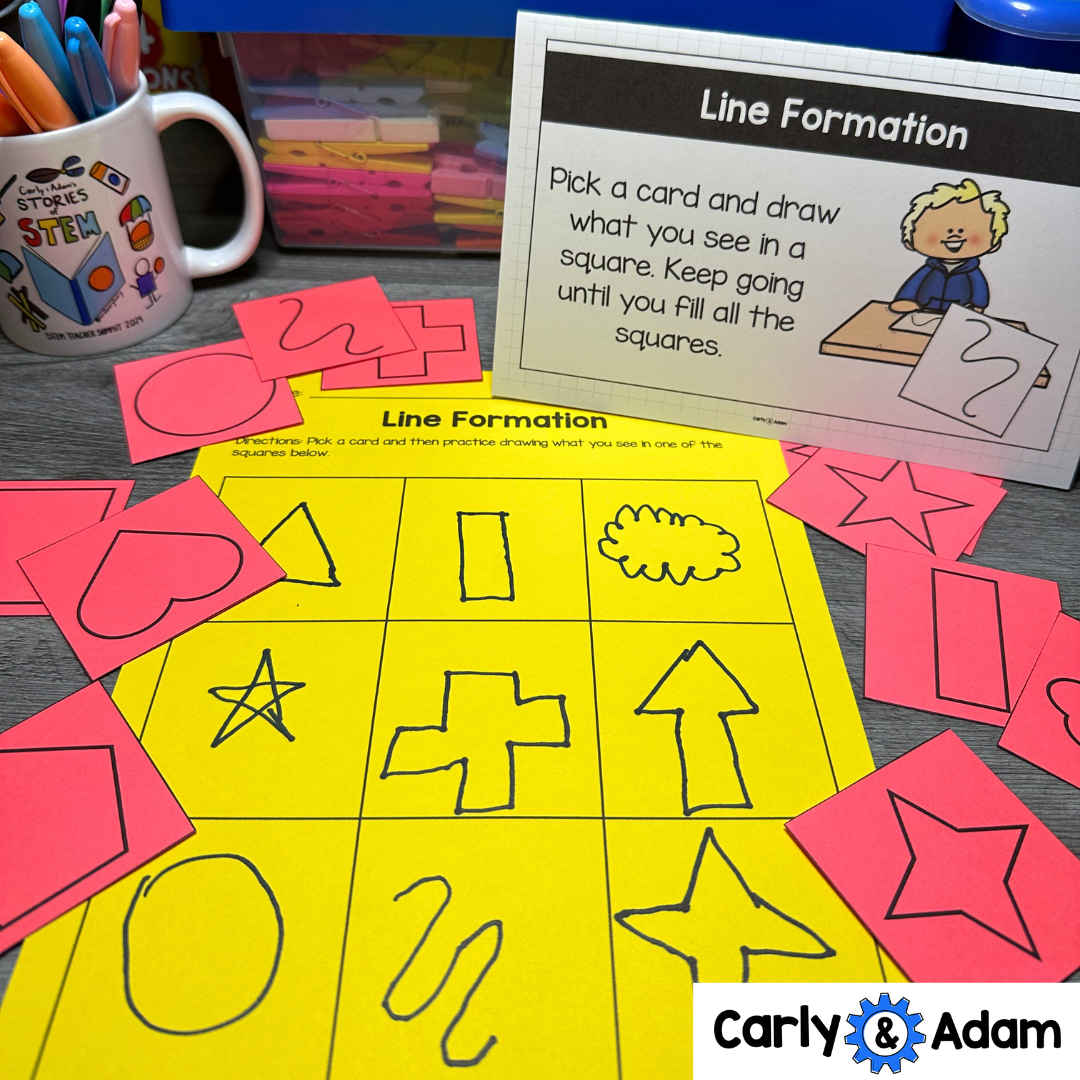
10.) Line Formation
Materials: Printable shape cards, crayons or pencils, printable recording sheet
Drawing shapes from cards onto a recording sheet helps students practice controlled movements with writing instruments. This activity reinforces shape recognition and the ability to follow instructions accurately.

11.) Geoboards
Materials: Printable cards, geoboards, rubber bands
Stretching rubber bands around pegs on a geoboard to form shapes strengthens fingers and improves spatial awareness. This activity also introduces geometric concepts in a hands-on manner.

12.) Symmetry Cutting
Materials: Printables, scissors
Students fold paper and cut along lines to create symmetrical shapes. This activity improves hand-eye coordination and the ability to follow complex patterns, reinforcing the concept of symmetry.

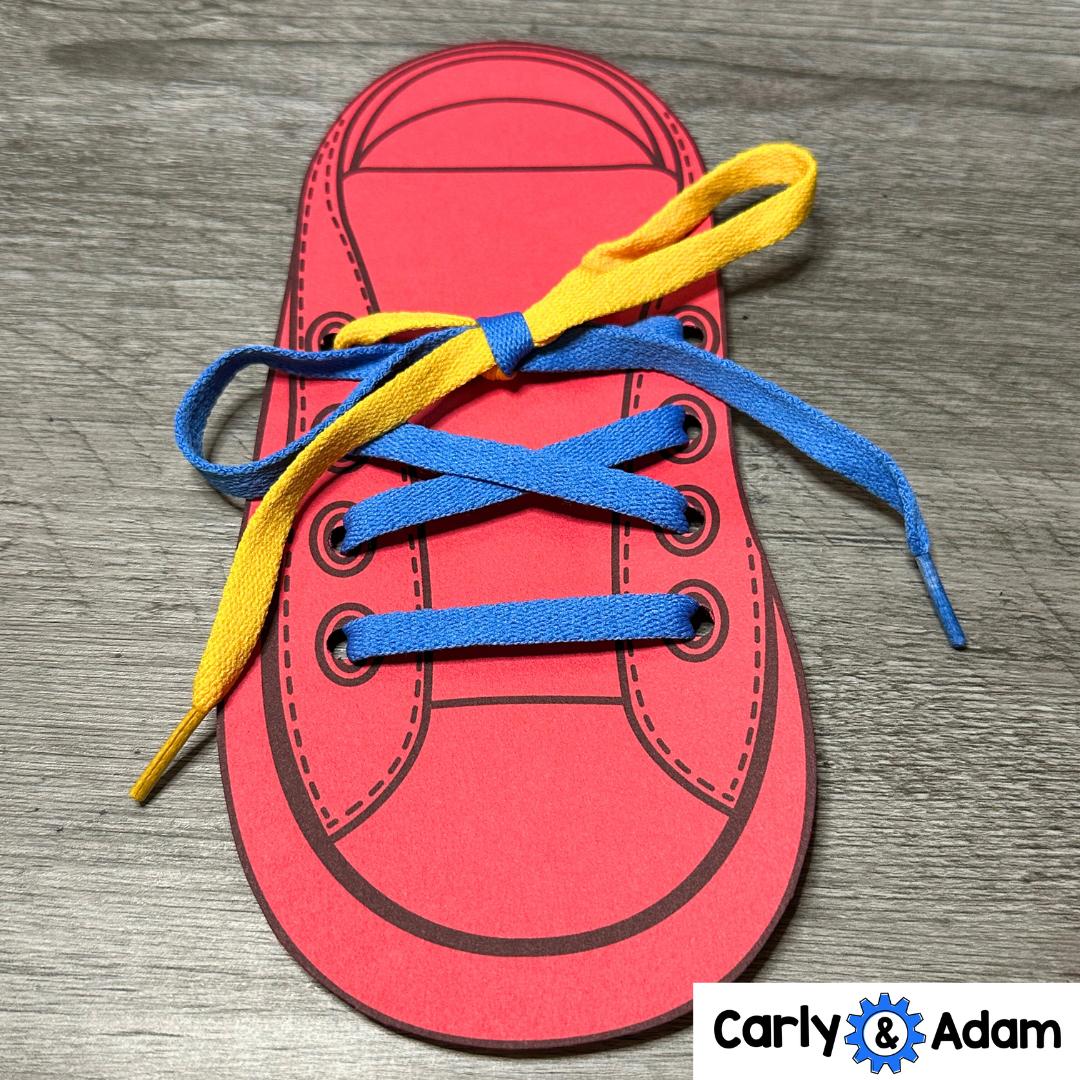
13.) Shoe Tying
Materials: Shoe printables (laminated and hole-punched), shoelaces, printable directions, shoe box (optional)
Practicing tying shoelaces builds fine motor precision and hand-eye coordination. Laminated shoe printables can be attached to a shoe box for stability, making it easier for students to practice tying knots and bows.
These 13 Fine Motor Skills Centers offer a diverse range of activities to help kindergarten students develop fine motor skills in an engaging and hands-on way. By incorporating these centers into your classroom, you can support your students in building the foundational skills necessary for success in kindergarten and beyond.

Have more questions or need additional resources?
You can get all 500+ STEM Challenges by Carly and Adam as part of the STEM Teachers Club Membership. Save $5 on your first month using coupon Code: CarlyAndAdamBlog.
We hope you have found this blog post helpful. To stay connected with Carly and Adam's teaching tips and classroom freebies be sure to follow us on Facebook, Pinterest, Teachers Pay Teachers, and subscribe to our blog!