
In today's rapidly changing world, fostering a growth mindset in children is more essential than ever. A growth mindset—the belief that abilities and intelligence can be developed through dedication and hard work—equips kids with the resilience and adaptability they need to thrive in various aspects of life.
Integrating growth mindset activities into your classroom or home routine can make a significant impact, and using engaging, hands-on STEM centers is a powerful way to do this.
Here’s how you can use STEM activities to encourage a growth mindset in kids, using a series of fun, thought-provoking challenges that not only build STEM skills but also foster perseverance, creativity, and problem-solving abilities.
10 Growth Mindset Activities for Kids
Float Your Boat
Tower Power
Chopstick Challenge
Bounce Into Success
Stack it Up
Domino Dynamite
Super Sorter
Bridge Builders
Puzzle Masters
Pom Pom Push
What are Growth Mindset Activities for Kids?
Growth mindset activities for kids are designed to help children develop the belief that their abilities and intelligence can grow through effort, learning, and perseverance. These activities often involve challenges that require problem-solving, creativity, and resilience, encouraging kids to see mistakes as opportunities for learning rather than signs of failure.
By engaging in tasks that promote trial and error, reflection, and continuous improvement, children learn to embrace challenges, persist in the face of setbacks, and develop a love for learning. These activities can take many forms, such as hands-on STEM projects, puzzles, or games that emphasize the importance of effort and strategy in achieving success.
1.) Float Your Boat
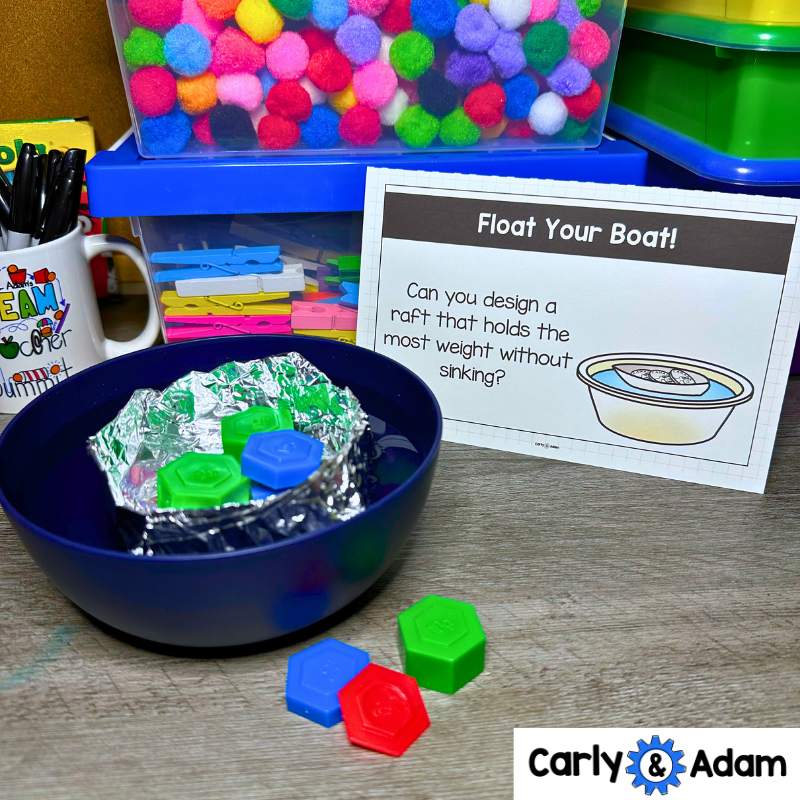
Challenge: Can you design a raft that holds the most weight without sinking?
Suggested Materials:
aluminum foil
basin with water
weights
Growth Mindset Focus: As students experiment with different raft designs, they’ll learn the importance of trial and error. Encourage them to reflect on what didn’t work and how they can improve their designs to achieve better results.
2.) Tower Power
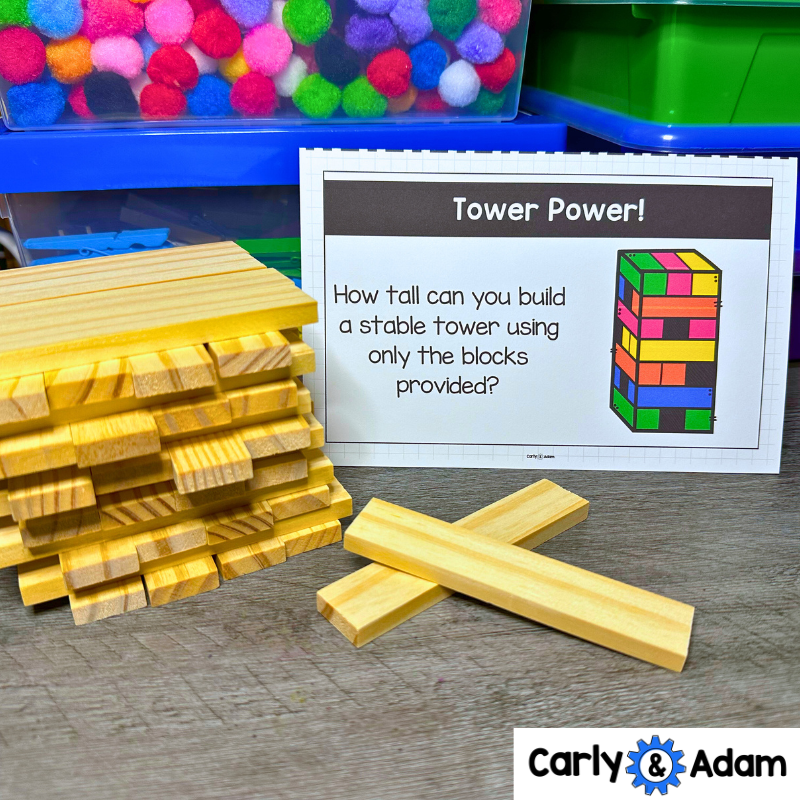
Challenge: How tall can you build a stable tower using only the blocks provided?
Suggested Materials:
KEVA planks or similar blocks
Growth Mindset Focus: Building a tall, stable tower requires patience and a willingness to start over if the tower collapses. This activity emphasizes that failure is a stepping stone to success.
3.) Chopstick Challenge
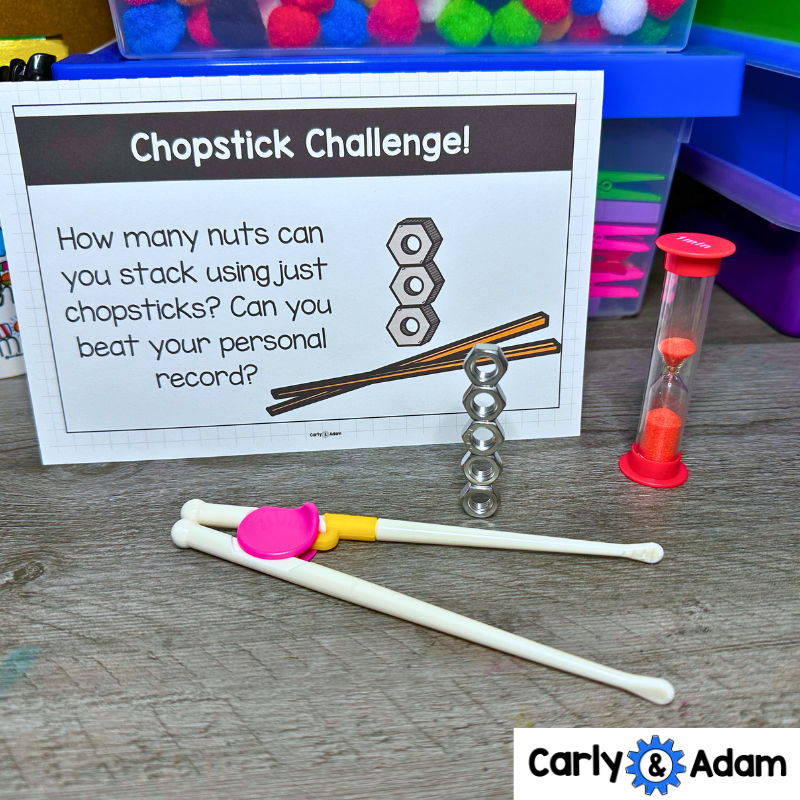
Challenge: How many nuts can you stack using just chopsticks? Can you beat your personal record?
Suggested Materials:
chopsticks
metal nuts
Growth Mindset Focus: This challenge is a perfect way for kids to practice fine motor skills while also improving their focus and perseverance. Each attempt provides a new opportunity to set a personal best, highlighting the value of incremental progress.
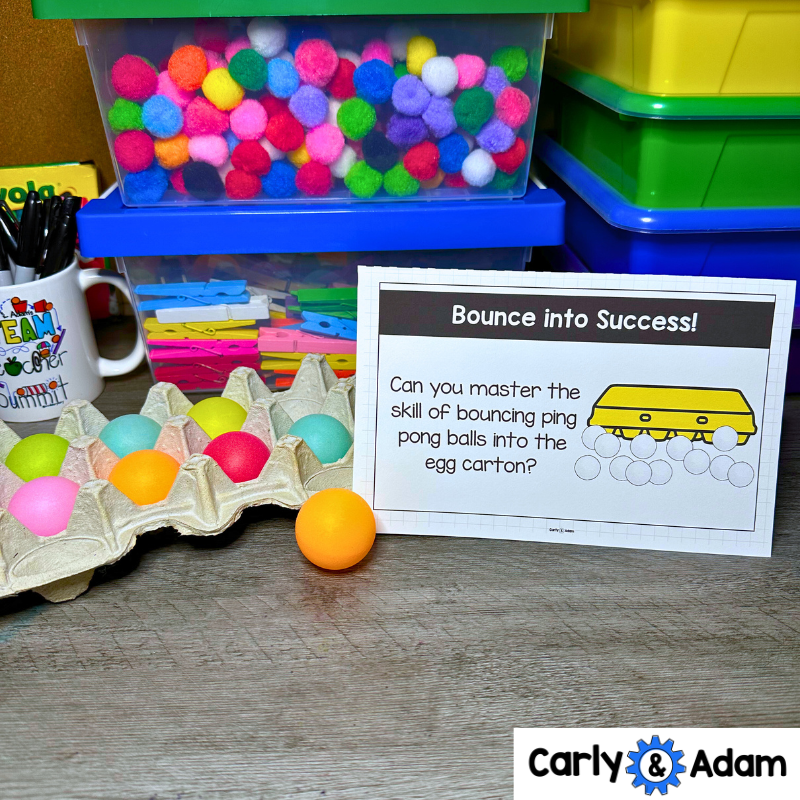
4.) Bounce Into Success
Challenge: Can you master the skill of bouncing ping pong balls into the egg carton?
Suggested Materials:
egg carton
12 ping pong balls
Growth Mindset Focus: Success in this activity comes from persistence and adjusting techniques based on what works and what doesn’t. It’s a great way for kids to learn that repeated efforts and small adjustments can lead to success.
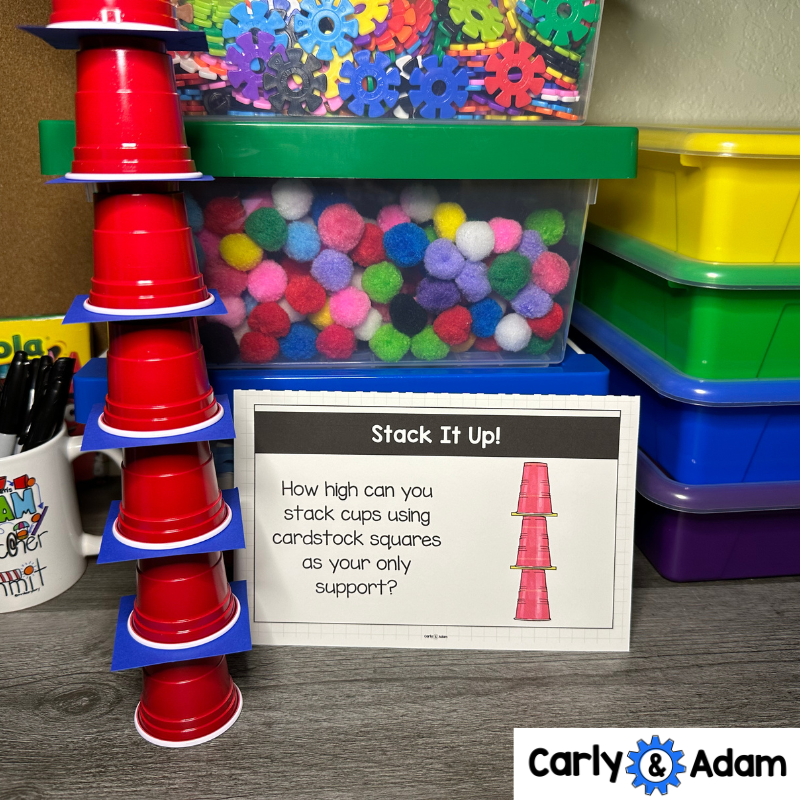
5.) Stack it Up
Challenge: How high can you stack cups using cardstock squares as your only support?
Suggested Materials:
cups
cardstock squares
Growth Mindset Focus: Stacking cups with limited support challenges students to think creatively and persist through the challenges of balance and design. This activity teaches that even simple tasks can have complex solutions.
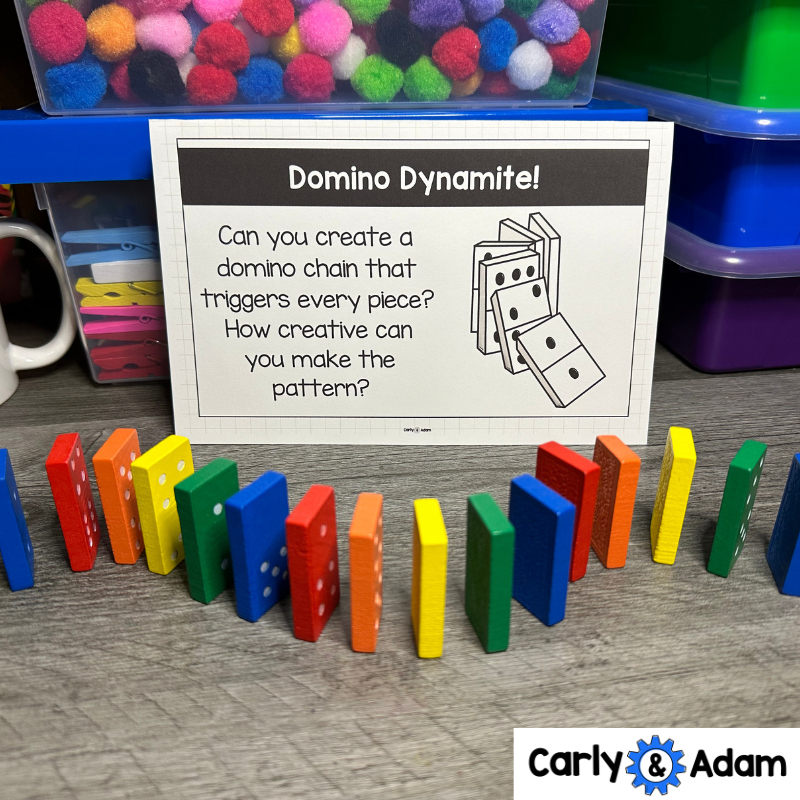
6.) Domino Dynamite
Challenge: Can you create a domino chain that triggers every piece? How creative can you make the pattern?
Suggested Materials:
Dominoes
Growth Mindset Focus: Creating an intricate domino pattern requires careful planning and patience. Students will learn that a carefully laid plan can sometimes need adjustments, and that’s okay. Perseverance pays off when the entire chain reaction is successful.
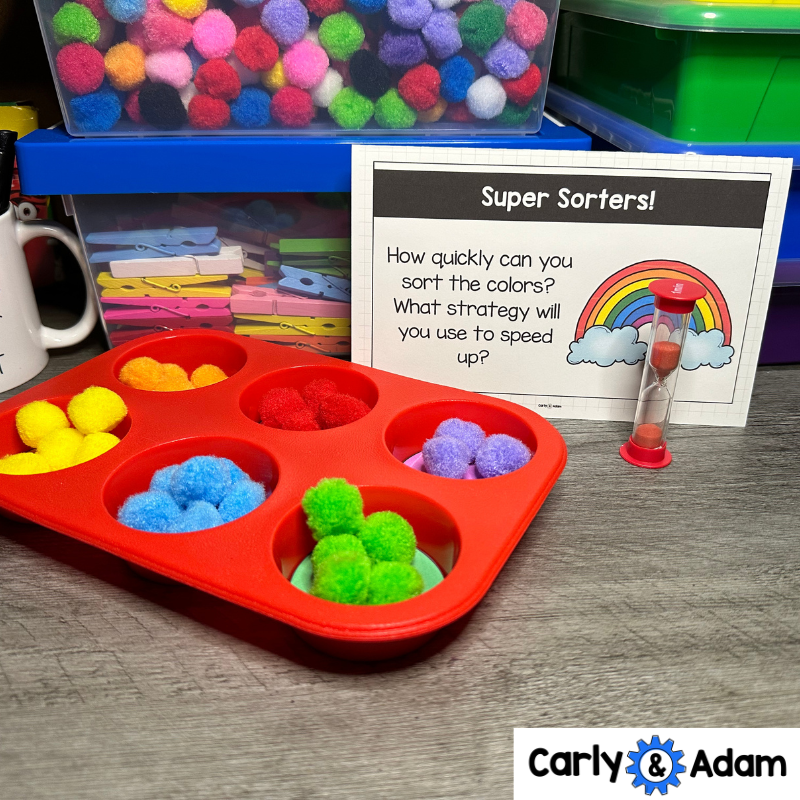
7.) Super Sorter
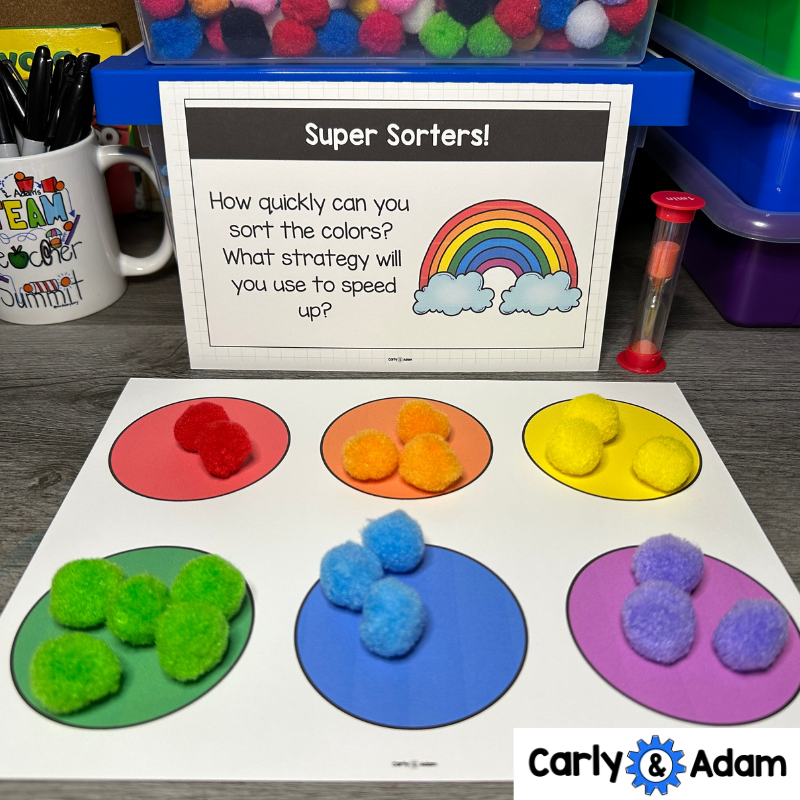
Challenge: How quickly can you sort the colors? What strategy will you use to speed up?
Suggested Materials:
6-count cupcake pan
colored circles
pom poms
tweezers
Growth Mindset Focus: Sorting requires not just speed but also strategy. This activity helps students develop their problem-solving skills and teaches them to refine their approach to improve their efficiency.
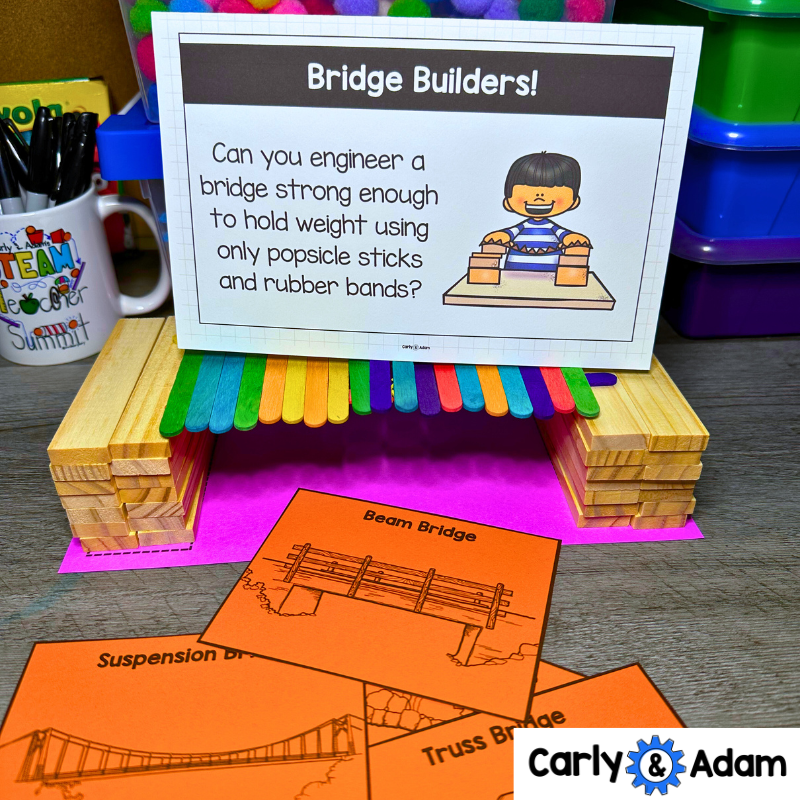
8.) Bridge Builders
Challenge: Can you engineer a bridge strong enough to hold weight using only popsicle sticks and rubber bands?
Suggested Materials:
popsicle sticks
rubber bands
blocks
bridge mat
Growth Mindset Focus: Engineering a functional bridge with limited materials fosters innovation and resilience. Students learn that overcoming constraints is a part of problem-solving, and each iteration brings them closer to a successful design.
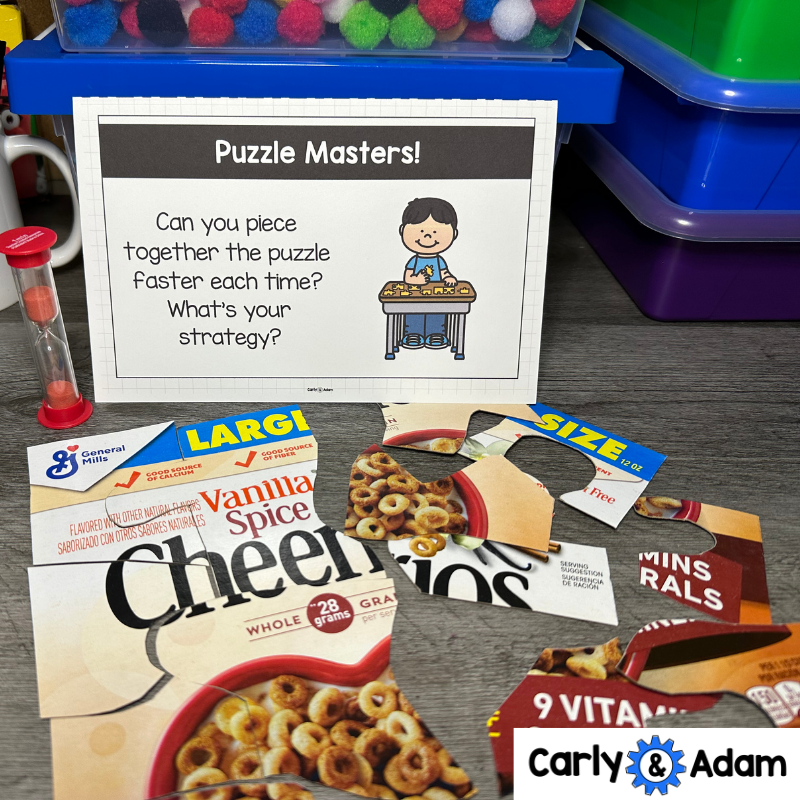
9.) Puzzle Masters
Challenge: Can you piece together the puzzle faster each time? What’s your strategy?
Suggested Materials:
cereal box front cut into pieces
Growth Mindset Focus: Puzzle-solving encourages critical thinking and strategy development. As students work to improve their speed and accuracy, they’ll see how practice and perseverance lead to better outcomes.
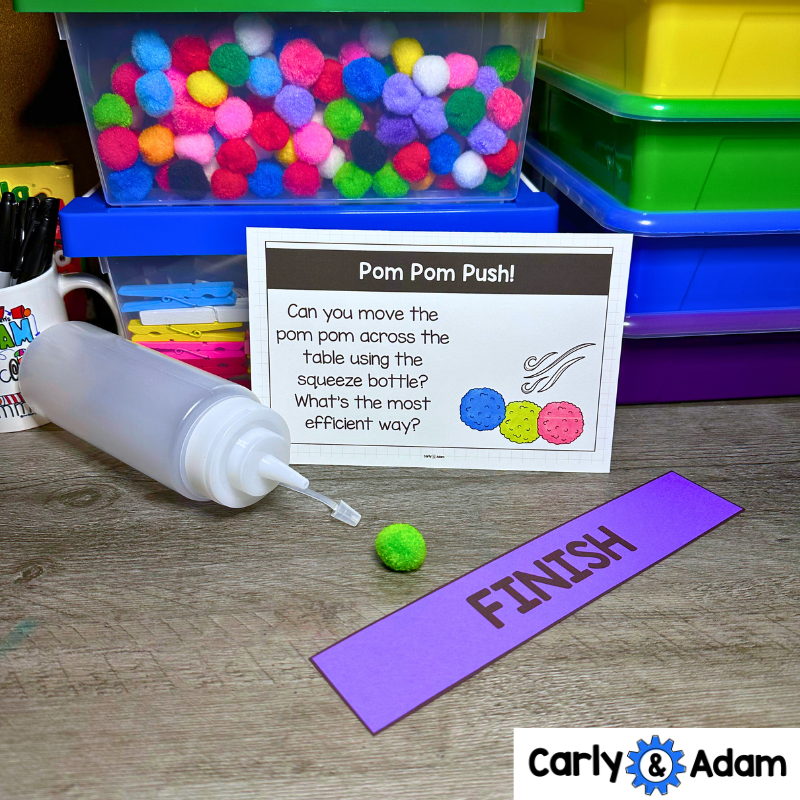
10.) Pom Pom Push
Challenge: Can you move the pom pom across the table using the squeeze bottle? What’s the most efficient way?
Suggested Materials:
large pom pom balls
plastic squeeze bottle
Growth Mindset Focus: This activity teaches students about efficiency and adaptability. As they refine their technique, they’ll understand that sometimes, less effort with more strategy can yield better results.
Encouraging Reflection and Growth
After each activity, it’s crucial to guide kids through a reflection process. Ask them questions like:
What challenges did you face, and how did you handle them?
How did you feel when you succeeded or didn’t meet your goal?
What did you learn by trying different strategies?
If you could complete this station again, what would you do differently?
These reflections help solidify the growth mindset principles by encouraging kids to think about their learning process and the strategies that led to improvement.
Simplifying Your Planning Process
The STEM Teachers Club Membership not only provides high-quality lesson plans but also offers a structured approach to implementing them. With weekly themes and suggested read-alouds, you can easily integrate STEM into your daily schedule. The detailed planning samples and customizable templates help you stay organized and ensure that your STEM activities are aligned with educational standards.
Spend Less Time Planning and More Time Teaching!
Hands-on STEM learning starts here.
Find ready-to-use STEM Activities and Science Curriculum, Practical Professional Development, and a Community of Educators to help you teach STEM with confidence.
You can get all 1000+ STEM Challenges by Carly and Adam as part of the STEM Teachers Club. Save 30% on your first month/year using coupon Code: CarlyAndAdamBlog.