
6 Science Experiments for The Dot by Peter Reynolds
Turn a simple dot into a science discovery!
These six science experiments for The Dot by Peter Reynolds connect reading with hands-on investigations for kindergarten through fifth grade. From colorful coffee filters to balloon hovercrafts, each activity encourages students to ask questions, make predictions, and explore.
Get all six of these lessons as part of the STEM Teachers Club.
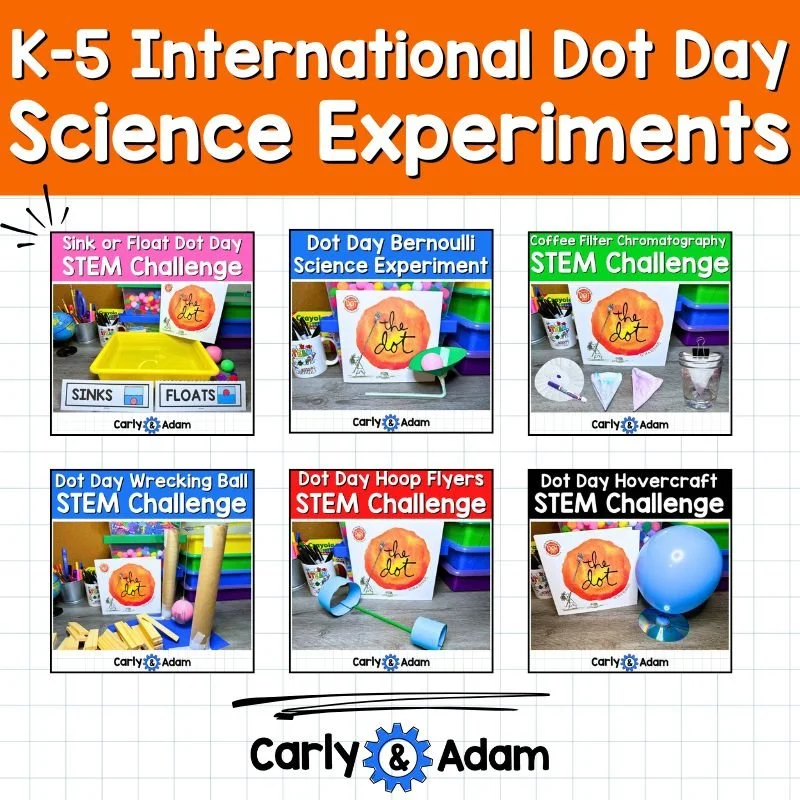
6 Science Experiments for The Dot by Peter Reynolds
Celebrate International Dot Day with 6 science experiments inspired by The Dot by Peter Reynolds! Explore sink or float, coffee filter chromatography, hoop flyers, a floating ball, a wrecking ball, and a balloon hovercraft.
These K–5 STEM activities connect reading with hands-on science as students make predictions, test ideas, and record discoveries. Inspire creativity and curiosity with Dot Day activities for kindergarten through fifth grade. Click to explore all six experiments!
Get all six of these lessons as part of the STEM Teachers Club.
Start by reading The Dot and discussing how Vashti builds confidence by trying something new.
Then, invite your students to bring that same curiosity to science! These activities are a fun addition to your Dot Day celebration or a read-aloud STEM lesson throughout the year.
1. Sink or Float
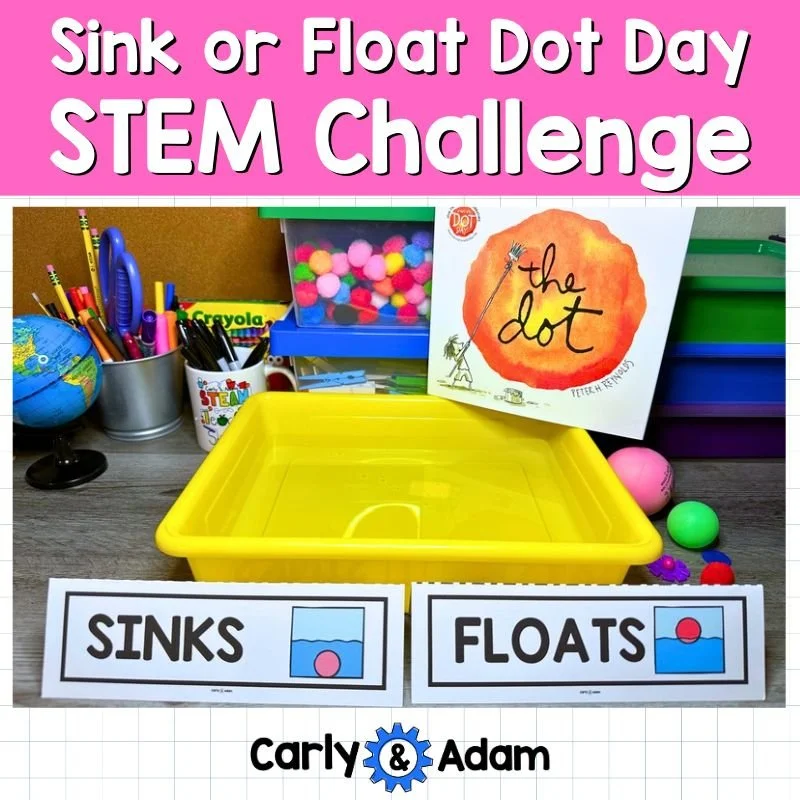
Kindergarten Sink or Float Science Experiment for The Dot by Peter Reynolds
Celebrate International Dot Day with a hands-on sink or float science experiment inspired by The Dot by Peter Reynolds! This kindergarten STEM activity invites students to predict, test, and sort round objects while exploring which ones sink or float. Connect your read-aloud with science as students practice observing, comparing, and recording their discoveries. Perfect for Dot Day activities, kindergarten science, and STEM centers. Click to explore all 6 science experiments for The Dot!
Suggested Grade: Kindergarten
Will a round object sink or float? Students investigate this question by testing objects such as buttons, coins, small balls, and marbles in clear cups of water. Before testing, they predict what will happen and then record their observations with pictures or words.
This Dot Day science experiment introduces students to making predictions, observing, and comparing results. It also provides an opportunity to explore circles and spheres while discovering that round objects don’t all behave the same way in water!
2. Coffee Filter Chromatography
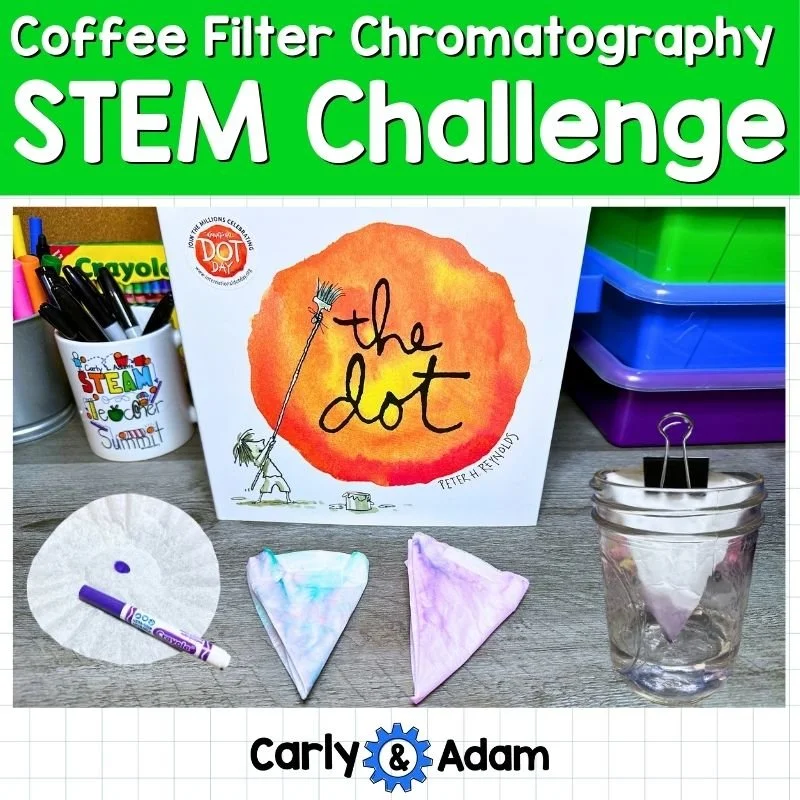
Chromatography Science Experiment for The Dot by Peter Reynolds Book Activity
Discover the colors hiding inside a dot! This coffee filter chromatography experiment inspired by The Dot by Peter Reynolds combines science and art for International Dot Day. Using markers, coffee filters, and water, students predict which colors will appear and observe how ink separates as water travels through the paper. Perfect for first grade science, Dot Day activities, and read-aloud STEM lessons. Click to explore all 6 science experiments for The Dot!
Suggested Grade: First Grade
What colors are hiding inside a marker? Students draw circular designs on coffee filters using black and purple water-soluble markers. They fold the filters into cones, place the tips in a small amount of water, and watch as the water moves through the paper and separates the ink into different colors.
This colorful experiment combines science and art while introducing chromatography—the process of separating parts of a mixture. Students compare their predictions with the colors they observe and discover that even a simple dot can hold a surprise!
3. Hoop Flyers
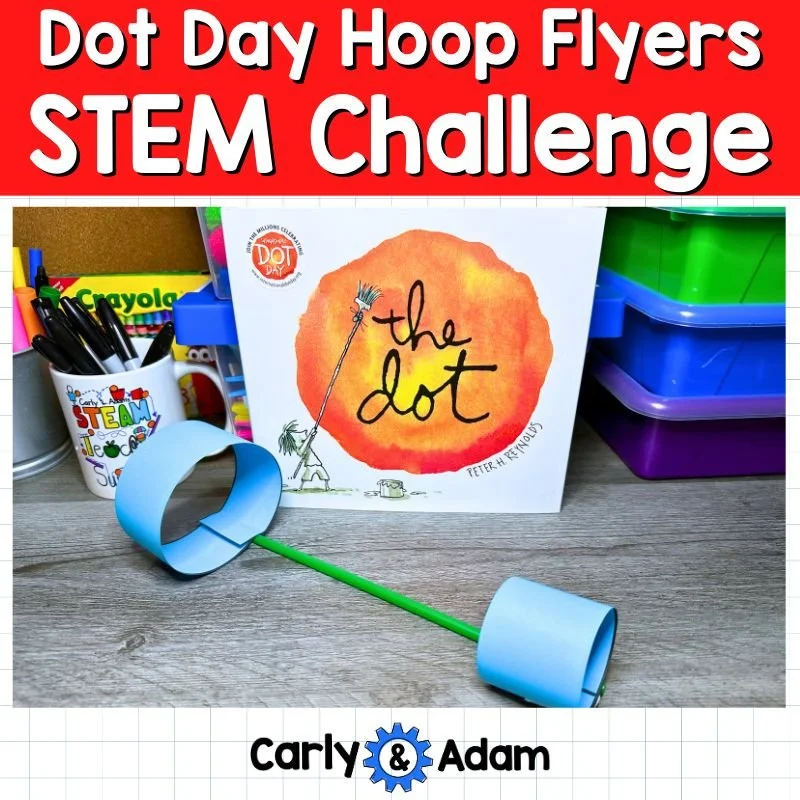
Hoop Flyers Science Experiment for The Dot by Peter Reynolds Activity
Make your Dot Day celebration soar with this hoop flyers STEM challenge inspired by The Dot by Peter Reynolds! Students use paper hoops, straws, and tape to build three flyer designs, predict which will fly farthest, and measure their results. Combine creativity, science, and math with a hands-on activity for second grade science, International Dot Day, and read-aloud STEM lessons. Click to explore all 6 science experiments for The Dot!
Suggested Grade: Second Grade
Can paper circles help a straw fly? Students build three hoop flyers: one with two large hoops, one with two small hoops, and one with a large hoop and a small hoop. They predict which design will travel farthest before putting their ideas to the test.
Students launch each flyer three times, measure the distance, and record their results. This activity connects Dot Day with flight, measurement, and design while encouraging students to use evidence to compare their creations.
4. Floating Ping-Pong Ball
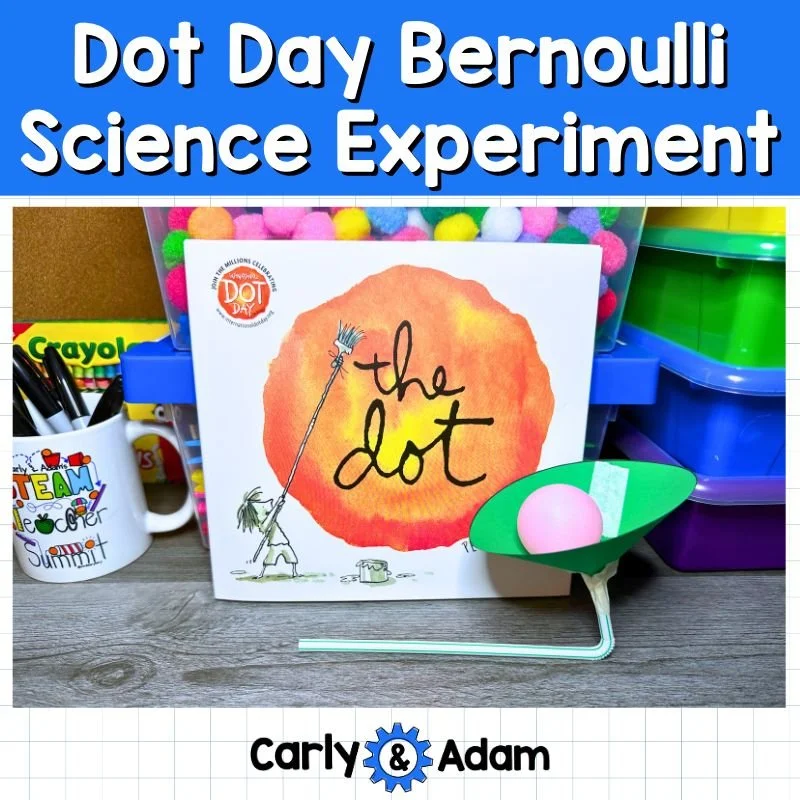
Bernoulli Air Pressure Science Experiment for The Dot by Peter Reynolds Activity
Can you make a dot float in the air? Explore this Dot Day Bernoulli science experiment inspired by The Dot by Peter Reynolds! Students use a straw, paper cone, and ping-pong ball to investigate airflow and air pressure. Encourage curiosity as students make predictions, blow through the straw, and observe how the ball moves. Perfect for third grade science, International Dot Day activities, and read-aloud STEM lessons. Click to explore all 6 science experiments for The Dot!
Suggested Grade: Third Grade
Turn a ping-pong ball into a floating dot! Using a bendy straw and a paper cone, students investigate what happens when they blow air beneath the ball. They observe how its movement changes when they blow harder or softer.
This investigation introduces airflow and air pressure through a lesson on Bernoulli’s principle. Students make predictions, record what happens, and compare their observations. Like Vashti, they practice trying something unfamiliar and learning through exploration.
5. Wrecking Ball
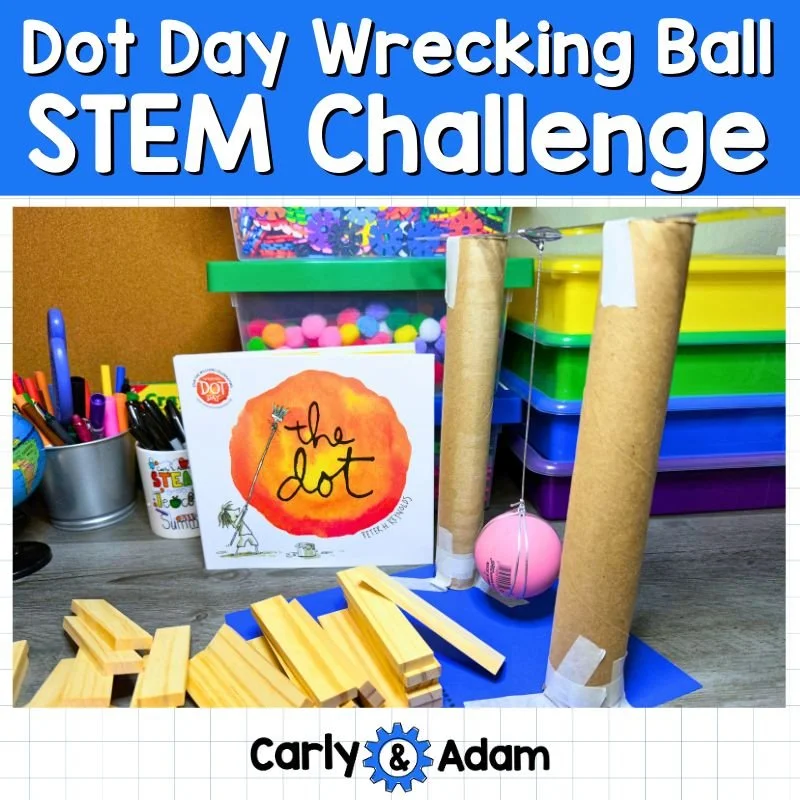
Wrecking Ball Force and Motion Science Experiment for The Dot by Peter Reynolds Activities
Make an impact with this Dot Day wrecking ball STEM challenge inspired by The Dot by Peter Reynolds! Students release a suspended ball from different heights, count how many blocks it knocks over, and compare their results. Explore force and motion while practicing predictions, measurement, and fair testing.
Perfect for fourth grade science, International Dot Day activities, and read-aloud STEM lessons. Click to explore all 6 science experiments for The Dot!
Suggested Grade: Fourth Grade
How does a wrecking ball’s release height affect the number of blocks it knocks over? Students use a ball suspended from string and a support made with paper towel rolls and a ruler to investigate. They release the ball from different heights and count how many blocks fall.
By repeating each test and recording their results, students explore motion, collisions, and the importance of fair testing. Keep the ball, string length, and block arrangement the same so students can focus on how release height affects the outcome.
6. Balloon Hovercraft
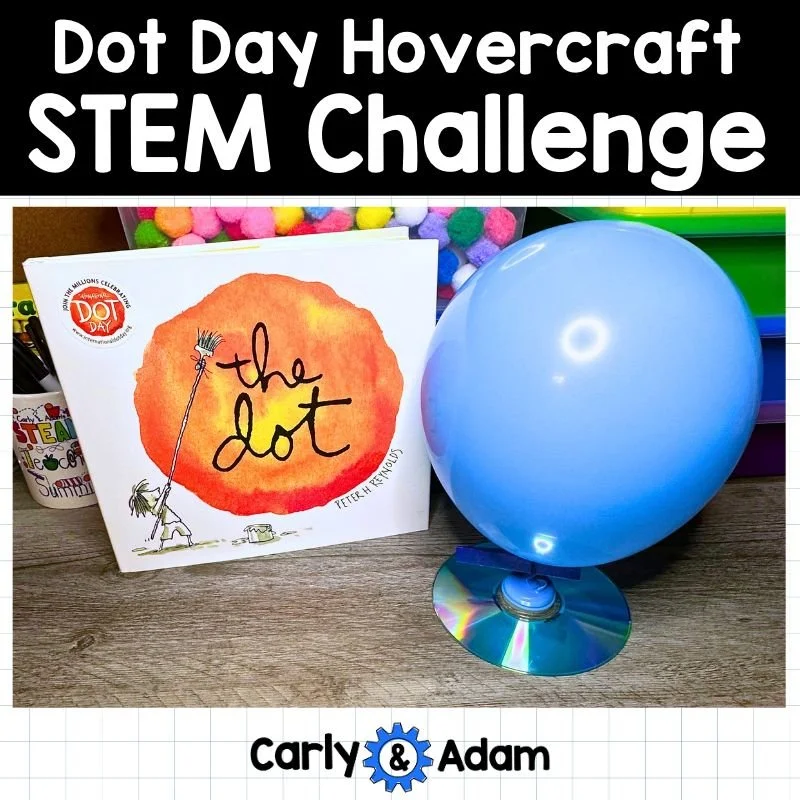
Balloon Hovercraft Science Experiment for The Dot by Peter Reynolds Activities
Build a balloon hovercraft for Dot Day! Inspired by The Dot by Peter Reynolds, this hands-on STEM challenge uses a balloon, bottle cap, and CD to explore air pressure and friction.
Students predict how their hovercraft will move, test it on different surfaces, and measure how far it travels. Perfect for fifth grade science, International Dot Day activities, and read-aloud STEM lessons.
Click to explore all 6 science experiments for The Dot!
Suggested Grade: Fifth Grade
Make a dot that glides! Students build a small hovercraft using a CD or DVD, a balloon, and a prepared bottle cap. As air escapes from the balloon beneath the disc, it creates a cushion of air that reduces friction and helps the hovercraft slide across a surface.
Students test their hovercrafts on smooth and rough surfaces, measure how far they travel, and compare their results. This Dot Day STEM activity gives students a hands-on way to investigate air pressure and friction while practicing observation and problem-solving.
Each experiment gives students a chance to approach science with the curiosity Vashti brings to her artwork. Encourage them to share what surprised them, explain what their results show, and suggest something they would like to test next. One little dot can be the beginning of a big discovery!
Get all six of these lessons as part of the STEM Teachers Club.
Spend Less Time Planning and More Time Teaching!
Hands-on STEM learning starts here.
Find ready-to-use STEM Activities and Science Curriculum, Practical Professional Development, and a Community of Educators to help you teach STEM with confidence.
You can get all 1000+ STEM Challenges by Carly and Adam as part of the STEM Teachers Club. Save 30% on your first month/year using coupon Code: CarlyAndAdamBlog.