
Making the Most of Your MakerSpace
A makerspace is a place in a classroom, library, or other common area of a school where students are encouraged to create, tinker, explore, discover, and invent using a variety of tools and materials. Effective makerspaces have been shown to foster peer-to-peer interaction as well as help students build confidence and take ownership of their learning. With so many benefits to the makerspace it is no wonder why they have taken off.
In her book, The Kickstart Guide to Making Great Makerspaces, Laura Fleming lays out seven attributes of a great makerspace. By utilizing these seven principles you can ensure that you are making the most of your classroom or library makerspace.

Personalized
The first attribute of a great makerspace is that it is personalized. When setting up your makerspace it is important to keep in mind the needs and interests of the students who will be utilizing the space. Makerspaces are not a one size fits all. In fact, effective makerspaces are personalized to fit the classroom and school community.
Another idea to personalize your makerspace is to let students give their input in the setup of the space. Ask students about what kinds of things they would like to see in their classroom makerspace, and assign them roles to decorate and organize the space so that they feel ownership of it.
If you are ready to set up and decorate your makerspace you can grab these Makerspace letters along with engineering design posters for students to begin personalizing their space.
Deep
Along with being personalized a makerspace should promote deeper learning. Students should have access to multiple activities that explore real-world themes. Makerspace activities should incorporate creativity, collaboration, communication, and critical thinking skills.
Empowering
One huge benefit to makerspaces is their ability to empower students to explore learning opportunities that they wouldn't otherwise have. They allow students to connect with their peers while building confidence in themselves and their creativity. They also allow opportunities to celebrate students.
Equitable
The most effective makerspaces allow access for all students no matter their academic or language proficiency. The concepts, supplies, and materials must be accessible to all learners. With proper planning it is possible to design a space where all learners can be successful.
Differentiated
Great makerspaces incorporate differentiation in order to meet the needs of all learners. Some ways to differentiate the space include materials, content, process, and learning environment. Another easy way to differentiate a makerspace is by incorporating student choice.
Intentional
The most effective makerspaces stem from a vision. It is important to have a clear purpose for your makerspace. It is also important to be able to communicate that vision to students.
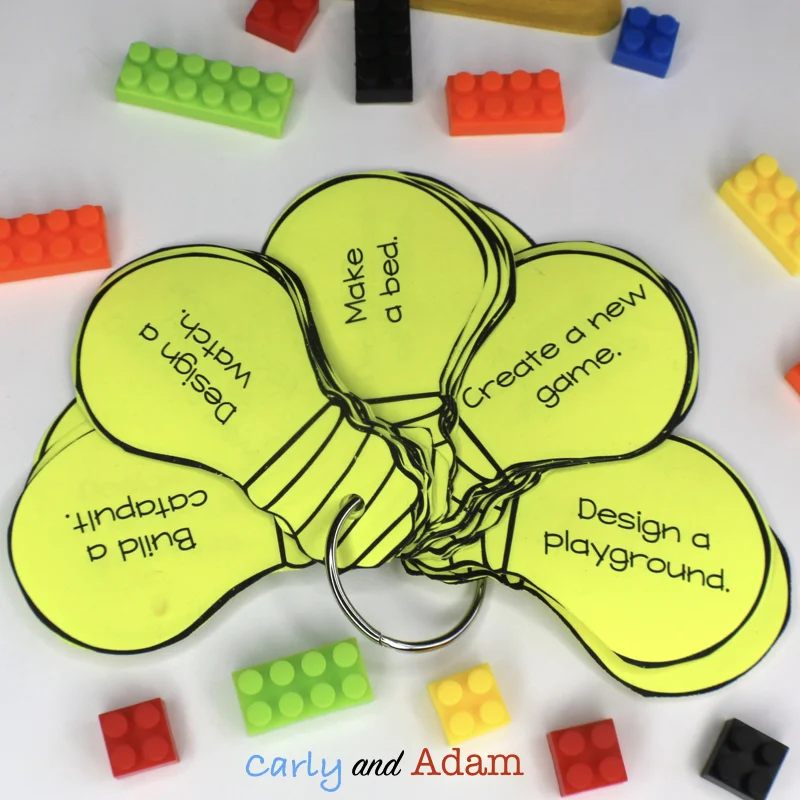
STEM ideas include 52 open-ended STEM project ideas to motivate students to keep making throughout the year!
Inspiring
Great makerspaces inspire students to want to make. One way to inspire students is to provide them with examples of real-world makers. Students also need access to plenty of ideas. By keeping a ring of STEM ideas handy in your makerspace you ensure that students stay motivated to create throughout the year. Students can also add their own ideas to the ring to inspire their peers.
We hope you have found this blog post helpful. To stay connected with Carly and Adam's teaching tips and classroom freebies be sure to follow us on Facebook, Pinterest, Teachers Pay Teachers, and subscribe to our blog!
Join our FREE Facebook group Elementary STEM Teachers Club! Learn more about how to incorporate STEM in your classroom or at home and collaborate with other STEM teachers! JOIN NOW!

Interested in Learning More About MakerSpaces?
Be sure to check out The Kickstart Guide to Making Great Makerspaces by Laura Fleming. We highly recommend it!

*This post contains affiliate links for your convenience.