Fairy Tale Family STEM Night
Are you looking to plan an fun and engaging Family STEM Night?
A Fairy Tale Family STEM Night is an exciting way to bring storytelling to life through hands-on STEM exploration. Each station is inspired by a classic fairy tale and designed to get students thinking creatively, solving problems, and having fun—often alongside their families. With 17 unique stations, there's something to spark curiosity in every child, from building and coding to experimenting and storytelling.
Here’s a closer look at each STEM center you can include in your event:
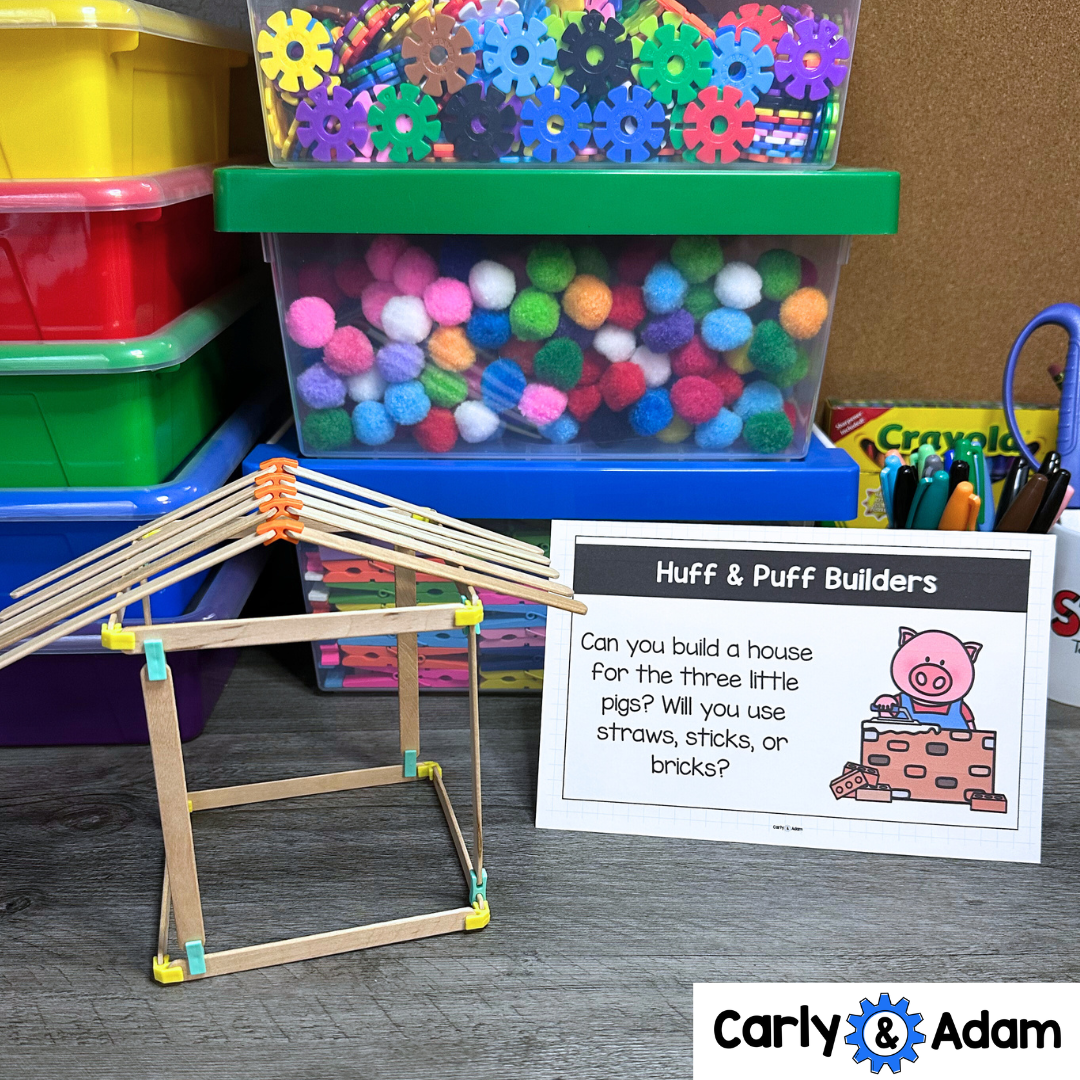
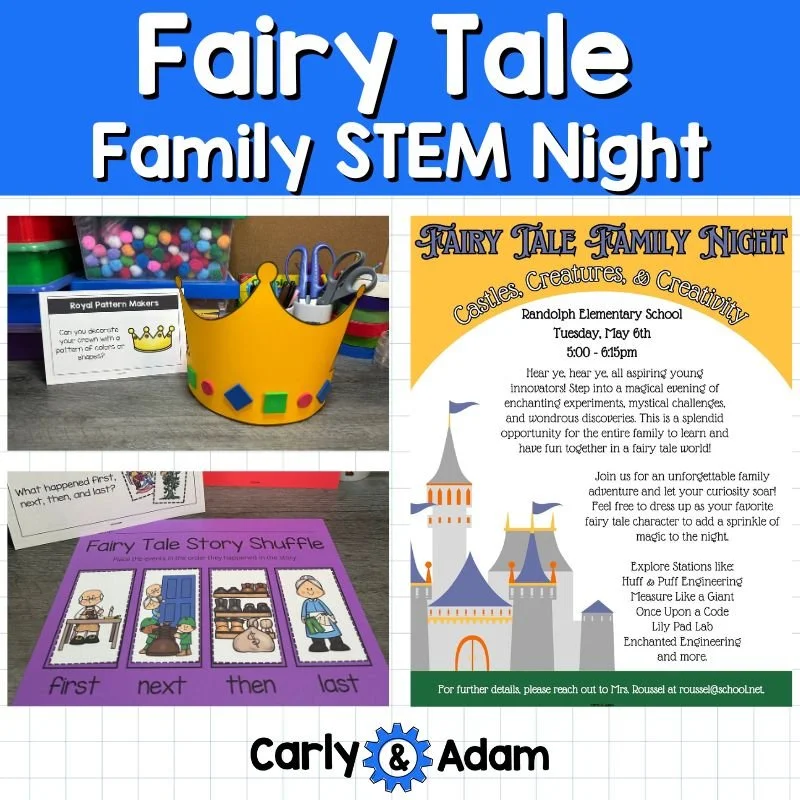
1.) Huff & Puff Builders
Inspired by The Three Little Pigs, this challenge invites kids to build a house strong enough to withstand the “huff and puff” of the Big Bad Wolf. Using straws, sticks, or bricks (like LEGO or craft sticks), kids explore how different materials hold up under pressure.
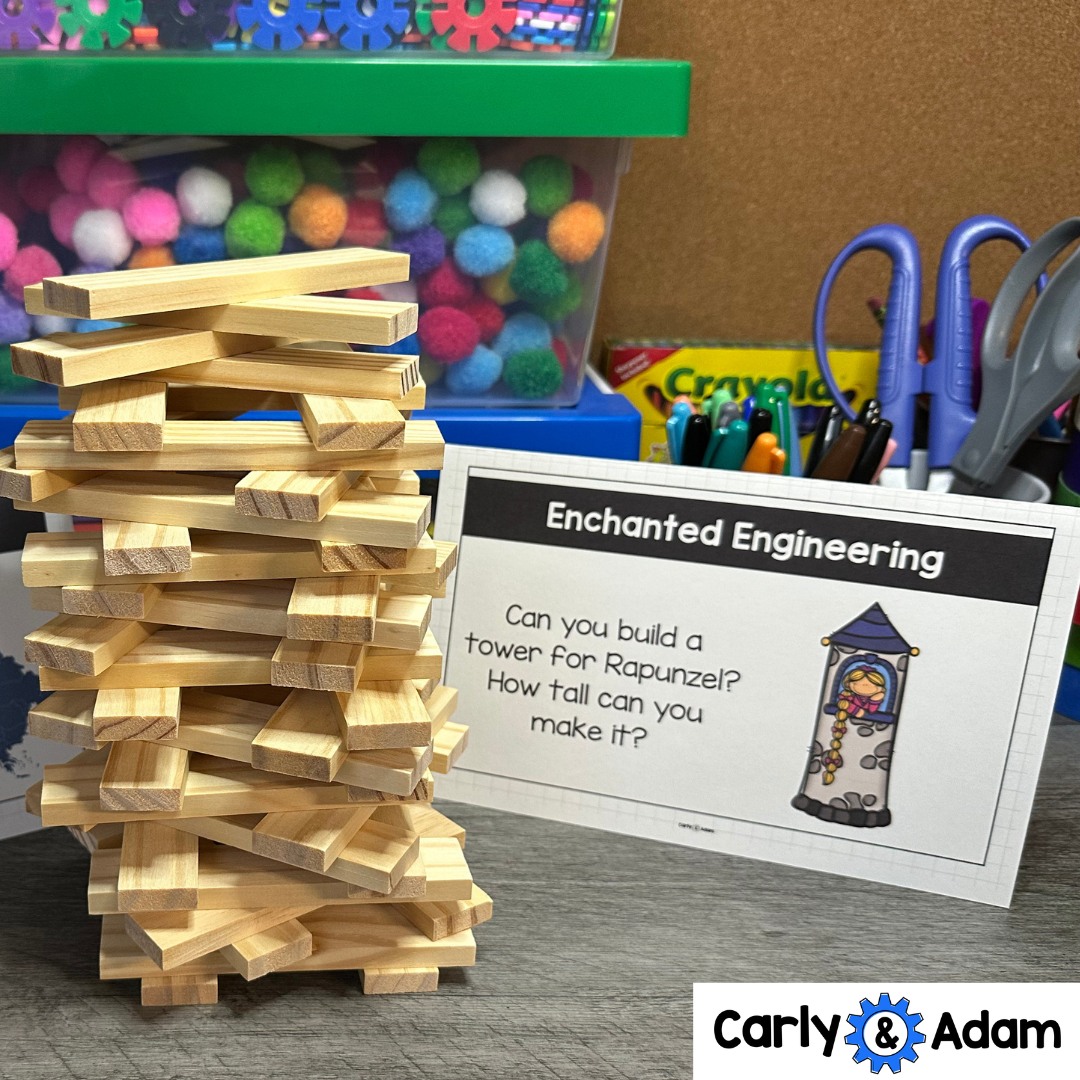
2.) Enchanted Engineering
Rapunzel needs a tower—and the taller, the better! Students use blocks like KEVA planks to build the tallest and most stable tower they can. It’s a great opportunity to explore balance, structure, and measurement in a fairy tale setting.
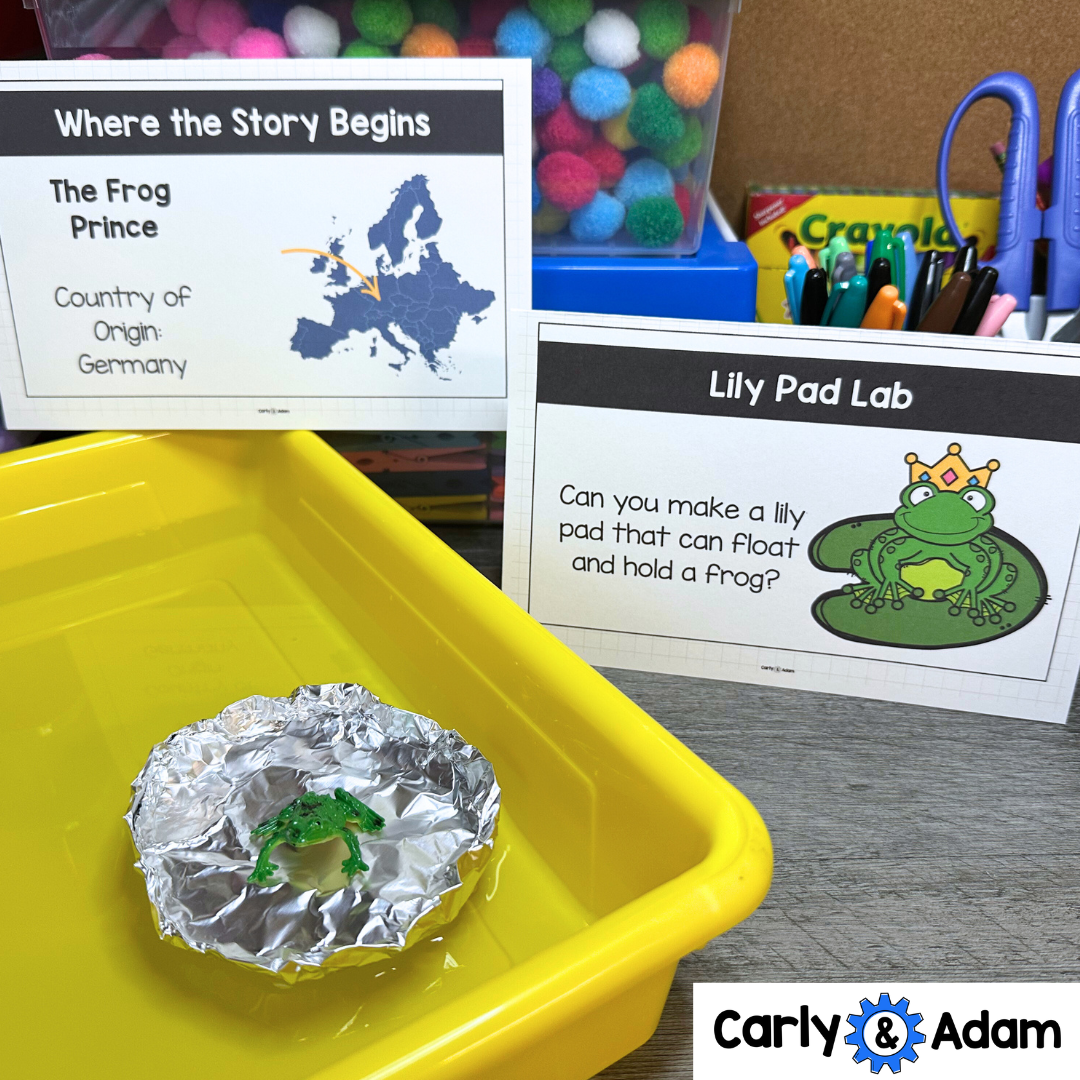
3.) Lily Pad Lab
Based on The Frog Prince, this center challenges students to create a lily pad that floats and supports a plastic frog. Using foil and other materials, children experiment with buoyancy and weight distribution. It’s a simple introduction to engineering and physical science.
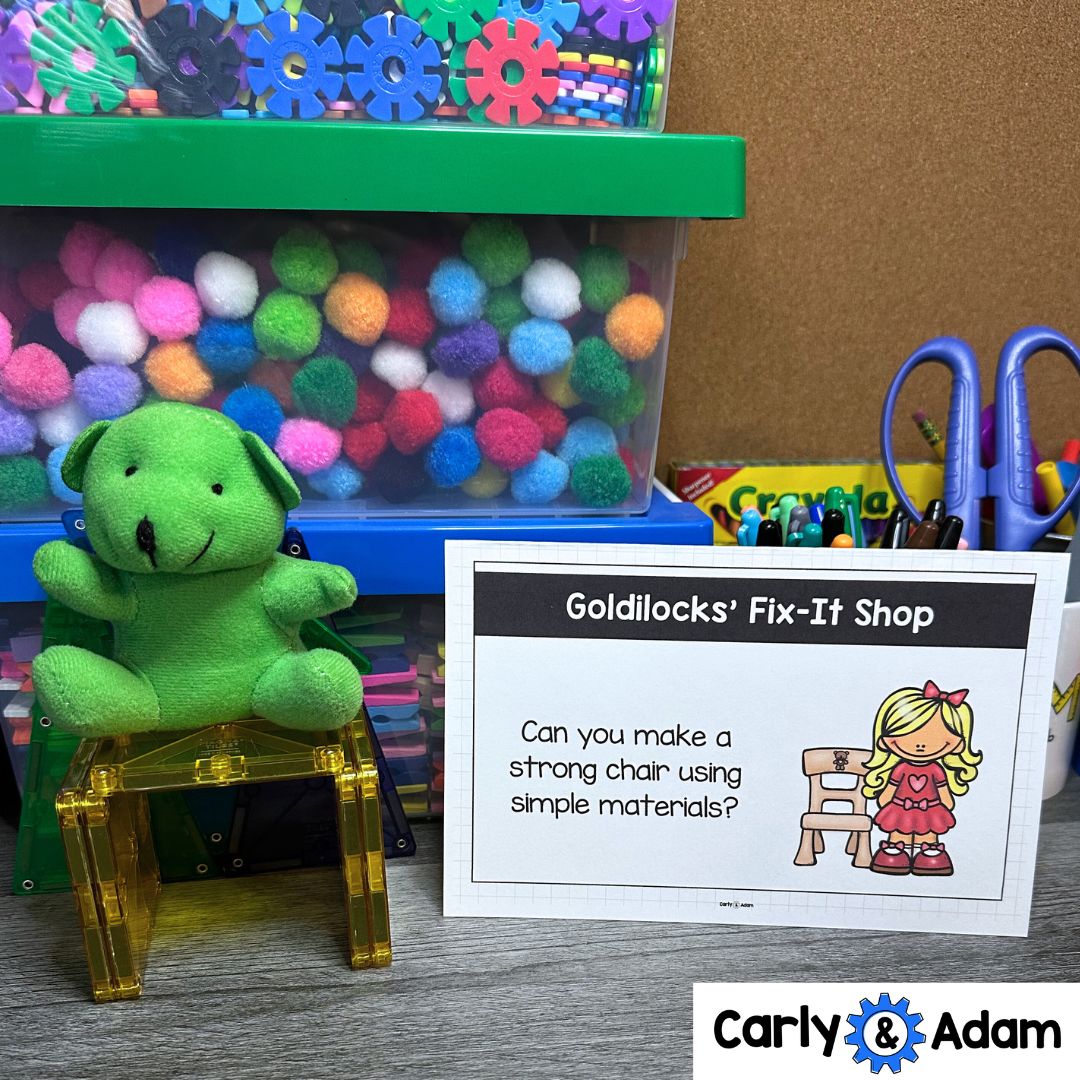
4.) Goldilocks’ Fix-It Shop
Goldilocks broke Baby Bear’s chair, and now it’s up to students to build a stronger one! With non-consumable building materials like Magna-Tiles or plastic bricks, families design and test their own miniature chairs. The challenge focuses on stability, strength, and creative design.
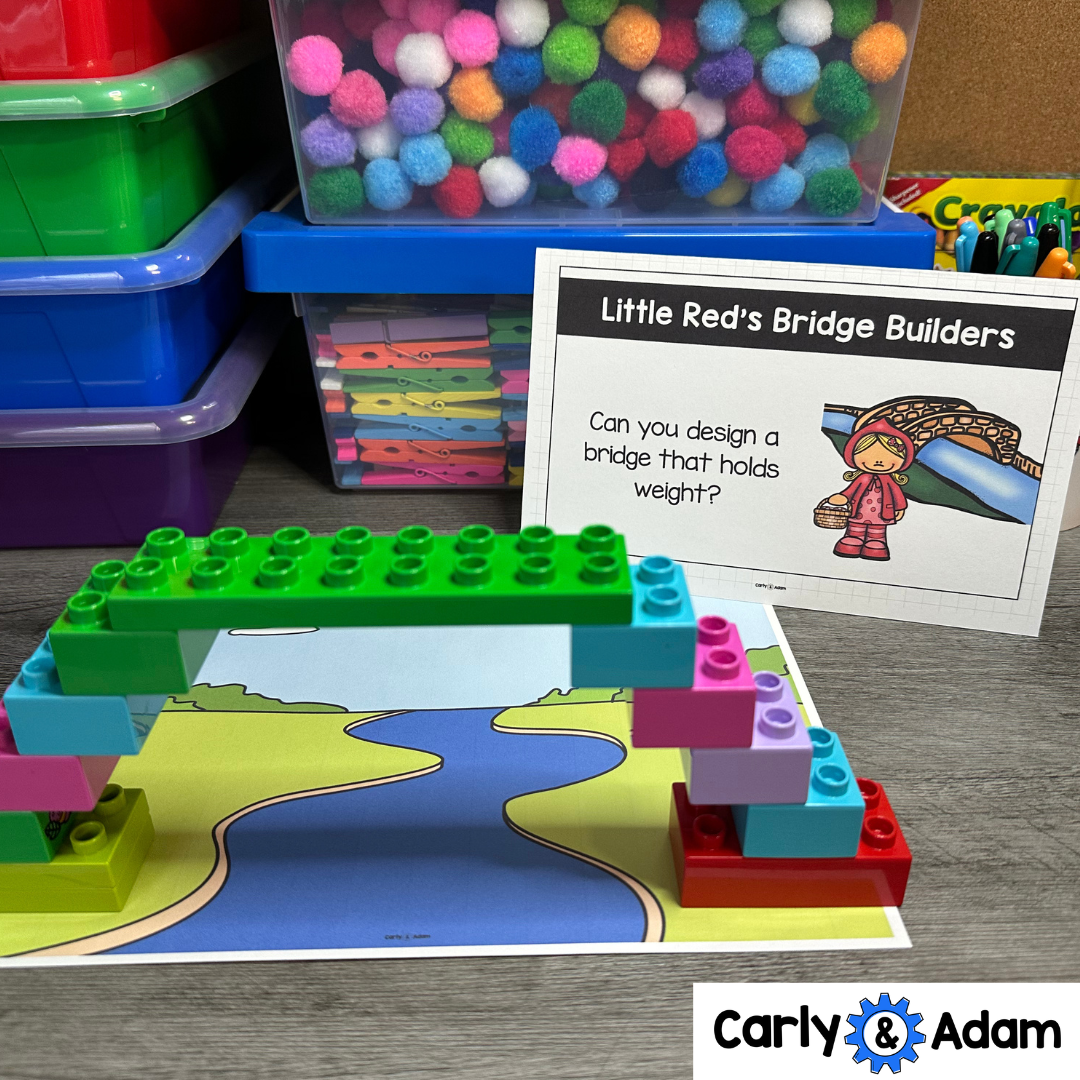
5.) Little Red’s Bridge Builders
Little Red Riding Hood needs help getting safely across the river. Students design a bridge using LEGO bricks or similar materials and test its strength with small weights. This activity emphasizes structural engineering and design testing.
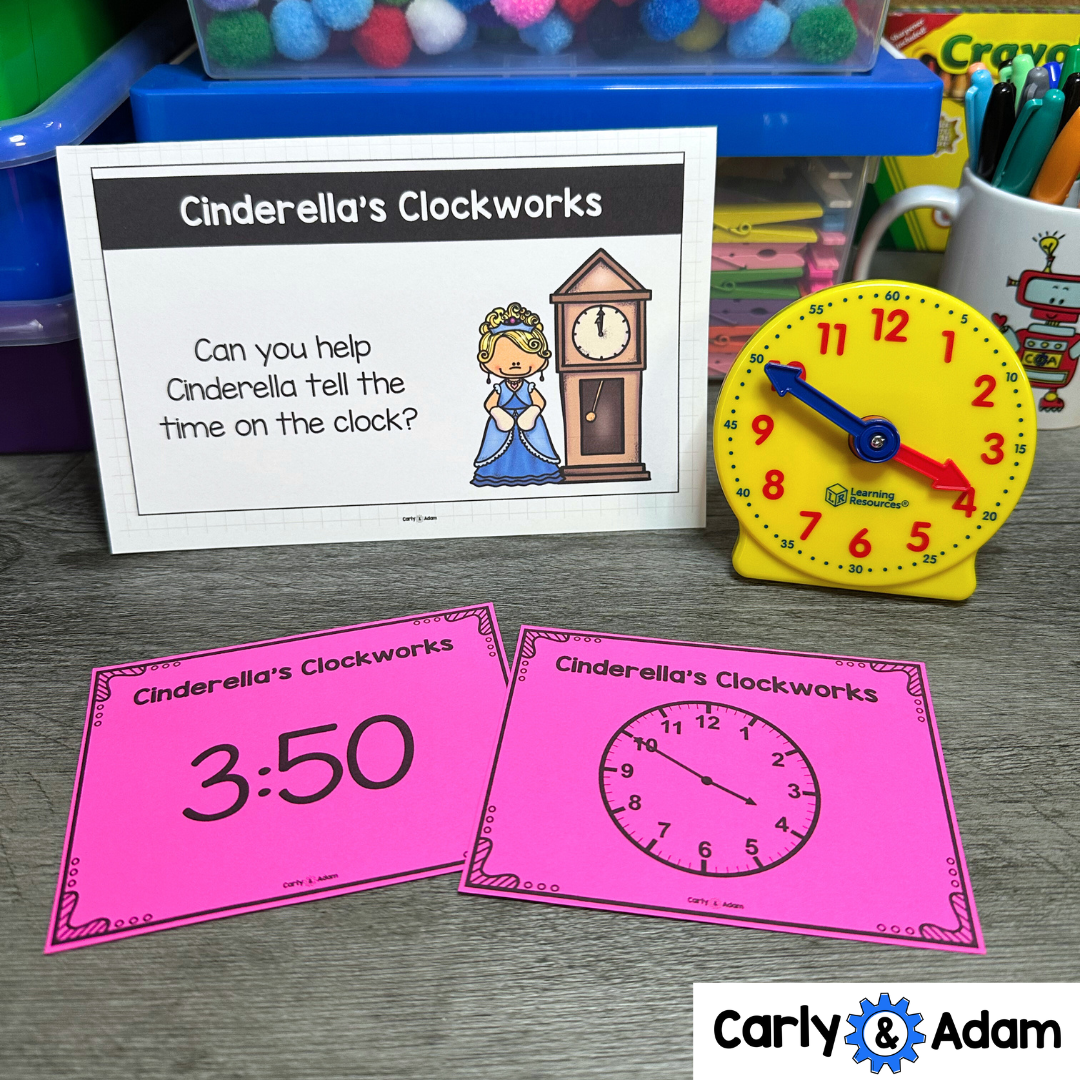
6.) Cinderella’s Clockworks
Help Cinderella get to the ball on time! In this center, students practice telling time with printable clock cards and dry erase tools. It’s a great way to reinforce math and time-reading skills in a story-driven way.

7.) Jack’s Magic Bean Math
Students use “magic beans” (uncooked beans or beads) to solve math problems. They model equations using visual representations on a laminated mat. This activity connects concrete materials to abstract number concepts.
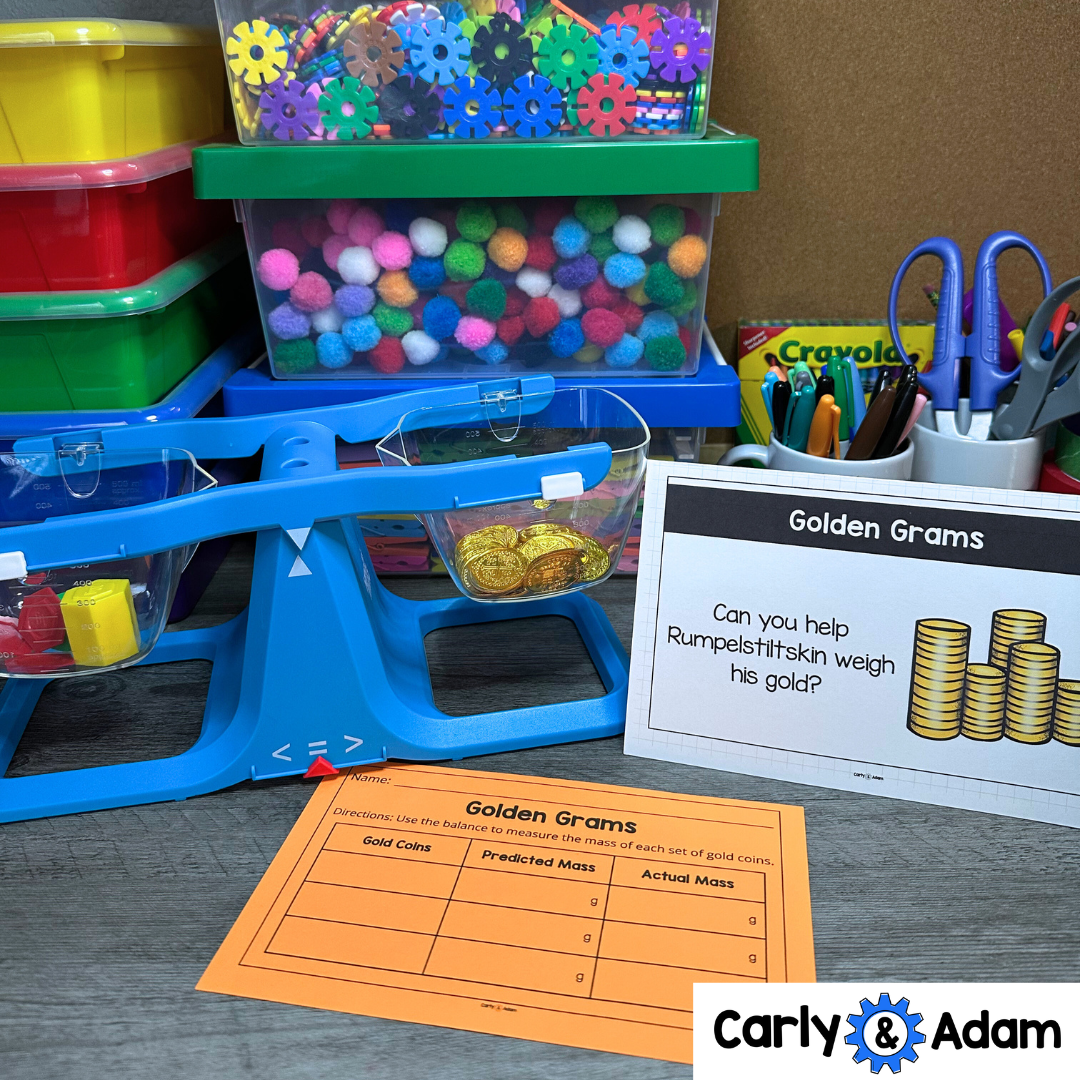
8.) Golden Grams
Rumpelstiltskin needs help weighing his gold! Students use a balance scale and plastic gold coins to explore weight, mass, and estimation. They record their findings and learn to compare different measurements using real-world math.
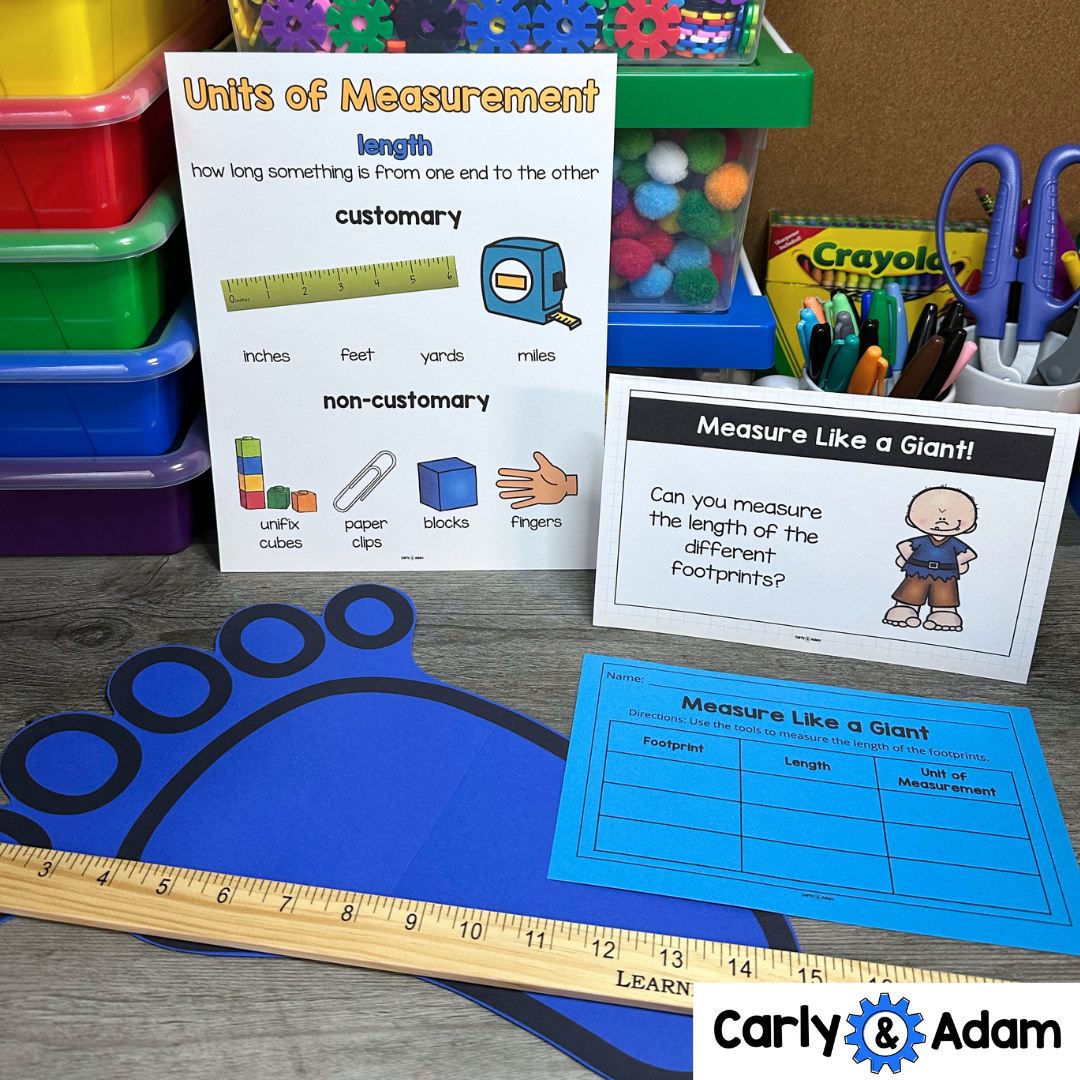
9.) Measure Like a Giant
In this playful station, students measure giant footprints using rulers, yardsticks, and measuring tapes. They record and compare lengths to practice both standard and non-standard measurement. It’s a fun way to explore units of length and build math vocabulary.
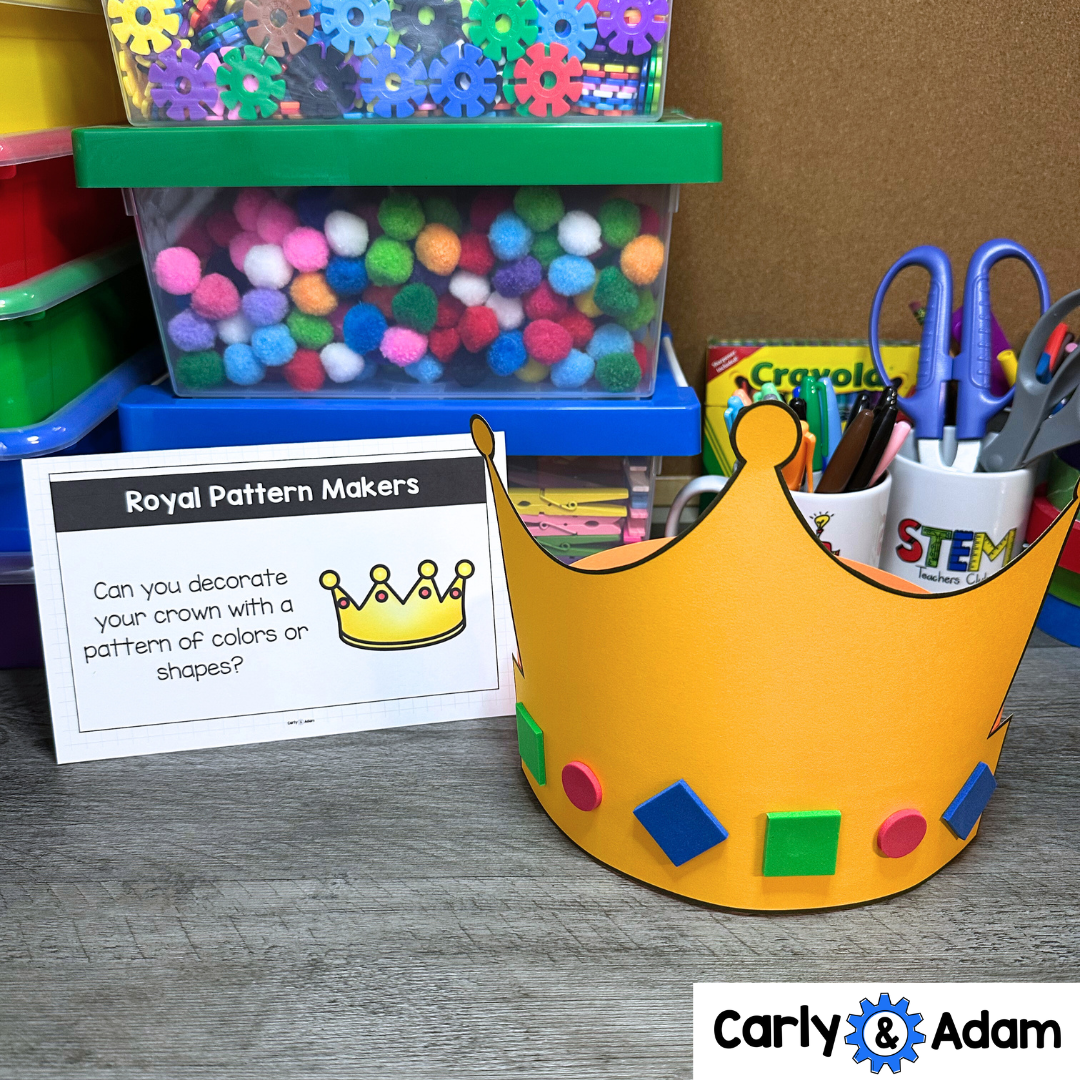
10.) Royal Pattern Makers
At this crown-decorating station, students create colorful patterns using stickers or foam shapes. They build repeating or alternating sequences and explore early algebraic thinking. Plus, they get to wear their custom-designed crowns!
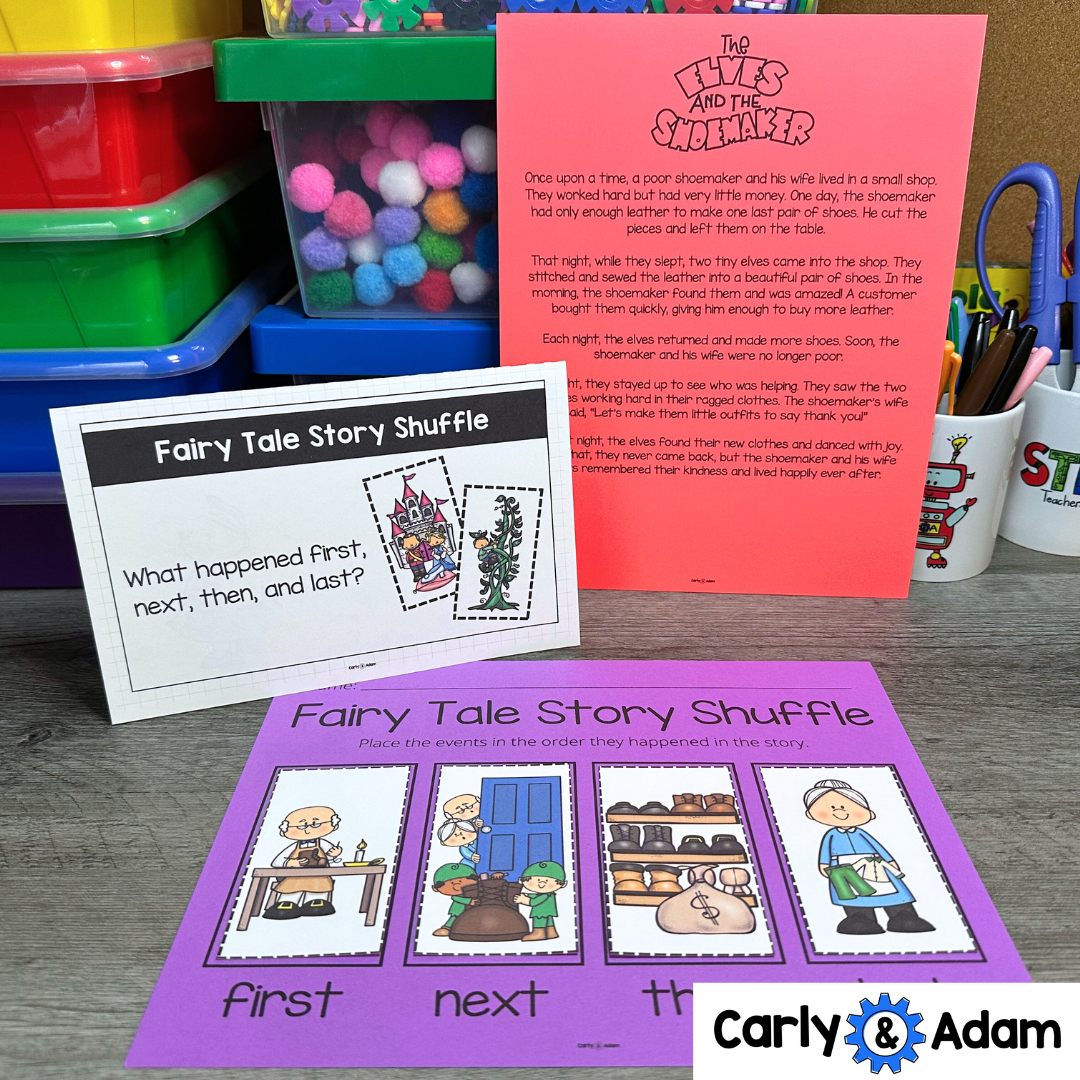
11.) Fairy Tale Story Shuffle
Students work on sequencing skills by putting a fairy tale back in the correct order. Using illustrated story cards, they determine what happened first, next, then, and last. It’s a great literacy-based station that builds comprehension and retelling skills.
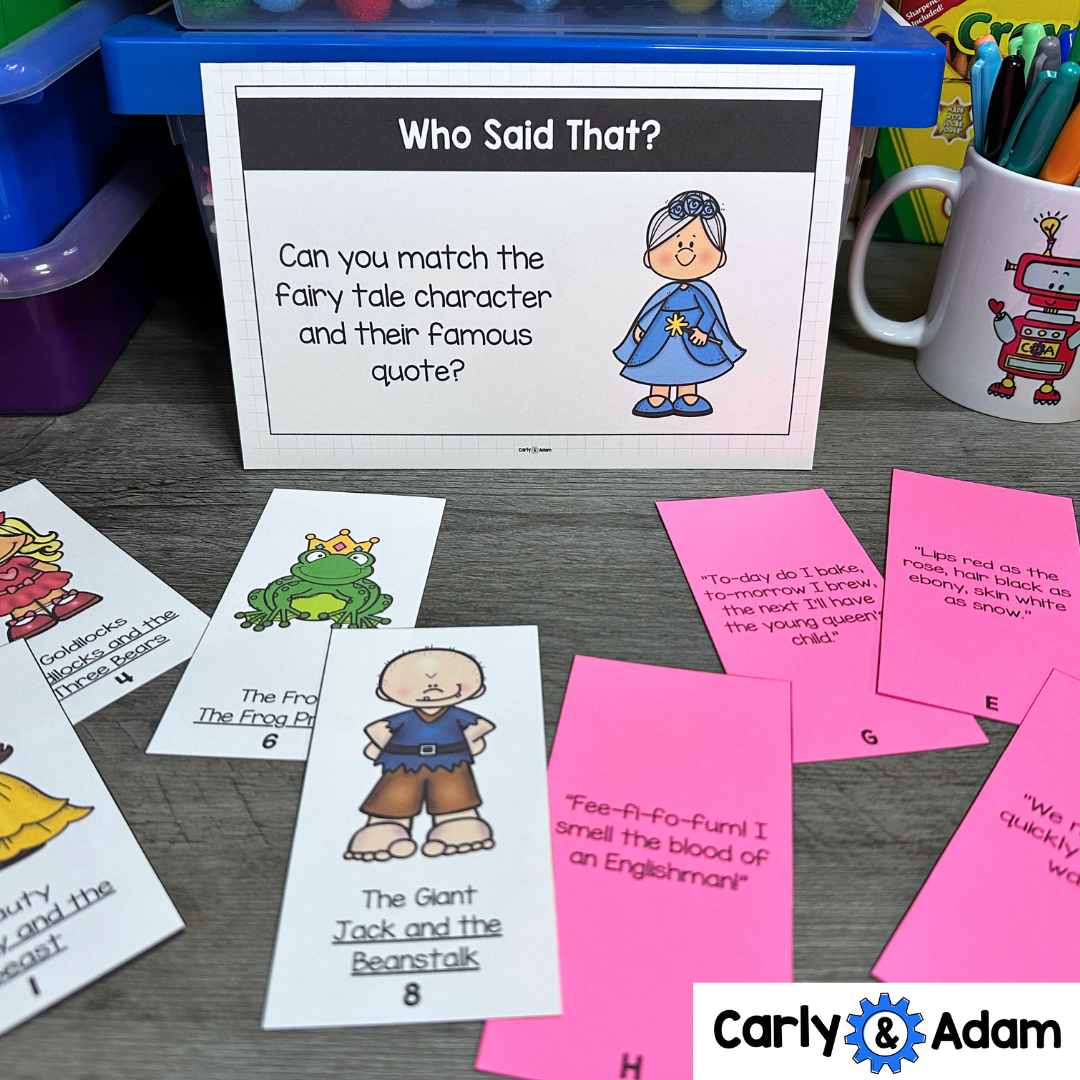
12.) Who Said That?
This matching activity invites kids to pair fairy tale characters with their iconic quotes. It builds memory, recognition, and character analysis skills in a playful way. It also encourages conversation about the stories they’ve read or heard.
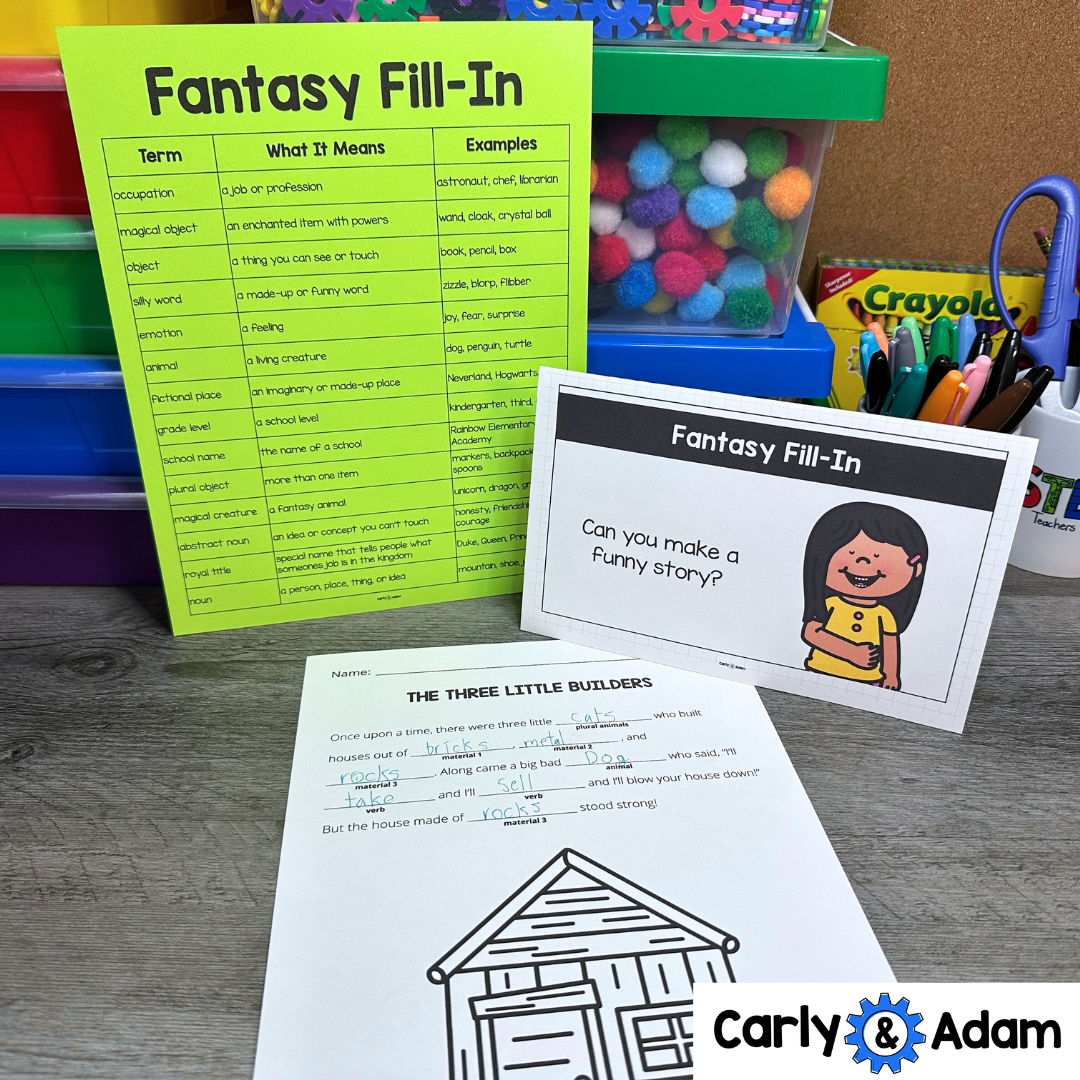
13.) Fantasy Fill-In
Think “Mad Libs” meets fairy tales! Kids fill in silly words (nouns, verbs, adjectives) to complete their own version of a fairy tale. This activity supports parts of speech, creative writing, and plenty of giggles.
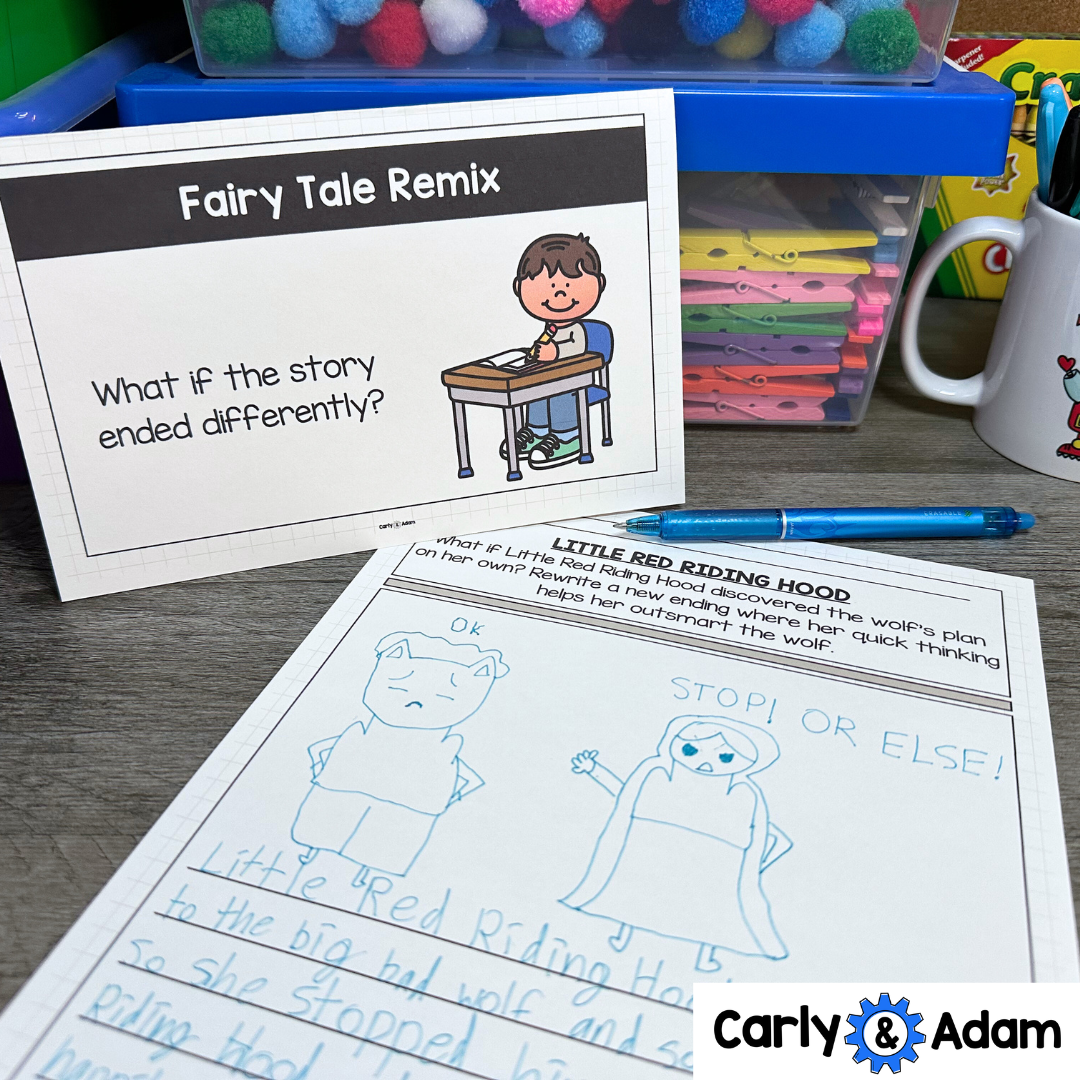
14.) Fairy Tale Remix
What if the story had ended differently? In this writing station, students imagine a new twist to a classic tale and write their own ending. It encourages imagination, literacy, and narrative structure.
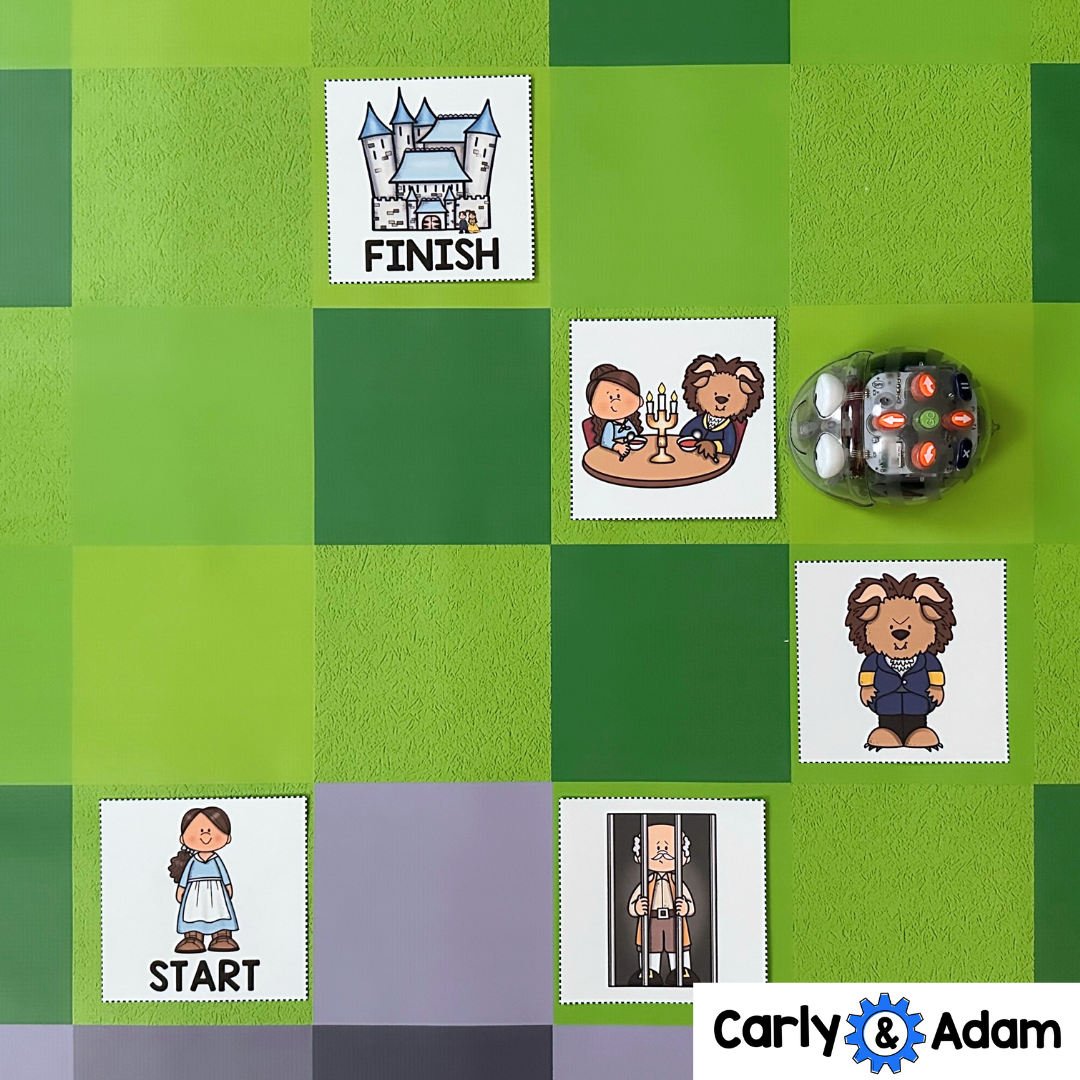
15.) Once Upon a Code
Using story-themed coding cards or programmable robots, students build a path to help a character complete a journey through the story. This activity introduces sequencing, directionality, and basic coding skills.
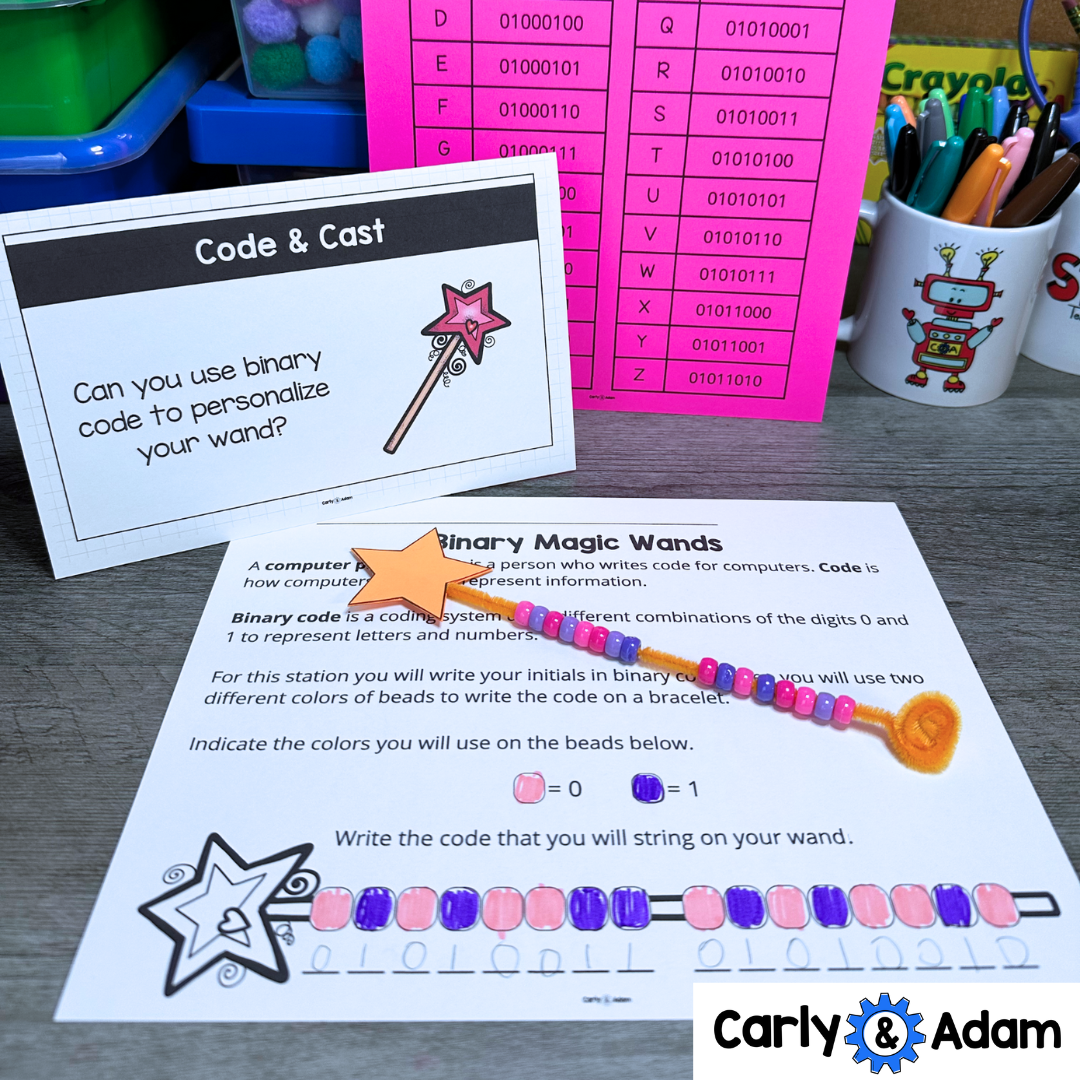
16.) Code & Cast
Students use binary code to create a personalized wand by stringing beads in color-coded sequences. They practice translating letters into binary and make a magical keepsake. It’s a clever way to connect technology with hands-on creativity.
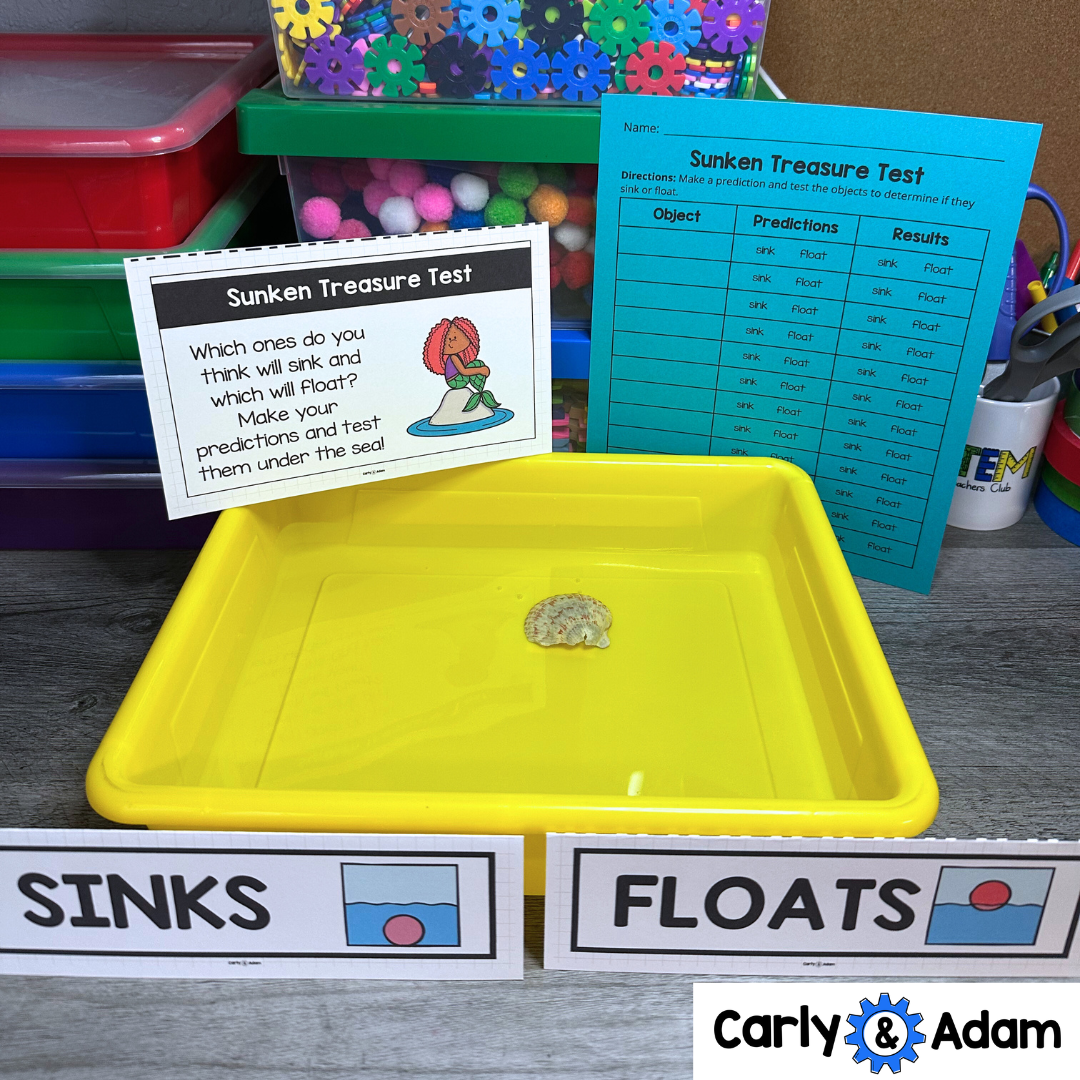
17.) Sunken Treasure Test
Students predict whether a variety of objects will sink or float, then test their hypotheses in a tub of water. From plastic toys to coins and household items, this activity explores density, prediction, and observation.
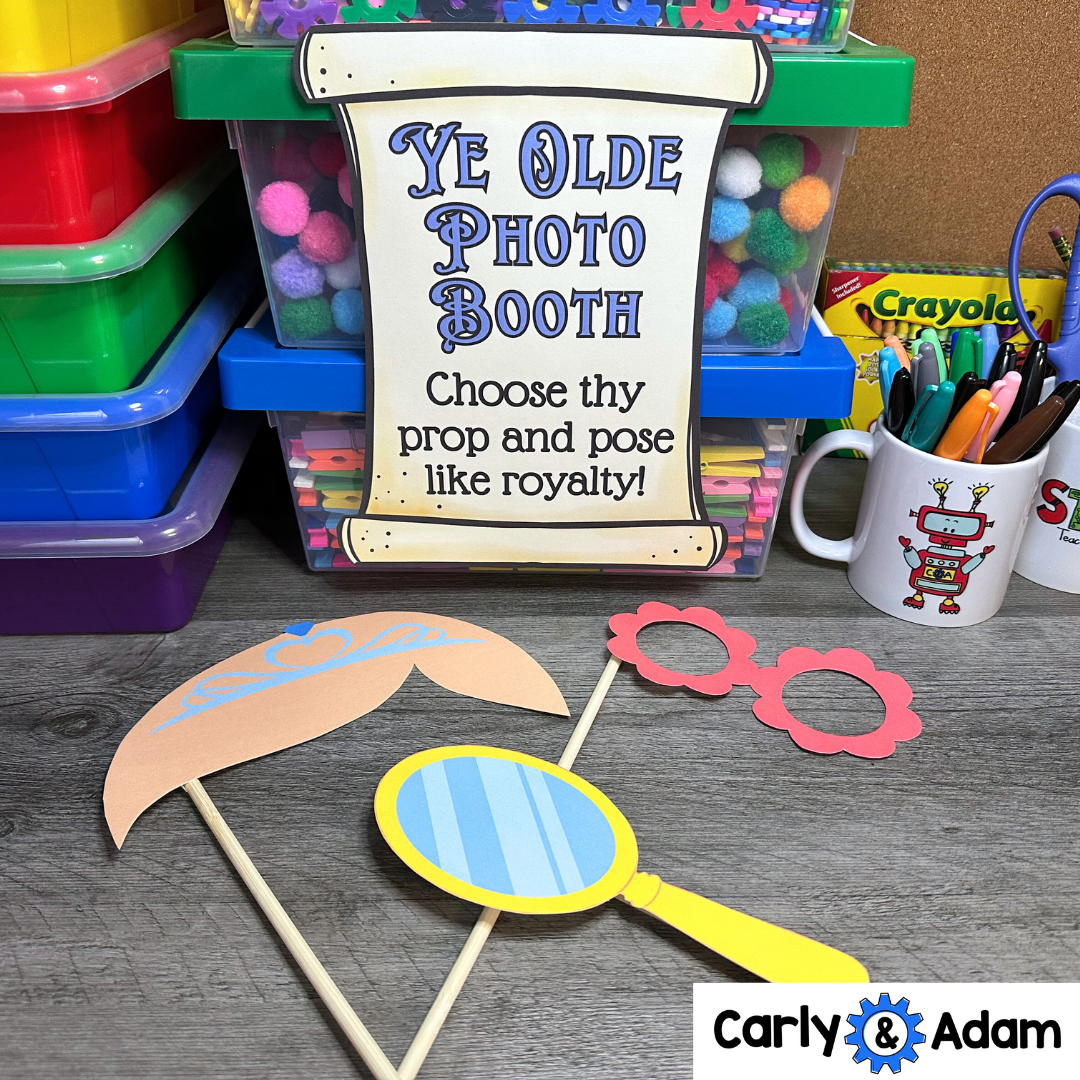
Don’t Forget the Photo Booth!
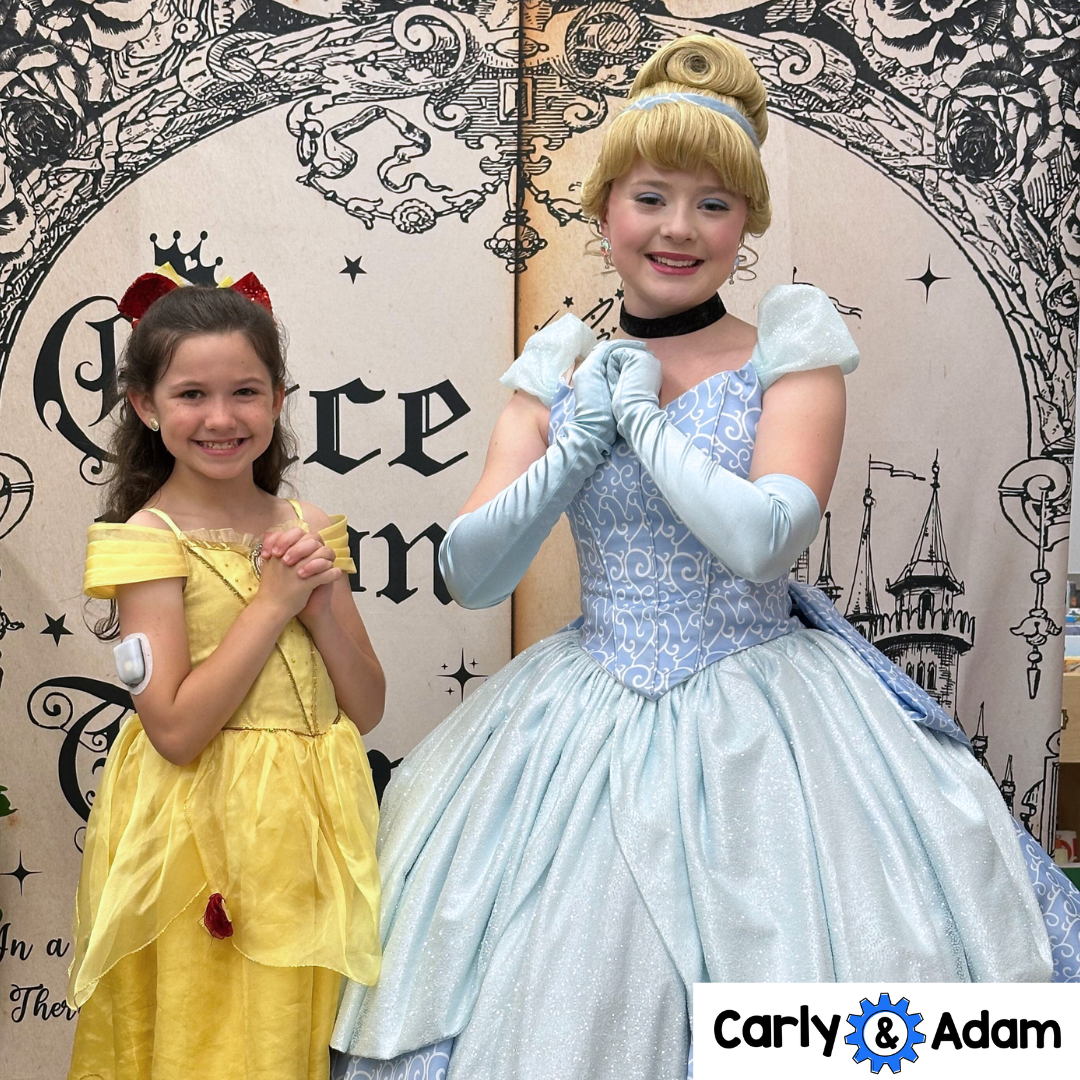
To make the night even more memorable, set up a photo booth complete with props like crowns, wands, capes, and fairy tale-themed backdrops. Encourage students, teachers, and volunteers to dress up as their favorite fairy tale characters—whether it’s Cinderella, a dragon, a knight, or the Big Bad Wolf. Costumes add a whimsical touch and help everyone feel immersed in the magical theme of the evening. The photo booth not only makes for great keepsakes, but also captures the joy and creativity of the night in a fun and festive way.
Ready to Plan your Family STEM Night?!
We hope these station ideas inspire you as you begin planning your own Family STEM Night. Looking for more support to bring your event to life? Check out our Fairy Tale Family STEM Night Planning Resource! It includes all of the activities featured in this post, plus a detailed planning guide and editable Canva templates to help you design flyers, create a schedule, and send home informational handouts for families.
Everything you need to host a magical and meaningful night of STEM fun is ready to go!
Have more questions or need additional resources?
You can get all 300+ STEM Challenges by Carly and Adam as part of the STEM Teachers Club Membership. Save $5 on your first month using coupon Code: CarlyAndAdamBlog.
We hope you have found this blog post helpful. To stay connected with Carly and Adam's teaching tips and classroom freebies be sure to follow us on Facebook, Pinterest, Teachers Pay Teachers, and subscribe to our blog!