Cup Stacking Challenges for Kids
Cup stacking challenges are an exciting and dynamic way to build STEM skills in the classroom. They combine creativity, engineering principles, and a healthy dose of competition to keep kids engaged and motivated. Whether you’re a classroom teacher, STEM specialist, or homeschool parent, cup stacking activities are a fantastic addition to your toolkit. In this post, we’ll dive into what cup stacking challenges are, how to set your students up for success, and introduce you to a powerful resource: Cup Stacking STEM Task Cards.
What Are Cup Stacking Challenges?
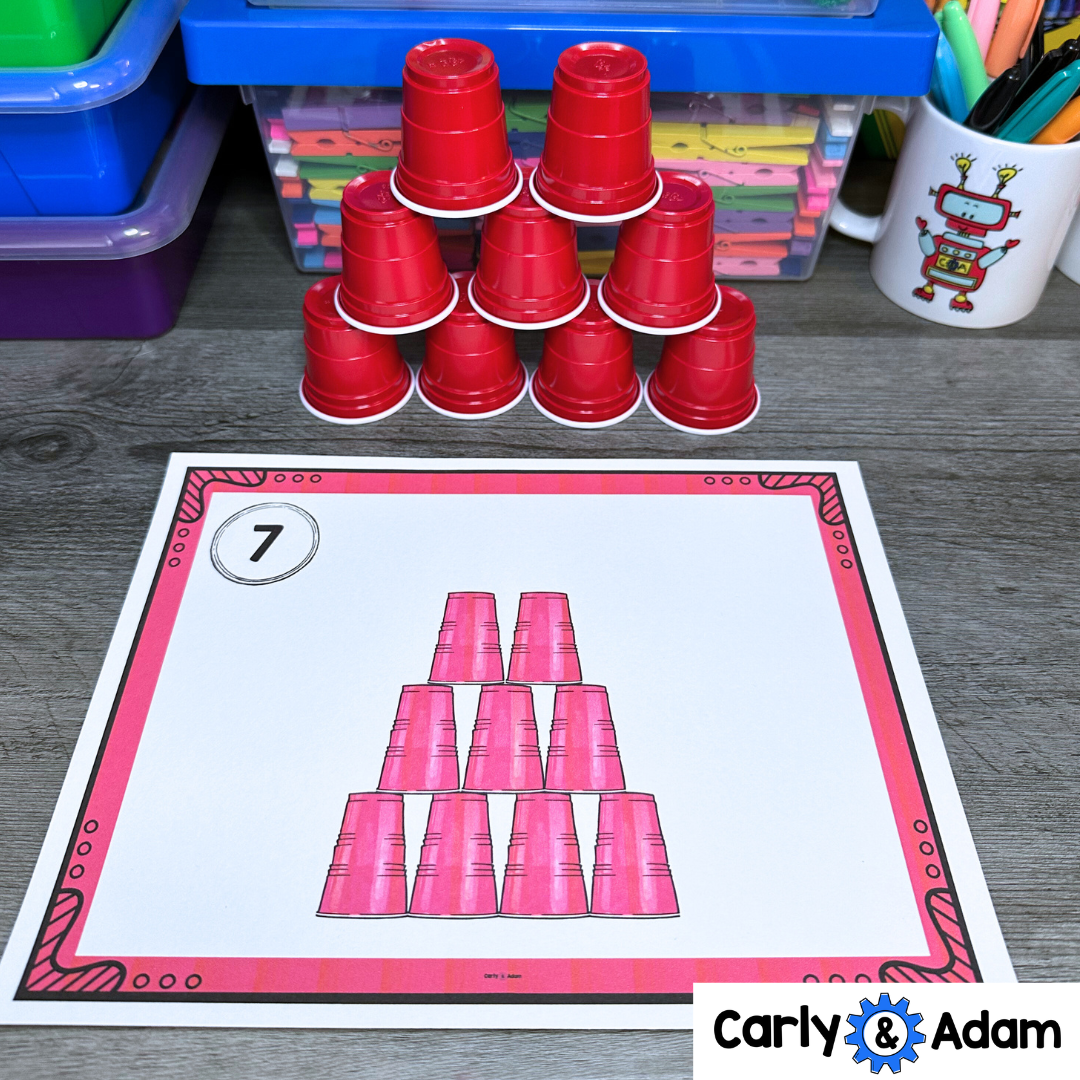
Cup stacking challenges invite students to use everyday materials—plastic cups—to build structures according to specific criteria or constraints. These challenges focus on important STEM concepts such as balance, stability, and design thinking.
Rather than simply stacking cups in any way, students might be asked to build the tallest tower possible using a set number of cups, or to complete a structure in the fastest time. These activities help students develop fine motor skills, spatial awareness, and problem-solving strategies. Plus, because cup stacking is inherently playful, kids often don’t even realize how much they're learning while they experiment and improve.
How to Set Students Up for Success with Cup Stacking Challenges
Setting students up for success in cup stacking challenges goes beyond handing them a stack of cups. It's about fostering a mindset that values perseverance, teamwork, and creative problem-solving. Here are key steps to ensure a productive experience:
Encourage Questions: Before the challenge begins, invite students to ask clarifying questions. This helps clear up misunderstandings and gets students thinking critically from the start.
Organize Materials: Ensure all the materials—primarily cups—are ready and accessible. A clutter-free setup can help students focus better on the task at hand.
Clarify Goals: Clearly state the objective. Whether it’s building the tallest tower or completing a structure in record time, students should understand what they are aiming to achieve.
Promote Reflection and Redesign: Allow time for students to reflect on their strategies, discuss what worked or didn’t work, and redesign their approach. Emphasize that encountering failure points is a normal and valuable part of the engineering process.
By creating a classroom culture that embraces exploration and resilience, you empower students to tackle challenges with confidence and creativity.

Cup Stacking STEM Task Cards
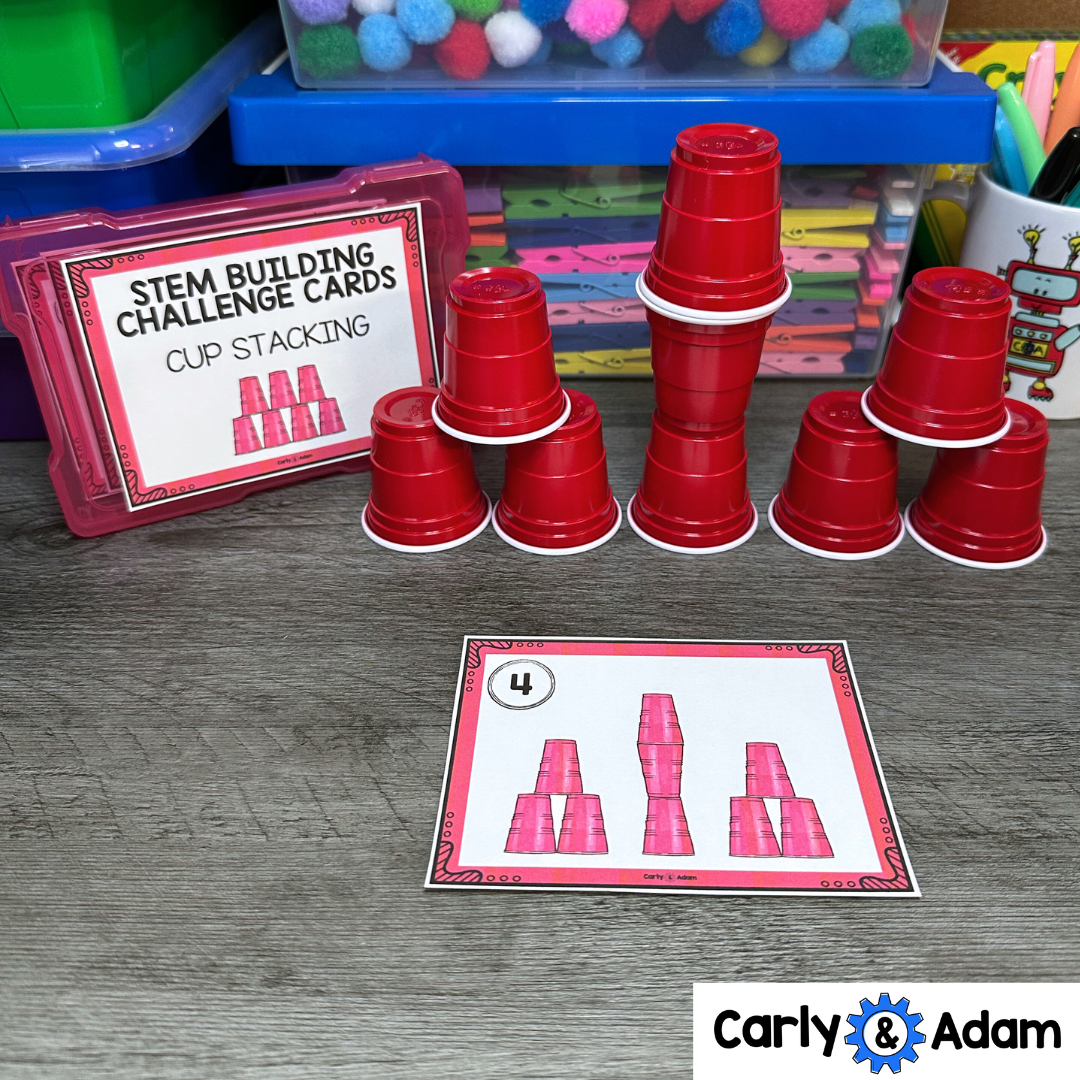
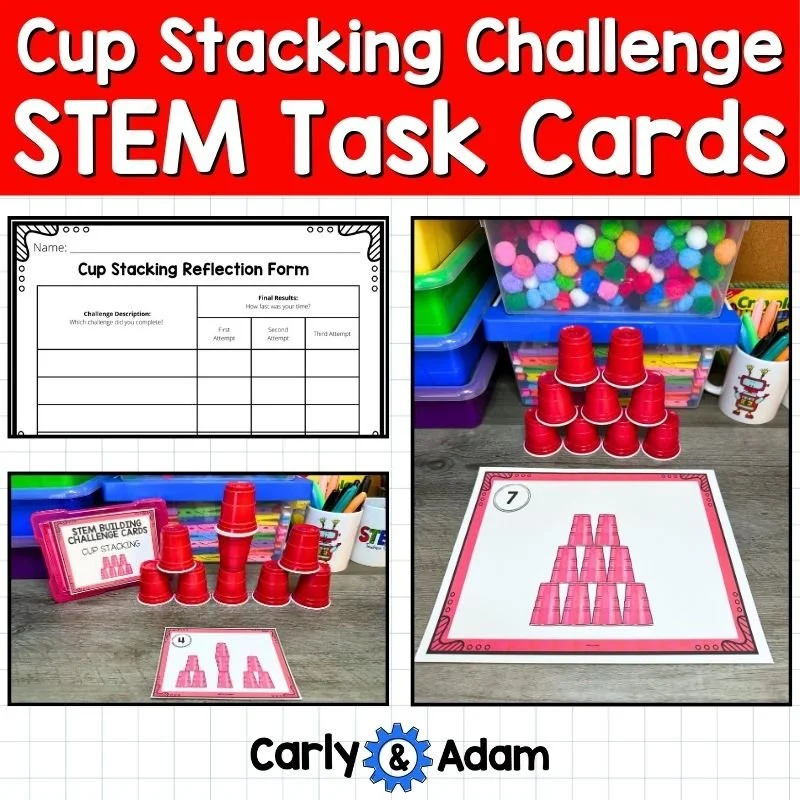
If you’re looking for a ready-to-use resource to guide your cup stacking activities, the Cup Stacking STEM Task Cards are a perfect fit. These task cards provide a series of challenges that can be easily implemented in any classroom.
Each card presents students with a specific goal, such as building the tallest tower using a set number of cups (e.g., 12, 16, 20, or 24 cups). The simplicity of the materials and directions makes it easy for students to jump right in, while still offering deep opportunities for learning and growth.
The task cards also encourage multiple attempts, promoting iteration and improvement—a critical part of the engineering design process. Reflection forms are included to help students record their results, analyze their successes and failures, and plan how they would improve in future challenges.
Want more ideas? Become a member of the STEM Teachers Club to access even more lessons and resources!

Spend Less Time Planning and More Time Teaching!
Hands-on STEM learning starts here.
Find ready-to-use STEM Activities and Science Curriculum, Practical Professional Development, and a Community of Educators to help you teach STEM with confidence.
You can get all 1000+ STEM Challenges by Carly and Adam as part of the STEM Teachers Club. Save 30% on your first month/year using coupon Code: CarlyAndAdamBlog.